
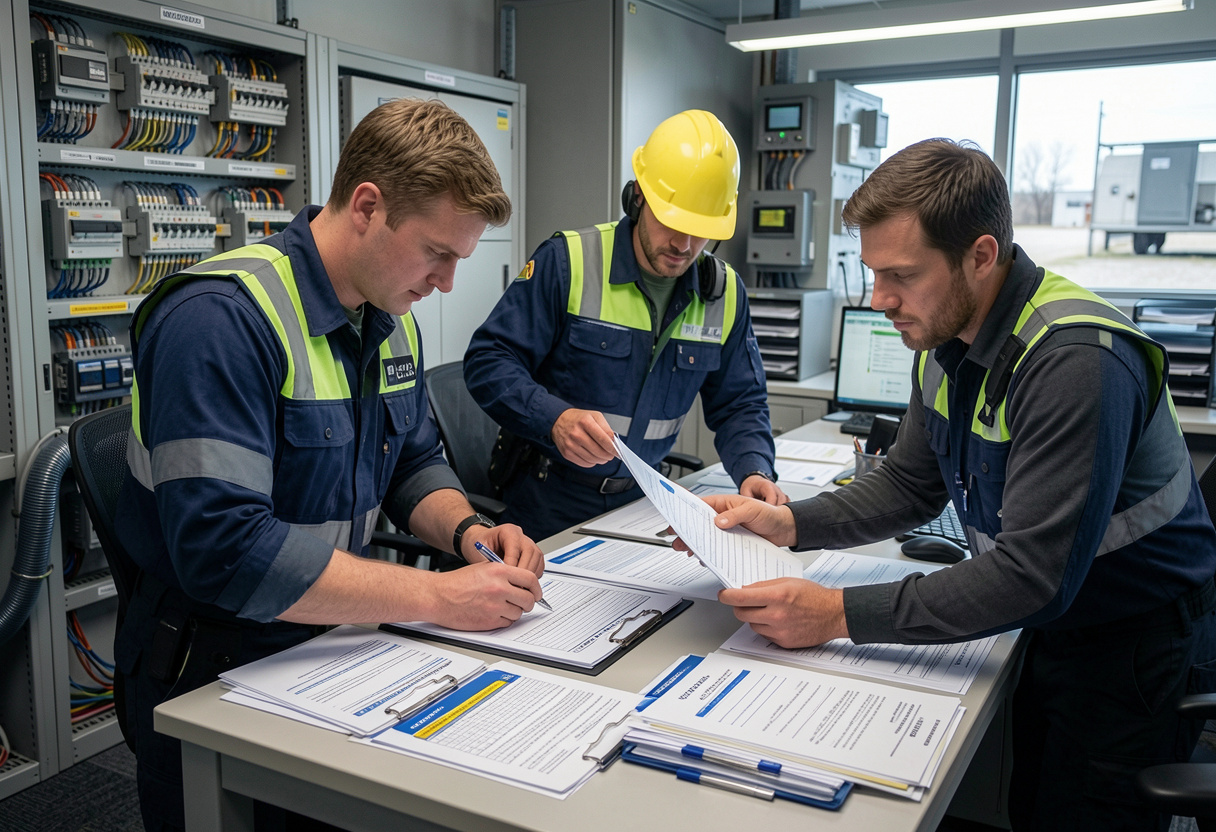
Maintaining compliance with North American Electric Reliability Corporation (NERC) standards can feel overwhelming for many power utilities. With constantly evolving regulations, strict audit requirements, and increasing cybersecurity concerns, organizations often struggle to keep up. However, achieving and maintaining compliance doesn’t have to be complicated.
By adopting practical, streamlined strategies and leveraging the expertise of nerc compliance consultants and nerc compliance testing services, utilities can simplify the process, reduce risk, and improve operational efficiency. This guide outlines easy, actionable strategies that can help power utilities stay compliant with confidence.
1. Understand the Scope of NERC Standards
The first step toward easier compliance is developing a clear understanding of which NERC standards apply to your organization. Not all utilities fall under the same requirements, so identifying your specific compliance obligations is critical.
Start by determining your organization’s classification (e.g., Generator Owner, Transmission Operator, etc.) and mapping it to applicable standards such as CIP (Critical Infrastructure Protection) or O&P (Operations and Planning). Once you know your scope, break down the requirements into manageable sections.
Working with experienced nerc compliance consultants can help you accurately interpret these standards and avoid unnecessary complexity. Their expertise ensures you focus only on what truly applies to your operations.
2. Build a Strong Compliance Framework
A structured compliance framework is essential for consistency and efficiency. Instead of handling compliance tasks reactively, utilities should establish documented processes that clearly define roles, responsibilities, and workflows.
Key components of a strong framework include:
-
Documented policies and procedures
-
Defined ownership for each compliance requirement
-
Regular training programs for staff
-
Centralized record-keeping systems
When processes are standardized, it becomes much easier to demonstrate compliance during audits. Additionally, a well-organized framework reduces the risk of missed requirements or last-minute scrambling.
3. Leverage Automation and Digital Tools
Manual compliance tracking is time-consuming and prone to errors. One of the easiest ways to simplify NERC compliance is by adopting digital tools and automation.
Compliance management software can help with:
-
Tracking deadlines and evidence
-
Automating alerts for upcoming tasks
-
Storing documentation securely
-
Generating audit-ready reports
By reducing manual effort, utilities can focus more on strategic improvements rather than administrative work. Many nerc compliance testing services also integrate with digital platforms, making it easier to validate systems and processes efficiently.
4. Conduct Regular Internal Audits
Waiting for a formal audit to identify issues can be risky and costly. Instead, utilities should perform regular internal audits to assess their compliance posture.
Internal audits help to:
-
Identify gaps before regulators do
-
Validate existing processes
-
Ensure documentation is up to date
-
Improve team readiness
These audits don’t need to be overly complex. Even simple periodic reviews can significantly reduce compliance risks. Partnering with nerc compliance consultants can further enhance the effectiveness of internal audits by providing an unbiased, expert perspective.
5. Invest in Continuous Training and Awareness
Compliance is not just a technical requirement—it’s a cultural one. Employees at all levels need to understand their role in maintaining compliance.
Regular training sessions should cover:
-
Key NERC standards and updates
-
Cybersecurity best practices
-
Incident reporting procedures
-
Documentation requirements
Creating a culture of awareness ensures that compliance becomes part of everyday operations rather than a separate, burdensome task. Over time, this approach reduces errors and strengthens organizational resilience.
6. Use Professional Testing Services for Validation
Testing is a critical component of NERC compliance, especially for cybersecurity-related standards. Utilities must regularly validate that their systems, controls, and processes are functioning as intended.
This is where nerc compliance testing services play a vital role. These services provide:
-
Vulnerability assessments
-
Penetration testing
-
System validation
-
Compliance gap analysis
By outsourcing testing to experts, utilities gain access to advanced tools and specialized knowledge that may not be available in-house. This not only improves accuracy but also saves time and resources.
7. Maintain Accurate and Audit-Ready Documentation
Documentation is one of the most important aspects of NERC compliance. Even if your processes are effective, poor documentation can lead to audit findings.
To simplify documentation management:
-
Use standardized templates
-
Keep records organized and centralized
-
Update documents regularly
-
Ensure evidence is clear and complete
Think of documentation as your proof of compliance. When everything is well-documented and easy to access, audits become far less stressful.
Final Thoughts
NERC compliance doesn’t have to be a complicated or overwhelming process. By focusing on clarity, structure, and proactive management, power utilities can significantly simplify their compliance journey.
Leveraging the expertise of nerc compliance consultants ensures that your organization stays aligned with evolving standards, while nerc compliance testing services provide the validation needed to maintain confidence in your systems and processes.
Ultimately, the key to easy NERC compliance lies in consistency, preparation, and continuous improvement. By implementing these strategies, utilities can not only meet regulatory requirements but also enhance their overall operational reliability and security.
 English
Join our community to interact with posts!