
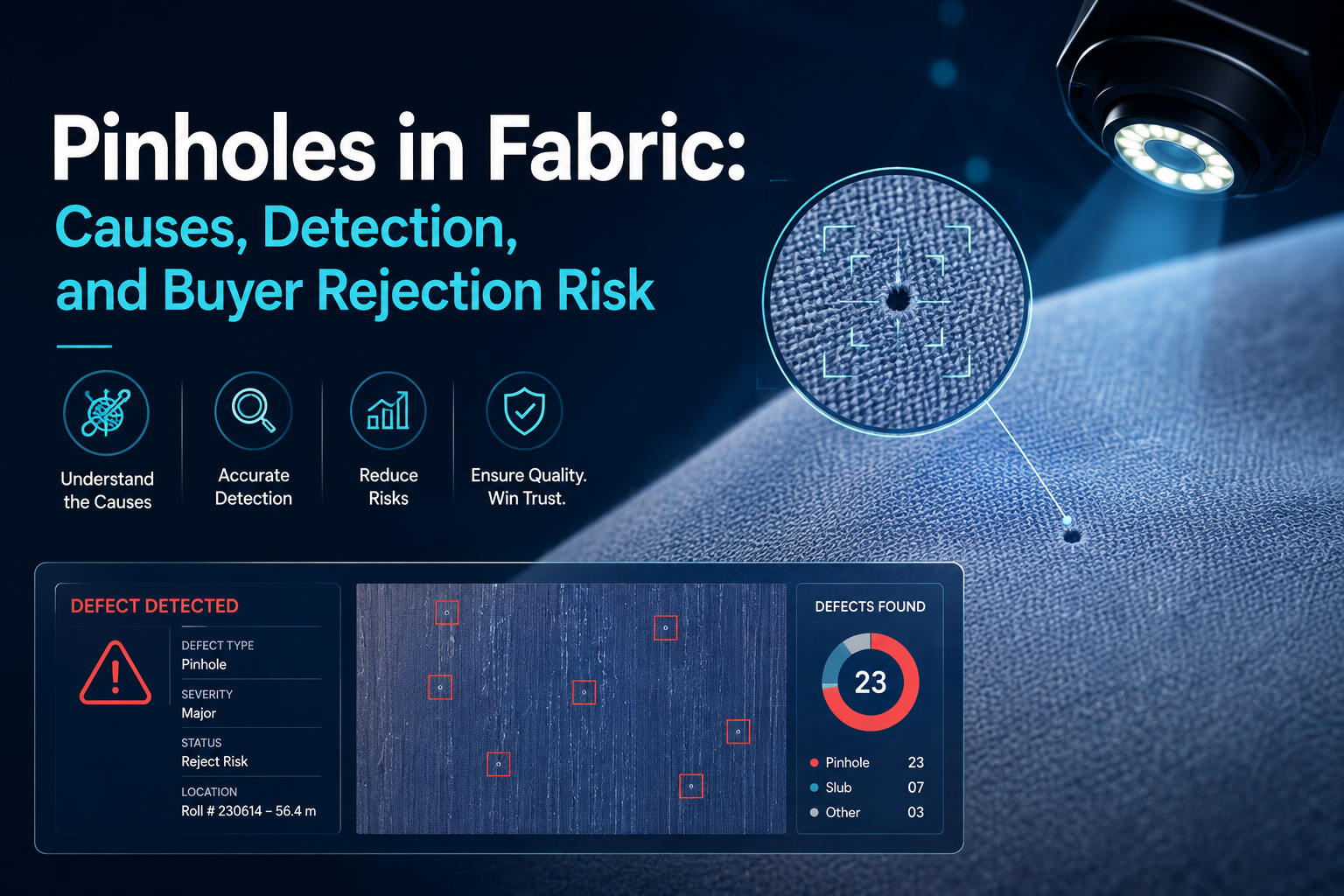
In the textile and apparel industry, even the smallest defects can create major quality concerns. One such defect is pinholes in fabric. Although these tiny holes may appear insignificant during production, they can lead to customer complaints, reduced product value, and even shipment rejection by buyers.
Understanding the causes of pinholes, how to detect them, and their impact on quality standards is essential for manufacturers aiming to maintain high fabric quality and reduce costly claims.
What Are Pinholes in Fabric?
Pinholes are small, visible holes that appear in fabric during manufacturing, processing, dyeing, finishing, or handling. These holes can range from barely noticeable defects to clearly visible openings that compromise fabric appearance and performance.
Pinholes are commonly found in:
- Knitted fabrics
- Woven fabrics
- Dyed fabrics
- Finished garments
- Technical textiles
Because pinholes directly affect fabric integrity, they are usually classified as a major defect during quality inspection.
Common Causes of Pinholes in Fabric
1. Mechanical Damage During Processing
One of the most common causes is mechanical damage from machinery.
Examples include:
- Sharp machine components
- Damaged needles
- Worn-out guides
- Rough rollers
- Improper fabric handling systems
When fabric comes into contact with these surfaces, fibers can break, creating small holes.
2. Needle Damage
In knitting and garment manufacturing, broken or bent needles can puncture fabric.
This issue is particularly common in:
- Circular knitting machines
- Flat knitting machines
- Sewing operations
Regular needle inspection is critical for preventing this type of defect.
3. Chemical Degradation
Harsh chemicals used during bleaching, dyeing, or finishing may weaken fibers.
Common causes include:
- Excessive bleaching agents
- Incorrect chemical concentration
- Poor pH control
- Over-processing
Weakened fibers eventually break and form pinholes.
4. Heat Damage
Excessive temperatures during drying, heat setting, or finishing can damage fabric structure.
Synthetic fibers are especially vulnerable because overheating may:
- Melt fibers
- Reduce tensile strength
- Create weak points that develop into holes
5. Abrasion and Friction
Continuous rubbing against machine parts or improper transportation can gradually wear away fibers.
High-speed processing lines are particularly susceptible if machine settings are not optimized.
6. Insect or Storage Damage
Poor warehouse conditions can expose fabrics to insects, rodents, or environmental degradation.
Long-term storage without proper protection may result in isolated pinholes before fabric reaches the customer.
How Pinholes Are Detected
Manual Fabric Inspection
Traditional fabric inspection involves trained inspectors examining fabric rolls under controlled lighting conditions.
Inspectors look for:
- Small holes
- Thin spots
- Broken yarns
- Surface irregularities
While effective, manual inspection can miss very small defects, especially at high inspection speeds.
Automated Vision Inspection Systems
Modern manufacturers increasingly rely on automated fabric inspection systems to detect pinholes with greater accuracy.
Machine vision technology can:
- Scan fabric continuously
- Detect microscopic defects
- Identify pinholes in real time
- Generate defect maps
- Reduce human error
Automated inspection is particularly valuable for high-volume production where consistency is critical.
Light-Based Detection
Many inspection systems use backlighting to make pinholes more visible.
When light passes through fabric, holes appear as bright spots, allowing inspectors or cameras to identify defects quickly and accurately.
Why Buyers Reject Fabric with Pinholes
Pinholes may seem minor during production, but buyers often view them as a serious quality issue.
Appearance Problems
Visible holes negatively affect product aesthetics.
For fashion brands and retailers, appearance defects directly impact customer satisfaction.
Reduced Durability
Pinholes create weak areas in the fabric structure.
Over time, these small holes can expand during:
- Washing
- Wearing
- Stretching
- Industrial use
Brand Reputation Risk
Brands strive to deliver defect-free products.
Receiving garments with pinholes can lead to:
- Customer returns
- Negative reviews
- Warranty claims
- Loss of consumer trust
Failure to Meet Quality Standards
Many buyers follow strict quality inspection protocols such as the Four-Point System.
Pinholes often receive significant penalty points because they affect both appearance and performance.
If total defect points exceed the buyer's acceptance limit, the fabric roll or shipment may be rejected.
Preventing Pinholes in Fabric Production
Manufacturers can significantly reduce pinhole defects by implementing preventive measures.
Regular Machine Maintenance
Routine inspection of:
- Needles
- Rollers
- Guides
- Cutting components
helps eliminate mechanical causes of pinholes.
Chemical Process Control
Maintaining proper:
- Chemical concentrations
- Processing temperatures
- Exposure times
prevents fiber degradation.
Automated Quality Monitoring
Real-time vision inspection systems help identify defects before large quantities of fabric are produced.
Early detection reduces waste and prevents defective fabric from reaching customers.
Employee Training
Operators should be trained to recognize early signs of machine wear and fabric damage before defects become widespread.
The Role of Automated Inspection in Reducing Buyer Rejections
As buyer quality expectations continue to rise, automated inspection has become a strategic investment for textile manufacturers.
Advanced vision systems from Edraak Systems enable mills and manufacturers to:
- Detect pinholes in real time
- Improve inspection consistency
- Reduce manual inspection dependency
- Minimize customer complaints
- Increase shipment acceptance rates
By identifying defects early in the production process, manufacturers can improve quality control while reducing operational costs.
Conclusion
Pinholes may be small, but their impact on fabric quality can be significant. From mechanical damage and chemical degradation to heat exposure and poor handling, multiple factors can contribute to their formation. Because pinholes affect both appearance and durability, buyers frequently classify them as major defects that can lead to shipment rejection.
Implementing effective inspection practices and advanced machine vision solutions helps manufacturers detect pinholes early, maintain quality standards, and deliver products that meet buyer expectations. For companies seeking reliable defect detection and fabric quality assurance, Edraak Systems provides intelligent vision inspection solutions designed for modern manufacturing environments.
 English
Join our community to interact with posts!