
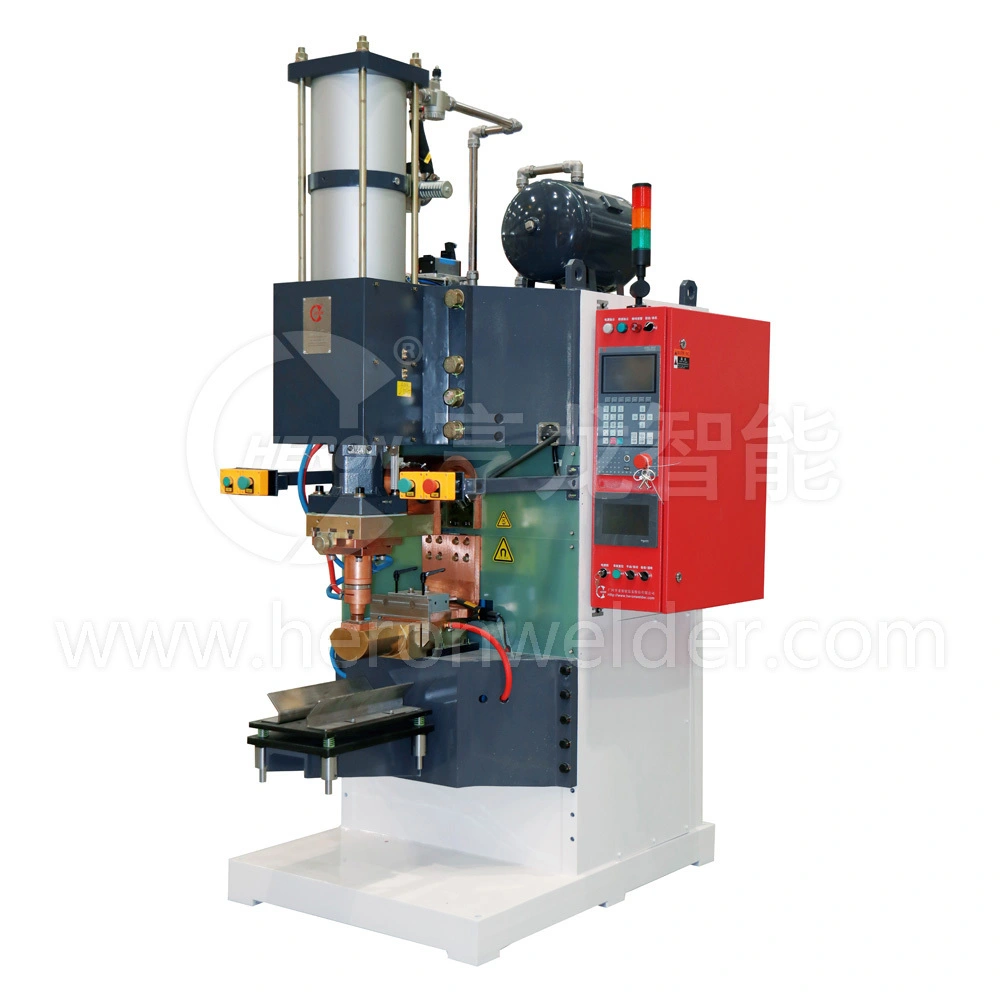
In modern manufacturing environments, joining aluminum components efficiently and reliably is a strategic imperative. As industries such as automotive, aerospace, electronics, and consumer goods continue to push for lighter, stronger, and more sustainable assemblies, aluminum spot welding has emerged as a core process for high-volume metal joining. In this post, we explore the technology principles, key applications, material challenges, system comparisons, and best practices all tailored for manufacturing engineers, OEMs, automation integrators, and factory decision-makers seeking optimized welding solutions.
At Heron Welder, we design and manufacture advanced resistance welding and metal-joining systems including state-of-the-art aluminum spot welders to help global manufacturers achieve consistent quality, higher throughput, and seamless integration into automated production lines.
What Is an Aluminum Spot Welder?
The Basics of Resistance Spot Welding
Aluminum spot welding is a type of resistance welding in which two overlapping aluminum sheets are joined by applying electrical current and pressure through copper alloy electrodes. The resistance to current flow at the faying surfaces produces localized heat, forming a weld nugget that bonds the metals together. Unlike fusion welding, no filler material is needed, and the process is fast typically a fraction of a second per weld.
Why Focus on Aluminum?
Aluminum offers an excellent strength-to-weight ratio and corrosion resistance, making it ideal for lightweight structural components. However, its high thermal conductivity and oxide layer present unique challenges for resistance welding, requiring specialized equipment and process control.
Key Applications of Aluminum Spot Welding
Aluminum spot welding is widely used across industries where lightweight, high-strength metal joints are crucial:
Automotive and Electric Vehicles
Spot welding aluminum body panels, battery trays, brackets, and closures supports vehicle weight reduction and enhanced fuel efficiency. EV manufacturers increasingly adopt aluminum spot welders for battery frame assemblies and structural reinforcements.
Aerospace and Transportation
Aircraft interior structures, payload frames, and railcar bodies benefit from aluminum’s weight and fatigue performance. Spot welding helps meet strict quality and repeatability demands.
Electronics and Appliances
Heat sinks, electrical enclosures, and chassis components made of aluminum are spot-welded for secure electrical paths and mechanical stability.
Consumer Goods and Industrial Equipment
From HVAC enclosures to recreational equipment, aluminum spot welding offers cost-effective, durable joining for high-volume parts.
Aluminum vs. Steel: Welding Challenges and Solutions
Distinct Material Characteristics
Aluminum’s physical properties high thermal and electrical conductivity, low melting point relative to steel, and a tenacious oxide layer require careful consideration:
-
Oxide Layer – Aluminum naturally forms an oxide film (~2–3 µm thick) that has significantly higher electrical resistance than the base metal. Without proper parameters and electrode design, inconsistent welds can result.
-
Thermal Conductivity – Aluminum dissipates heat quickly, demanding higher welding currents and precise timing.
-
Electrode Wear – Copper electrodes can erode faster on aluminum, calling for robust electrode materials and cooling.
Heron’s Engineering Advantage
Heron aluminum spot welders are engineered with:
-
Advanced MFDC (Medium-Frequency Direct Current) power supplies for consistent heat generation
-
Optimized electrode geometries to concentrate current and minimize wear
-
Real-time monitoring and adaptive control to compensate for material and temperature variability
These design choices improve repeatability and reduce downtime compared to generic spot welding units.
Choosing the Right Aluminum Spot Welding System
Power Source: MFDC vs. Traditional AC
-
Traditional AC Welders offer adequate performance for mild steel but struggle with aluminum due to slow current rise times and unstable heat control.
-
MFDC Welders provide rapid, controlled current delivery with superior energy efficiency and responsiveness critical for aluminum applications.
Heron’s MFDC welding systems deliver highly controlled current profiles that reduce spatter, improve nugget formation, and enhance electrode life.
Electrode Material and Cooling
Using chromium-zirconium copper or tungsten-copper electrodes enhances durability and heat handling. Coupled with robust water-cooling channels, these electrodes maintain consistent performance across long production runs.
Control and Monitoring
Modern spot welding systems should offer:
-
Force control to ensure consistent pressure
-
Current and time feedback loops
-
Process data logging for traceability
Heron controllers include intelligent process monitoring and optional integration with factory MES/PLC systems.
Integrating Aluminum Spot Welding into Automated Lines
Manufacturing automation calls for welding systems that are:
-
Modular and scalable
-
Robot-ready for GMAW, laser, and spot sequence coordination
-
Safe and ergonomic for operators
Heron’s spot welding cells are configured for:
-
Robot arm integration with hot-stamped part handling
-
Turnkey end-of-line inspection systems (vision or ultrasonic gauges)
-
Flexible fixturing for mixed model production
These solutions reduce cycle times and elevate quality consistency across batches.
Best Practices for Aluminum Spot Welding
1. Maintain Electrode Quality
Inspect and dress electrodes regularly to prevent buildup and ensure proper contact.
2. Optimize Welding Parameters
Conduct weld schedules based on material thickness, alloy type, and joint configuration. Fine-tune current, force, and time for repeatable nuggets.
3. Use Pre-Weld Surface Preparation
Remove oils and contaminants that can impede current flow or interfere with heat generation.
4. Monitor Process Metrics
Track current curves, force graphs, and nugget size trends to detect drift before it impacts quality.
5. Regular Calibration and Preventive Maintenance
Schedule system calibration and water-cooling checks to maintain peak performance.
Heron’s Aluminum Spot Welder Lineup
Heron offers a portfolio of solutions tailored for aluminum resistance welding:
-
Compact bench-top units for prototyping and light production
-
High-throughput MFDC spot welders for automotive and battery module manufacturing
-
Fully automated cell solutions with robotics and inline quality inspection
With over decades of experience in resistance welding and automation, Heron stands out as a trusted provider for mission-critical fabrication environments.
Frequently Asked Questions (FAQs)
Q1. What thickness of aluminum can be spot welded?
Aluminum spot welding is effective for thin gauge applications up to moderate thicknesses (typically 0.5 mm to 4 mm per sheet), depending on material grade and equipment capacity.
Q2. Can aluminum spot welding replace other joining methods?
In many cases, yes. Its high speed and repeatability make it an alternative to rivets, adhesives, or mechanical fastening particularly in high-volume production.
Q3. What alloys are most suitable for spot welding?
Common aerospace and automotive alloys such as 5000 and 6000 series aluminum respond well when the welding system is properly configured.
Q4. How does electrode wear affect production?
Electrode wear can change contact resistance and weld quality over time. Using appropriate electrode materials and monitoring wear are essential for consistent results.
Q5. Is aluminum spot welding automation-friendly?
Absolutely. Modern aluminum spot welders are designed for integration with robots, conveyor systems, and advanced quality feedback loops.
Ready to Optimize Your Aluminum Welding Process?
Whether you’re scaling an automotive line, integrating battery pack assembly, or improving plant throughput, Heron Welder delivers engineered solutions tailored to your needs. Request a quote or consult with our experts today to explore custom aluminum spot welding and automated welding systems that boost performance and lower total cost of ownership.
Contact Heron Welder for customized welding automation and expert support.
 English
Join our community to interact with posts!