
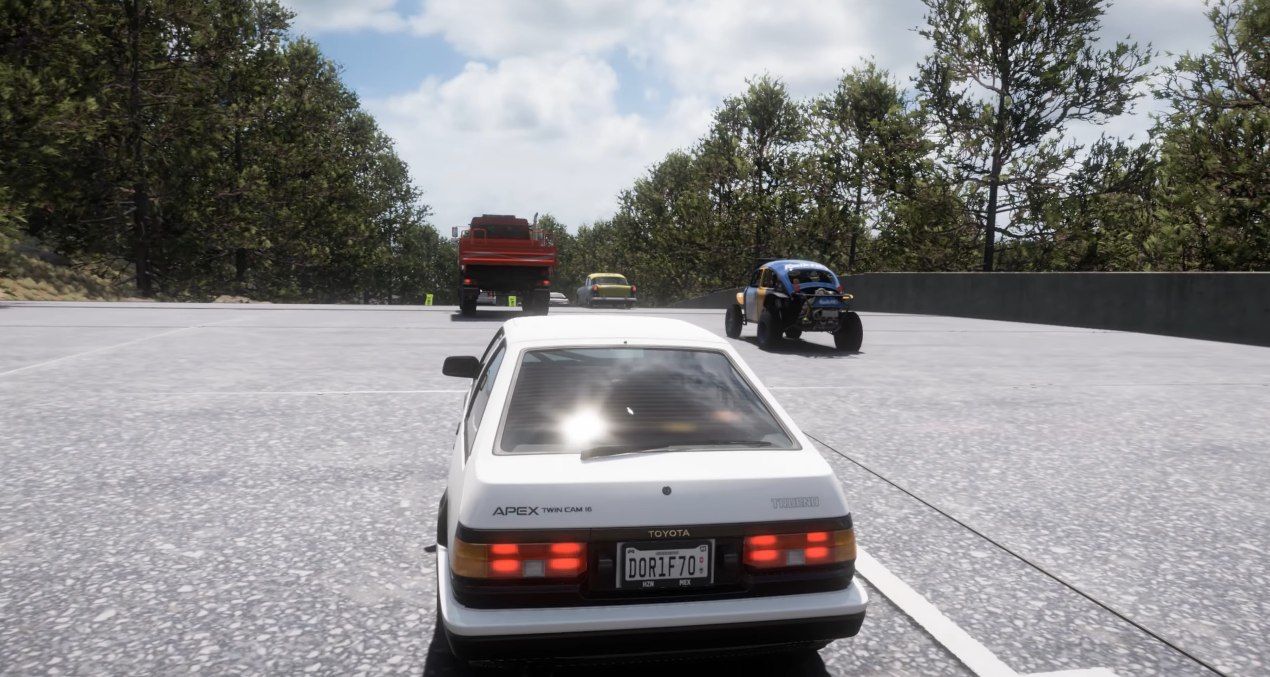
Braking is a crucial part of racing in Forza Horizon 6 (FH6), whether you're competing in a street race, off-roading, or tackling a challenge. One of the most important things to learn is how to brake consistently—no matter what car you're driving, or which track you're racing on. This guide will walk you through the key points of braking in FH6, from setting up your car for maximum control to fine-tuning your technique in practice.
What is Consistent Braking?
Before diving into tuning and technique, let's start by defining what we mean by "consistent braking." In simple terms, this refers to being able to reliably slow down your car at the same rate and distance every time, allowing you to navigate turns, avoid crashes, and set faster lap times. It’s about maintaining control under braking pressure, and finding the right balance between slowing down quickly enough to make the turn and not losing too much speed.
Why is Braking Consistency Important?
In Forza Horizon 6, every aspect of racing is about precision. From cornering to speed management, the key to faster lap times often boils down to getting your braking right. If you're inconsistent with your braking points or feel your car is unstable when applying the brakes, you’re likely losing precious time on the track. Learning how to brake consistently helps you carry more speed into corners, which in turn, helps with lap times and competitive races.
How Does Braking Work in Forza Horizon 6?
In Forza Horizon 6, braking operates similarly to real-world physics. The game factors in your car’s weight, tire grip, speed, and the surface you're driving on. Cars with better handling will decelerate more effectively, while heavier cars or those with poor handling will take longer to slow down.
There are a few key things to understand about braking behavior in the game:
-
Brake Bias: How your car's brakes are distributed between the front and rear axles. A more front-biased brake setup will give you more stopping power at the front wheels, making the car feel more stable during hard braking. A rear-biased brake setup can help you rotate the car, but it’s riskier because it can cause the rear end to slide out under heavy braking.
-
ABS (Anti-lock Braking System): The game allows you to toggle ABS, which prevents your wheels from locking up during heavy braking. While ABS is useful for newer players who need a bit of extra help, turning it off can give more control over braking and let you modulate your deceleration more finely.
-
Brake Force: The overall strength of your braking. More aggressive braking force can stop your car faster, but it can also make your car more difficult to control if you’re not used to it. If you have a lot of brake force in your tune, it can be harder to make smooth, controlled stops, especially at high speeds.
How Do I Tune My Car for Better Braking?
To brake consistently, you need to make sure your car is set up to do so. Tuning is an essential part of ensuring that your brakes work the way you want them to. Here are the main adjustments you should consider when tuning your car's brakes:
1. Brake Balance (Brake Bias)
The brake balance or brake bias controls how much braking power is sent to the front or rear wheels. In most cars, you want a slight front bias, as this helps with stability during braking. However, if you’re driving a more rear-heavy car, like a muscle car or a rear-wheel-drive drift build, you might want to adjust the brake bias towards the rear to help rotate the car.
How to tune: In FH6, you can adjust this by going to the Tuning menu, and selecting Brake Balance. Start with a 60-40 front-to-rear bias (60% braking power at the front), and adjust it based on how the car feels under braking. If the car feels like it’s pushing or understeering, shift the bias towards the rear. If the car feels unstable, try shifting it slightly more toward the front.
2. Brake Force
Braking force determines how quickly your car decelerates when you hit the brakes. A higher brake force can help you stop quicker but can also make the car harder to handle if you’re not smooth with your braking.
How to tune: Adjust the Brake Force in the Tuning section. A good starting point is to keep it around 90%, and you can increase it to 100% for quicker stops, but be careful—this may make your car more prone to skidding if you’re not careful. If you feel the car’s rear end is sliding too much during braking, reduce the brake force by a few clicks.
3. Tires and Pressure
Braking consistency depends heavily on your tires' ability to grip the road. Tires with more grip will allow you to brake harder without losing traction.
How to tune: Under the Tires settings, set your tire pressure to optimal levels (generally, 30-35 PSI for most cars). Lower pressure provides more grip and a smoother ride, which can help with braking. However, keep in mind that lower pressure increases tire wear, which can affect your car’s handling over longer races.
4. Suspension Tuning
Suspension is another critical factor in how your car handles during braking. A well-tuned suspension can help your car maintain balance under heavy braking and prevent it from bottoming out or becoming unstable.
How to tune: Adjust the Suspension settings to stiffen or soften the car’s springs and dampers. Softer suspension settings allow the car to settle more quickly under braking, but they can make the car feel less precise. Stiff suspension, on the other hand, makes the car more responsive but may cause it to become bouncy or unstable in bumpy conditions.
5. Differential and Handling
The differential settings control how power is distributed between the wheels, which can affect the car's handling under braking. If you’re racing in tighter, technical tracks, you might want to adjust your differential for quicker turning and better control.
How to tune: For consistent braking, you want to find a good balance between the Center Differential and Locking Differential. Start by setting the center diff at a medium setting for most road races. If you’re driving off-road, or your car is heavy and prone to understeer, you might want to lock the diff a bit more for better stability under braking.
How Do I Improve My Braking Technique?
Braking in FH6 isn’t just about the car setup—it’s also about your technique. Here are a few tips to help you brake more consistently in practice:
1. Find Your Braking Points
Braking points are the spots on a track where you need to begin slowing down in order to make a turn. These are typically located just before the corner, but the exact spot will vary depending on the track and car. Consistent braking starts with knowing where these points are.
Tip: Practice each corner until you can hit your braking point the same way every time. Visual markers like signs, trees, or curbs can help you remember where to brake.
2. Brake Smoothly, Not Abruptly
Slamming on the brakes might stop you quickly, but it can also cause your car to lose control. Instead, brake gradually, applying more pressure as you approach the corner, and ease off as you enter the turn.
Tip: Aim to modulate the brake pedal with precision—this helps prevent the wheels from locking up and losing grip.
3. Trail Braking
Trail braking is when you gradually release the brake as you enter a corner, which helps to rotate the car and gives you better control. It’s especially useful for tight corners.
Tip: To do this, start braking earlier than usual and then slowly ease off the brake as you approach the apex of the turn. Be careful not to release the brake too suddenly or you’ll lose control.
4. Avoid Over-Braking
Over-braking can make your car feel sluggish and unstable. It’s tempting to slam on the brakes when you’re approaching a corner too fast, but over-braking can make the car difficult to control.
Tip: Be mindful of your entry speed. If you’re entering the corner too fast, it’s better to brake slightly earlier and more gently, rather than overcompensating with heavy braking.
How Can I Test My Braking Setup?
Once you’ve made adjustments to your car’s braking setup, it’s time to test your work. A good way to do this is by using the Test Drive feature in FH6. Take your car to a track or open road, and do a few laps, paying close attention to how your car handles under braking.
Look for signs of instability, such as the car oversteering or understeering during braking, or if the rear end feels too loose. If you notice any issues, make small tweaks to the tuning until you find a balance that works for you.
Achieving consistent braking in Forza Horizon 6 requires a combination of tuning and practice. By adjusting your car’s brake balance, force, and suspension, and honing your technique on the track, you can improve your braking and ultimately set faster lap times. If you ever want to give yourself a leg up, you could even consider using a safe FH6 Modded Account, which could provide an advantage in terms of performance and customization options. With time and attention to detail, consistent braking will become second nature, helping you race with more control and confidence.
 English
Join our community to interact with posts!