
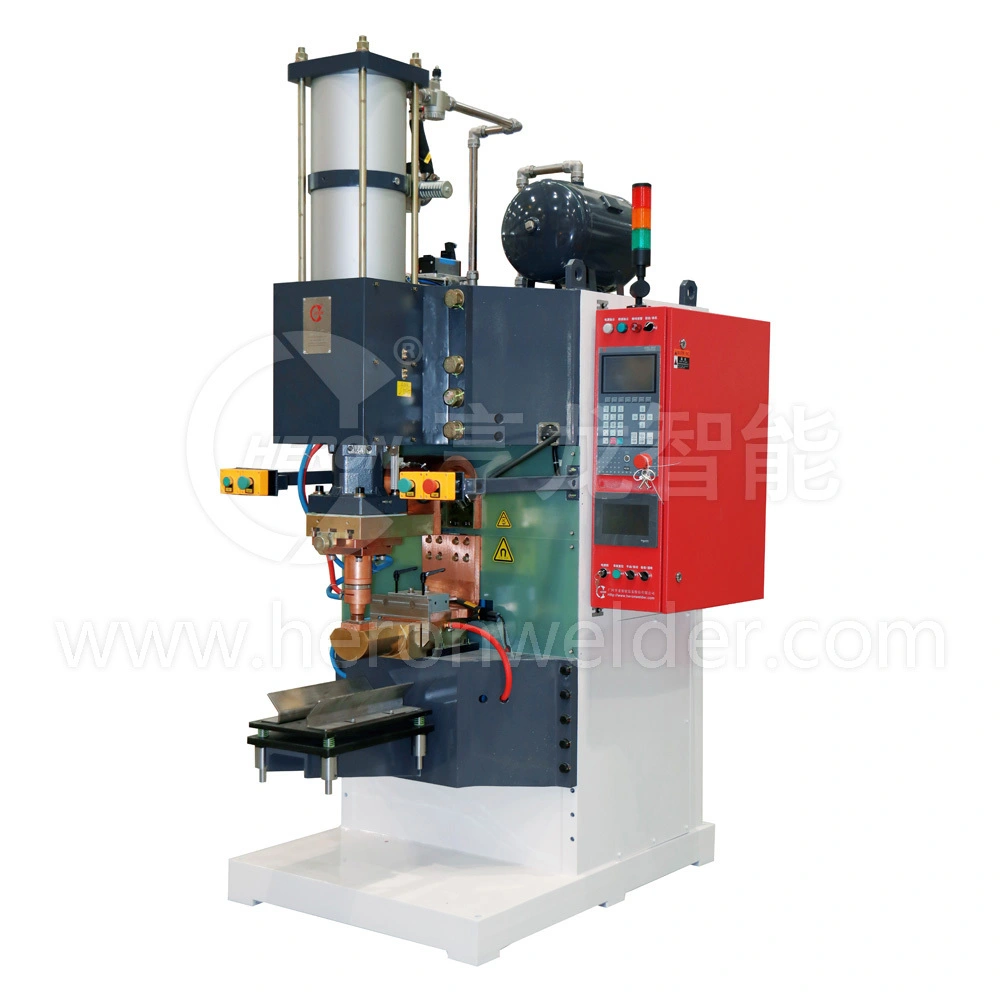
In today’s competitive manufacturing landscape, precision, speed, and reliability are critical. For industries ranging from automotive and aerospace to electronics and metal fabrication, resistance welding has become a cornerstone technology. Heron Welder provides advanced resistance welding solutions designed to meet the exacting standards of OEMs, automation integrators, and factory decision-makers worldwide. In this guide, we explore the principles, applications, and best practices of resistance welders, helping manufacturers optimize production while maintaining high-quality standards.
What is a Resistance Welder?
A resistance welder is a type of welding machine that joins metals by applying heat generated from electrical resistance combined with mechanical pressure. Unlike traditional arc or gas welding, resistance welding relies on the natural resistance of the metals being joined. When an electric current passes through the contact area, the localized heat melts the metal, forming a strong joint once pressure is applied.
This method offers several advantages:
-
Fast cycle times, enabling high-volume production
-
Consistent weld quality, reducing human error
-
Energy efficiency, as the heat is generated only at the weld spot
-
Clean welding environment, with minimal fumes or spatter
Heron Welder specializes in multiple types of resistance welders, including spot welders, projection welders, seam welders, MFDC, and capacitor discharge machines, providing tailored solutions for diverse manufacturing needs
How Resistance Welding Works: Basic Principles
The operation of a resistance welder can be broken down into three main stages:
-
Clamping – Electrodes clamp the metal pieces together under precise pressure. Proper clamping ensures consistent current flow and reduces weld defects.
-
Current Flow – A high-amperage electrical current is passed through the metal at the contact point. The resistance at this point generates heat proportional to the current and duration.
-
Weld Formation – As the metal reaches its melting point, the electrode pressure forces the molten metal to fuse, creating a solid, durable joint.
Key parameters that affect weld quality include:
-
Current magnitude and duration
-
Electrode type, size, and alignment
-
Material thickness, type, and surface condition
-
Weld schedule and timing
Heron’s advanced welding controllers and automated systems help manufacturers maintain these parameters precisely, ensuring repeatable weld quality across high-volume production lines.
Common Types of Resistance Welders
Manufacturers often select a resistance welder based on the application, material type, and production requirements. Heron offers a comprehensive portfolio:
Spot Welders
Spot welding is the most widely used resistance welding method. It is ideal for joining sheets of metal, commonly in automotive body panels or electronic enclosures. Spot welders deliver rapid, localized heat, forming multiple welds in seconds.
Projection Welders
Projection welding uses raised sections or projections on the workpiece to concentrate heat at specific points. This method is preferred for complex assemblies, such as fastener attachment or engine components, providing precise welds without damaging surrounding material.
Seam Welders
Seam welding produces continuous welds along a joint, often used in fuel tanks, HVAC components, and metal tubing. Continuous rollers ensure a leak-proof and uniform seam.
MFDC and Capacitor Discharge Welders
Medium-Frequency Direct Current (MFDC) and capacitor discharge welders provide high-speed, high-precision welds for thin-gauge metals and sensitive components, such as in electronics, medical devices, or battery manufacturing.
Applications Across Industries
Resistance welding is highly versatile and widely adopted across industries:
-
Automotive Manufacturing: Spot and projection welders for body-in-white assembly, chassis, and battery packs.
-
Aerospace: Lightweight metal joining with precise seam and spot welds.
-
Electronics: Capacitor discharge welders for terminals, connectors, and circuit components.
-
Appliances & HVAC: Continuous seam welds for tanks, panels, and enclosures.
-
General Fabrication: Fast, consistent joints in structural frames and assemblies.
Heron Welder’s solutions are engineered for automation compatibility, enabling integration into robotic welding cells and high-volume production lines, boosting throughput while reducing labor dependency.
Benefits of Using Heron Resistance Welders
Partnering with Heron offers manufacturers clear advantages:
-
Precision and Consistency – Advanced controllers and sensors ensure uniform weld quality.
-
Scalability – Machines suited for small workshops to full-scale automated production lines.
-
Energy Efficiency – Targeted heating reduces power consumption compared to traditional welding.
-
Custom Solutions – Heron provides tailored welding setups for unique production requirements.
With decades of experience and a global service network, Heron is more than a supplier it’s a trusted partner for manufacturing excellence.
Best Practices for Resistance Welding
To maximize performance and extend equipment life, manufacturers should follow these best practices:
-
Regular Electrode Maintenance – Keep electrodes clean, shaped, and aligned.
-
Optimize Weld Schedules – Adjust current, time, and pressure based on material type and thickness.
-
Use Automation Where Possible – Robotic or CNC integration improves accuracy and reduces cycle time.
-
Monitor Quality – Implement monitoring systems to detect inconsistencies in weld strength or fusion.
-
Training and Safety – Ensure operators are trained in safe handling and machine operation.
Heron offers training, support, and remote diagnostics to help customers maintain peak operational efficiency.
Frequently Asked Questions (FAQs)
Q1: What materials can be welded with a resistance welder?
A1: Resistance welders work best on conductive metals like steel, stainless steel, aluminum, and copper alloys. Material thickness and conductivity determine the welder type and settings.
Q2: How does a spot welder differ from a projection welder?
A2: Spot welders create welds at individual points, while projection welders use raised areas to concentrate heat, allowing multiple or precise welds simultaneously.
Q3: Can resistance welding be automated?
A3: Yes. Resistance welding is highly compatible with robotic arms, CNC systems, and automated production lines for consistent, high-volume manufacturing.
Q4: How often should electrodes be replaced or reconditioned?
A4: Electrode life depends on usage, material, and current settings. Routine inspection and maintenance are critical for weld quality and machine longevity.
Q5: Is resistance welding suitable for thin metals?
A5: Absolutely. MFDC and capacitor discharge resistance welders excel at joining thin-gauge metals without overheating or warping.
Conclusion: Partner with Heron for Advanced Resistance Welding Solutions
Incorporating a resistance welder into your manufacturing process enhances speed, precision, and reliability. With Heron Welder’s comprehensive range of spot, projection, seam, MFDC, and capacitor discharge machines, manufacturers can optimize production, reduce defects, and scale efficiently.
Whether you’re integrating automated welding cells, upgrading existing lines, or designing a custom welding solution, Heron’s engineering expertise ensures a perfect fit for your application.
Contact Heron Welder today to request a quote or consult on a customized welding and automation solution that meets your exact production needs.
 English
Join our community to interact with posts!