
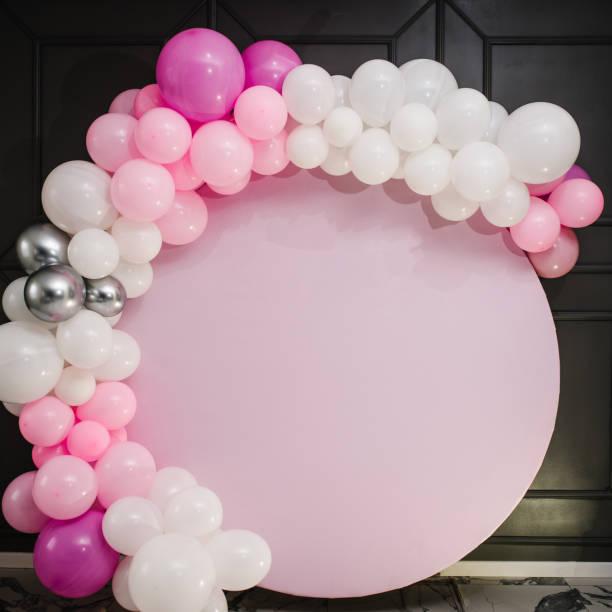
You’ve seen them at weddings, store openings, birthday setups… those big, flowing balloon pieces that somehow pull the whole space together. They look easy. Like someone just blew up a bunch and tied them in place. Not even close. Good Balloon Arches take time, a bit of stubbornness, and honestly, a lot of fixing things as you go. There’s no perfect formula. Even pros mess up mid-way and adjust. That’s kind of the job. What you end up seeing—the clean, balanced arch—is usually the result of a bunch of small decisions that don’t look important on their own, but add up.
It Starts Messy, Not Perfect
No one really talks about this part, but the beginning is usually a bit chaotic. Balloons everywhere, sizes not matching yet, colors looking off under bad lighting. Professionals don’t panic at this stage. They expect it. There’s usually a rough idea in mind—how wide, how tall, what kind of shape—but it’s not some rigid plan. More like a direction. They adjust as they go, sometimes stepping back, sometimes redoing a whole section because it just feels… wrong. And yeah, “feels” is a big part of it.
Balloon Quality Actually Matters (More Than People Think)
This is one of those things people try to cut corners on. Doesn’t work. Cheap balloons behave badly. They don’t stretch right, colors look dull, and worst part—they pop when you don’t want them to. Professionals stick to better quality stuff because it saves time later. Also, color consistency is a real issue. Two balloons that look the same in a pack can look completely different once inflated. That’s why you’ll see artists mixing, matching, sometimes even layering balloons just to get the shade right. Bit extra, maybe. But it shows.
There’s Always Something Holding It Together
Even those loose, “organic” looking arches? Yeah, they’re not just floating there magically. There’s structure underneath. Could be a metal frame, could be a flexible rod, sometimes just clever use of line and anchors. Depends on the setup. The point is—if the base isn’t solid, the whole thing starts sagging or shifting. And once that happens, fixing it is a pain. So pros spend more time than you’d expect just making sure the foundation is steady. Not exciting work, but it’s what keeps everything from falling apart halfway through the event.
The Real Trick Is in the Clusters
If you look closely at a well-made arch, it’s not uniform at all. That’s on purpose. Professionals group balloons in clusters—different sizes, slightly uneven spacing. Bigger ones first, then smaller ones tucked in wherever there’s an awkward gap. It’s not perfectly planned either. There’s some instinct involved. You add a cluster, step back, stare at it for a second, maybe tilt your head like that’s going to help… then adjust again. It’s a bit trial-and-error, honestly. Too neat and it looks flat. Too random and it looks like a mess. Somewhere in between is the sweet spot.
Color Choices Aren’t Just “Pick What Looks Nice”
People assume artists just choose colors they like and go with it. Not really. There’s some thought behind how colors sit next to each other, how they show up in photos, even how they react to the venue lighting. Soft pastels behave differently than bold tones. Metallics can either look great or completely off, depending on the light. Sometimes a color that worked in the studio just doesn’t hit the same on-site. So yeah, last-minute swaps happen. More often than you’d think.
Stuff Goes Wrong. It Just Does.
Wind, heat, sharp corners, someone brushing past with a bag—balloons don’t need much to give up. Even indoor setups aren’t safe from random pops. Professionals don’t expect perfection. They expect problems. So they carry extras, tools, backups for their backups. If something breaks, they don’t stop and overthink it. They fix it and move on. Half the time, guests don’t even notice anything happened. That’s kind of the goal.
Experience Shows in Small Things
It’s not always obvious why one arch looks better than another. But it’s usually experience. Knowing how tight to tie, how much air to leave in, how long something will last before it starts drooping. These aren’t things you get from watching a quick video. It comes from doing it wrong a few times first. Maybe a whole setup collapsed once. Maybe colors didn’t match and had to be redone last minute. That stuff sticks. And it shows in the final result, even if you can’t point out exactly why.
When There’s a Planner Involved, It’s Smoother
Things tend to run better when there’s coordination. A balloon artist working with an Event Planner in Pittsburgh (or anywhere else) usually has clearer direction—where the arch goes, what the theme is, how much space they actually have. Without that, setups can feel a bit disconnected, like they were added last minute. With a planner, everything lines up better. Timing, layout, even color choices. Less guesswork, fewer surprises.
Conclusion
From the outside, it looks simple. Inflate, tie, done. But once you really watch how professionals build Balloon Arches, it’s not that clean. It’s adjusting, reworking, sometimes starting over on a section that just isn’t sitting right. A bit of frustration here and there, too. But that’s part of it. The final result—the one people take photos of—that only happens because someone spent time getting all the small details to work together. Not perfectly. Just… right enough to look like it was easy.
 English
Join our community to interact with posts!