
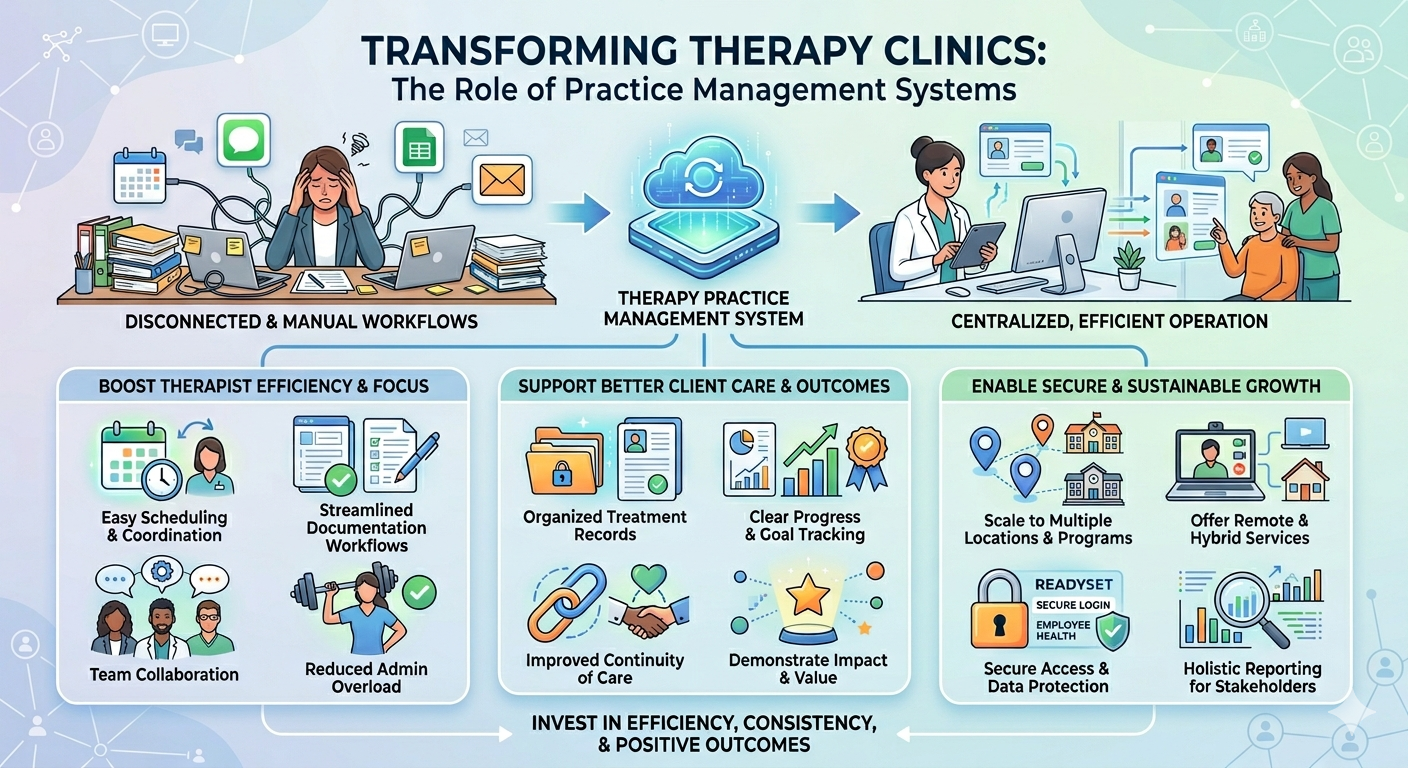
Running a therapy clinic involves far more than scheduling appointments and writing notes. Providers are balancing client care, documentation, communication, compliance, billing, team coordination, and long term outcomes all at once. As practices grow, relying on disconnected tools or manual processes can quickly slow everything down.
That is where a therapy practice management system becomes valuable. Whether you run a private clinic, support school based services, or provide care across multiple programs, the right system helps create a smoother experience for both your team and the people you serve. It also plays an important role in areas like occupational therapy in the workplace, where coordination, reporting, and progress visibility are essential.
A modern clinic needs more than software that simply stores information. It needs a system that supports better care delivery, reduces administrative burden, and helps teams stay organized without losing focus on the client.
What Is a Therapy Practice Management System?
A therapy practice management system is a digital platform designed to help therapy providers manage the daily operations of their practice. This often includes scheduling, documentation, secure communication, progress tracking, reporting, team workflows, and in some cases billing or administrative support.
For therapy clinics, this type of system becomes the operational foundation of the practice. Instead of moving between spreadsheets, email threads, paper files, and separate tools, everything can be managed in one place.
The result is simple. Less time spent on admin and more time spent on meaningful care.
Why Modern Clinics Need More Than Basic Scheduling Tools
A calendar alone cannot support the complexity of therapy services. Modern clinics often work with:
- Multiple therapists and disciplines
- Individualized treatment plans
- Ongoing goal tracking
- Parent, caregiver, or employer communication
- Compliance and secure record keeping
- Remote or hybrid service delivery
When these moving parts are handled manually, small inefficiencies begin to add up. Missed follow ups, duplicate documentation, inconsistent records, and communication gaps can affect both workflow and client experience.
A therapy practice management system helps bring structure to that complexity. It gives clinics a reliable process for managing care while keeping important information accessible and organized.
Better Organization Leads to Better Client Care
One of the biggest advantages of a strong management system is visibility. When therapists and administrators can quickly see schedules, treatment notes, progress updates, and client history, they are better equipped to make informed decisions.
This matters because therapy is rarely a one step process. Progress happens over time, and successful outcomes often depend on consistency, collaboration, and clear documentation.
With the right system in place, clinics can:
- Keep treatment records organized
- Review progress more efficiently
- Monitor goals across sessions
- Improve continuity of care
- Reduce the chance of missed details
This creates a better experience not only for the therapist, but also for the client and family.
Reducing Administrative Overload for Therapists
Therapists should not have to spend hours every week managing paperwork, chasing updates, or piecing together records from multiple sources. Administrative overload is one of the biggest challenges facing healthcare and therapy teams.
When providers are overwhelmed by systems that do not work well together, it can lead to frustration, delays, and even burnout.
A therapy practice management system helps reduce that burden by streamlining everyday tasks such as:
Scheduling and calendar coordination
A centralized schedule makes it easier to manage appointments, therapist availability, recurring sessions, and rescheduling.
Documentation workflows
Templates and structured note taking can help therapists complete records more efficiently while maintaining consistency.
Goal and progress tracking
Instead of searching through old notes, providers can monitor changes and outcomes in a more organized way.
Team collaboration
When multiple staff members support the same client, having a shared system improves communication and continuity.
The goal is not to replace the human side of care. It is to remove unnecessary friction so therapists can focus more on the work that matters most.
Supporting Growth Without Losing Efficiency
Many clinics start small and expand over time. Growth is exciting, but it can also expose gaps in workflow. What worked for a handful of clients may no longer work when your team is larger, your caseload is growing, or your services are expanding into schools, community programs, or employer partnerships.
A therapy practice management system makes growth more sustainable. It helps practices maintain quality and consistency even as operations become more complex.
This is especially important for clinics that want to:
- Add more providers
- Serve clients across multiple locations
- Offer remote therapy services
- Track outcomes across programs
- Improve reporting for stakeholders
Without the right systems in place, growth can create stress instead of momentum. A strong platform helps clinics scale with confidence.
Why Secure Access and Data Protection Matter
Therapy clinics handle sensitive client and organizational information every day. That includes personal details, health related records, progress reports, communication history, and service documentation.
Because of this, secure access is not optional. It is a core part of running a responsible and professional practice.
A well designed therapy management system should support secure workflows by making it easier for the right people to access the right information at the right time. This is especially relevant for organizations that prioritize staff wellness, protected records, and streamlined access through tools such as readyset secure login employee health.
Secure systems also help build trust. Clients, families, staff, and partner organizations want to know that information is handled carefully and professionally. When your processes are secure and organized, that trust becomes easier to maintain.
The Role of Practice Management in Outcome Tracking
Modern clinics are increasingly expected to show progress, outcomes, and value. Whether you are working with families, school systems, referral networks, or workplace programs, being able to demonstrate impact is important.
A therapy practice management system helps make that possible by centralizing progress data and making it easier to review outcomes over time.
This supports stronger decision making in areas such as:
- Goal completion
- Service effectiveness
- Session consistency
- Team performance
- Program reporting
For clinic owners and directors, this kind of visibility is incredibly useful. It helps you understand what is working, where improvements are needed, and how your services are making a difference.
Why It Matters for Workplace and Community Based Therapy Services
Therapy is no longer limited to a single clinical setting. More providers are supporting individuals in schools, community programs, hybrid environments, and workplace related care models.
That shift makes coordination even more important.
When therapy services extend into professional or organizational environments, communication and documentation need to remain clear and accessible. This is one reason digital systems are becoming so important in areas connected to workplace wellness and interdisciplinary support.
A strong management platform can help teams stay aligned, even when services happen across different locations or involve multiple stakeholders.
What Clinics Should Look for in a Practice Management System
Not every platform is built with therapy workflows in mind. Clinics should look for a solution that supports both clinical and operational needs in a practical, user friendly way.
Here are a few features worth prioritizing:
Easy scheduling and session management
A clean scheduling system saves time and reduces confusion for staff and clients.
Custom documentation tools
Therapists need workflows that match real clinical practice, not rigid templates that slow them down.
Progress and goal tracking
Being able to see client development over time is essential for quality care.
Secure access and communication
Privacy, compliance, and controlled access should be built into the system.
Reporting and visibility
Clinic leaders need insights that help them make better decisions and support growth.
The best system is not always the one with the most features. It is the one that helps your team work better every day.
A therapy clinic runs best when care delivery and operations support each other. If your team is constantly switching between tools, repeating tasks, or struggling to stay organized, it may be time to rethink the systems behind your workflow.
A therapy practice management system is more than a convenience. It is a practical investment in efficiency, consistency, security, and better client outcomes. It helps clinics reduce administrative strain, improve coordination, and create a stronger foundation for long term growth.
As therapy services continue to evolve across clinical, educational, and professional settings, the clinics that stay organized and adaptable will be best positioned to serve their communities well. That is especially true for teams navigating care models connected to occupational therapy in the workplace, where communication, structure, and progress tracking can make a meaningful difference.
FAQs
1. What does a therapy practice management system do?
A therapy practice management system helps clinics manage scheduling, documentation, progress tracking, secure communication, and daily operations in one place.
2. Why is practice management software important for therapy clinics?
It helps reduce administrative workload, improves organization, supports better client care, and makes it easier for clinics to grow without losing efficiency.
3. How do I choose the right therapy practice management system?
Look for a platform that is easy to use, supports therapy specific workflows, offers secure access, and helps your team manage both clinical and operational tasks effectively.
 English
Join our community to interact with posts!