
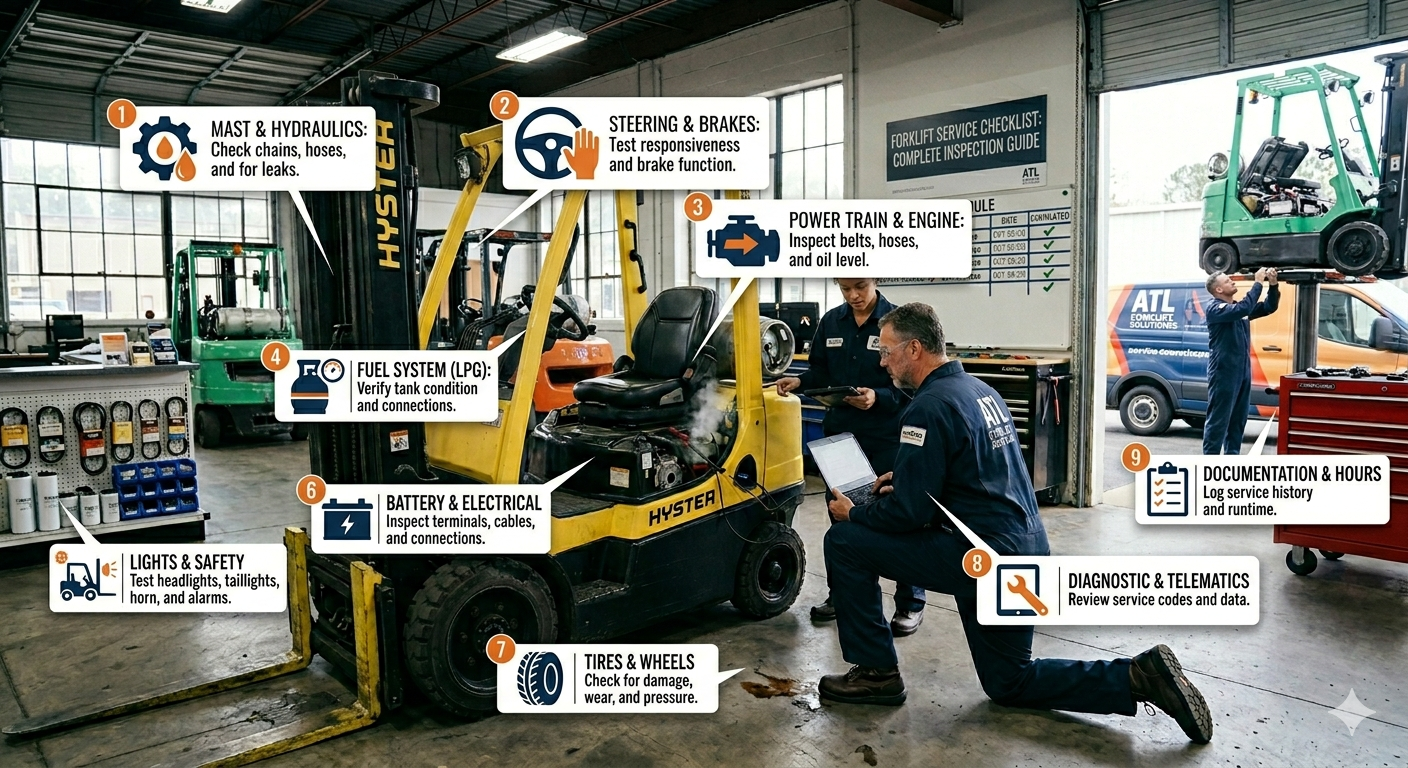
Warehouse operations depend heavily on forklifts to move inventory quickly, safely, and efficiently. From loading pallets to transporting heavy materials, forklifts are among the most frequently used machines in industrial environments. However, constant use can lead to wear and tear that affects performance and safety over time. This is why a proper fork lift service checklist is essential for every warehouse. Routine inspections help prevent breakdowns, improve equipment lifespan, and reduce workplace accidents before they happen.
Why Routine Forklift Inspections Matter
Forklifts operate in demanding conditions where small mechanical issues can quickly turn into major problems. A worn brake system, leaking hydraulics, or damaged tire may not seem serious at first, but these issues can lead to downtime, costly repairs, or safety hazards if ignored.
According to industry studies, businesses that follow preventive maintenance programs experience up to 40% fewer equipment failures than those relying only on reactive repairs. Regular inspections help identify issues early, allowing businesses to fix problems before operations are disrupted.
Safety is another critical reason for consistent maintenance. The Occupational Safety and Health Administration (OSHA) reports that forklift-related incidents contribute to thousands of workplace injuries annually. Routine fork lift service inspections help ensure that forklifts remain safe for operators and other warehouse employees.
By implementing a detailed forklift checklist, warehouses can improve productivity, reduce operational interruptions, and maintain compliance with workplace safety standards.
Essential Forklift Service Checklist Items
Every warehouse should follow a structured maintenance routine to keep forklifts operating at peak performance. The following areas are among the most important to inspect regularly.
Tires and Wheels
Forklift tires play a major role in stability and handling. Worn or damaged tires can reduce traction, increase stopping distance, and create tipping hazards when lifting heavy loads.
Warehouse teams should inspect for:
- Uneven tire wear
- Cracks or punctures
- Low tire pressure on pneumatic tires
- Loose wheel components
Replacing worn tires improves maneuverability and helps operators maintain better control in busy warehouse environments.
Brake System Inspection
Brakes are one of the most important safety systems on any forklift. Weak or unresponsive brakes increase the risk of collisions and workplace accidents.
A proper fork lift service inspection should include:
- Brake pedal responsiveness
- Brake fluid levels
- Parking brake functionality
- Signs of unusual noise or vibration
Regular brake maintenance ensures forklifts can stop safely, even when carrying heavy loads.
Hydraulic System Checks
Hydraulic systems control the lifting and lowering functions of forklifts. Leaks or pressure problems can reduce lifting power and compromise load stability.
Technicians should inspect:
- Hydraulic fluid levels
- Hoses and fittings for leaks
- Mast and lift cylinder performance
- Smooth lifting and lowering operation
Hydraulic issues should never be ignored, as they can create serious safety risks during operation.
Battery and Electrical Components
Electric forklifts rely heavily on battery performance for productivity. Poor battery maintenance can lead to reduced operating time and unexpected downtime.
Battery inspections should include:
- Proper charging cycles
- Corrosion on terminals
- Water levels in battery cells
- Damaged cables or connectors
For internal combustion forklifts, electrical inspections should also cover ignition systems, wiring, lights, and warning alarms.
Research suggests that proper battery care can improve electric forklift efficiency by up to 30%, helping warehouses reduce operational delays.
Additional Areas Every Warehouse Should Monitor
Beyond the main mechanical systems, several other forklift components should be inspected regularly to maintain safety and performance.
Steering and Controls
Operators should check steering responsiveness and ensure all controls function smoothly. Difficulty steering or delayed control response may indicate mechanical problems that require immediate attention.
Forks and Mast Condition
Damaged forks or mast components can compromise load handling and create safety hazards. Warehouses should inspect for cracks, bends, or signs of structural wear.
Safety Features and Warning Systems
Modern forklifts often include alarms, lights, backup cameras, and operator warning systems. These features should be tested regularly to ensure proper functionality.
Fluid Levels and Engine Performance
For fuel-powered forklifts, regular inspection of oil, coolant, and transmission fluid levels helps maintain reliable performance and prevent overheating.
The Long-Term Benefits of Preventive Maintenance
A consistent fork lift service program offers more than just equipment reliability. Preventive maintenance helps businesses reduce repair costs, extend forklift lifespan, and improve workplace productivity.
Well-maintained forklifts consume less fuel, operate more efficiently, and experience fewer breakdowns. This helps warehouses avoid costly delays and maintain smoother daily operations.
Preventive maintenance also improves employee confidence. Operators are more productive when they know their equipment is dependable and safe to use.
Technology is further improving maintenance efficiency. Many modern forklifts now include telematics systems that monitor equipment performance in real time and provide alerts when service is needed. These systems help warehouses schedule maintenance proactively and avoid unexpected downtime.
Final Thoughts
A detailed forklift inspection checklist is essential for maintaining safe and productive warehouse operations. Regular fork lift service inspections help identify problems early, reduce downtime, and improve equipment performance over time.
By monitoring critical systems such as brakes, hydraulics, tires, batteries, and safety features, warehouses can protect both employees and equipment while improving operational efficiency. Investing in preventive maintenance today helps businesses avoid costly repairs tomorrow and ensures forklifts remain reliable assets for long-term success.
 English
Join our community to interact with posts!