
The frontline workforce is the backbone of industries such as manufacturing, healthcare, logistics, energy, and field services. These employees perform critical operational tasks that directly impact productivity, safety, customer satisfaction, and business performance. Yet, despite their importance, frontline workers have historically been underserved by enterprise technology. Today, however, digital transformation initiatives are reshaping how organizations support and empower these workers, making the Connected Frontline Workforce Platform Market one of the most dynamic and rapidly evolving technology segments worldwide.
As businesses face increasing pressure to improve efficiency, ensure workforce safety, and adapt to changing operational demands, connected workforce technologies have emerged as essential tools for modern enterprises. The rise of mobile devices, wearable technologies, Industrial Internet of Things (IIoT) solutions, artificial intelligence, and cloud-based platforms is enabling organizations to digitize frontline operations, improve communication, and create more agile work environments. These developments are fundamentally transforming how frontline employees access information, collaborate with experts, and execute daily tasks.
QKS Group’s research on the Connected Frontline Workforce Platform Market provides a comprehensive assessment of emerging technology trends, competitive developments, and future growth opportunities. The study offers strategic guidance for technology providers seeking to expand their market presence and for enterprises evaluating workforce solutions that can enhance operational performance and workforce engagement.
Connected Frontline Workforce (CFW) platforms are designed to bridge the gap between frontline employees and enterprise systems. These platforms combine mobile applications, wearable devices, digital workflows, remote collaboration tools, and AI-powered analytics into an integrated ecosystem that enables real-time communication and decision-making. By connecting workers with critical operational information, organizations can improve productivity, streamline processes, and ensure consistent execution across distributed operations.
One of the primary drivers behind market growth is the accelerating need for workforce digitization. Many organizations continue to rely on paper-based processes, manual reporting, and disconnected communication methods that create inefficiencies and increase the risk of errors. Connected workforce platforms eliminate these limitations by digitizing workflows, automating routine tasks, and enabling instant access to operational data. As organizations pursue greater agility and efficiency, investment in workforce digitization initiatives continues to increase.
Another key trend shaping the market is the growing adoption of mobile-first technologies. Frontline workers often operate in environments where access to traditional desktop systems is limited. Mobile platforms provide employees with real-time access to work instructions, maintenance procedures, safety protocols, and performance data directly from smartphones or tablets. This capability enables faster decision-making, reduces delays, and improves overall operational effectiveness.
Artificial intelligence is also playing an increasingly important role within the Connected Frontline Workforce Platform Market. AI-powered capabilities help organizations optimize workforce performance through intelligent task recommendations, predictive insights, automated reporting, and personalized learning experiences. AI can identify patterns in operational data, anticipate potential issues, and provide actionable guidance that enables workers to resolve problems more efficiently. As AI technologies continue to advance, their integration into connected workforce platforms is expected to become a major competitive differentiator.
The emergence of wearable technologies and hands-free solutions is further transforming frontline operations. Smart glasses, voice-enabled devices, and augmented reality applications allow workers to access information without interrupting their tasks. These technologies are particularly valuable in industrial environments where employees need immediate access to instructions, troubleshooting support, or safety information while maintaining focus on operational activities. Hands-free technologies improve productivity while enhancing workplace safety and compliance.
Remote expert assistance has become another critical capability driving market adoption. Organizations increasingly require mechanisms to support geographically dispersed teams and address workforce skill shortages. Connected workforce platforms enable frontline employees to collaborate with remote experts through video communication, augmented reality annotations, and digital knowledge-sharing tools. This functionality reduces downtime, accelerates issue resolution, and enhances workforce effectiveness.
Enterprise integration is also becoming a key requirement for modern connected workforce solutions. Organizations seek platforms that seamlessly integrate with enterprise resource planning (ERP), manufacturing execution systems (MES), asset management applications, and other operational technologies. Integration enables the flow of real-time data across systems, ensuring that frontline workers have access to accurate and up-to-date information while supporting enterprise-wide visibility and coordination.
Despite strong growth opportunities, the market faces several challenges. Workforce readiness remains a concern as organizations introduce new digital tools and technologies. Effective training and change management strategies are essential to ensure successful adoption and maximize return on investment. Data privacy, cybersecurity risks, and integration complexities also require careful consideration as organizations expand their digital workforce ecosystems.
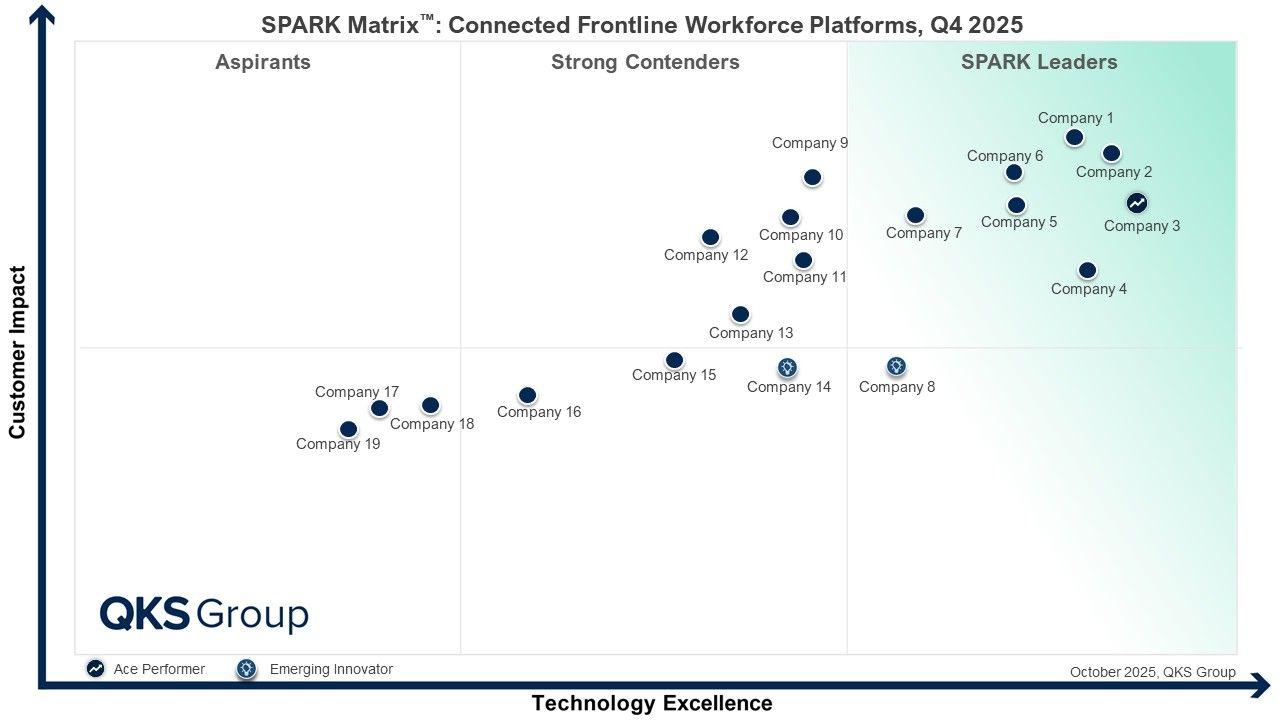
To help organizations navigate this evolving landscape, QKS Group’s research incorporates its proprietary SPARK Matrix™ analysis framework. The SPARK Matrix™ evaluates leading vendors based on technology excellence and customer impact, enabling enterprises to assess competitive differentiation and make informed investment decisions.
The study includes detailed analysis of prominent vendors such as Aatmunn, augment IT, Axonify, Beekeeper, CAI Software, Dozuki, Honeywell, Innovapptive, L2L, Librestream, Poka, QAD, SafetyCulture, SymphonyAI, TeamViewer, Tulip Interfaces, Webalo, Workerbase, and Zaptic. These companies are driving innovation through advancements in AI-enabled workflows, digital work instructions, mobile collaboration, remote assistance, and enterprise integration capabilities.
Competition within the Connected Frontline Workforce Platform Market continues to intensify as vendors focus on enhancing user experiences, expanding platform functionality, and delivering measurable business outcomes. Organizations increasingly demand solutions that not only improve productivity but also strengthen workforce engagement, safety, and operational resilience. Vendors that successfully combine mobility, AI, automation, and seamless integration are well positioned to capture market share in this growing industry.
Looking ahead, the market is expected to experience significant expansion as organizations accelerate digital transformation initiatives and embrace Industry 4.0 strategies. The growing importance of operational agility, workforce empowerment, and data-driven decision-making will continue to drive adoption across industries. As connected workforce technologies become more sophisticated, organizations will gain new opportunities to improve efficiency, enhance safety, and unlock the full potential of their frontline employees.
In an increasingly digital world, connected workforce platforms are becoming essential tools for building smarter, safer, and more productive operations. QKS Group’s SPARK Matrix™ research provides valuable insights into market trends, vendor capabilities, and technology innovations shaping the future of frontline work.
 English
Join our community to interact with posts!