
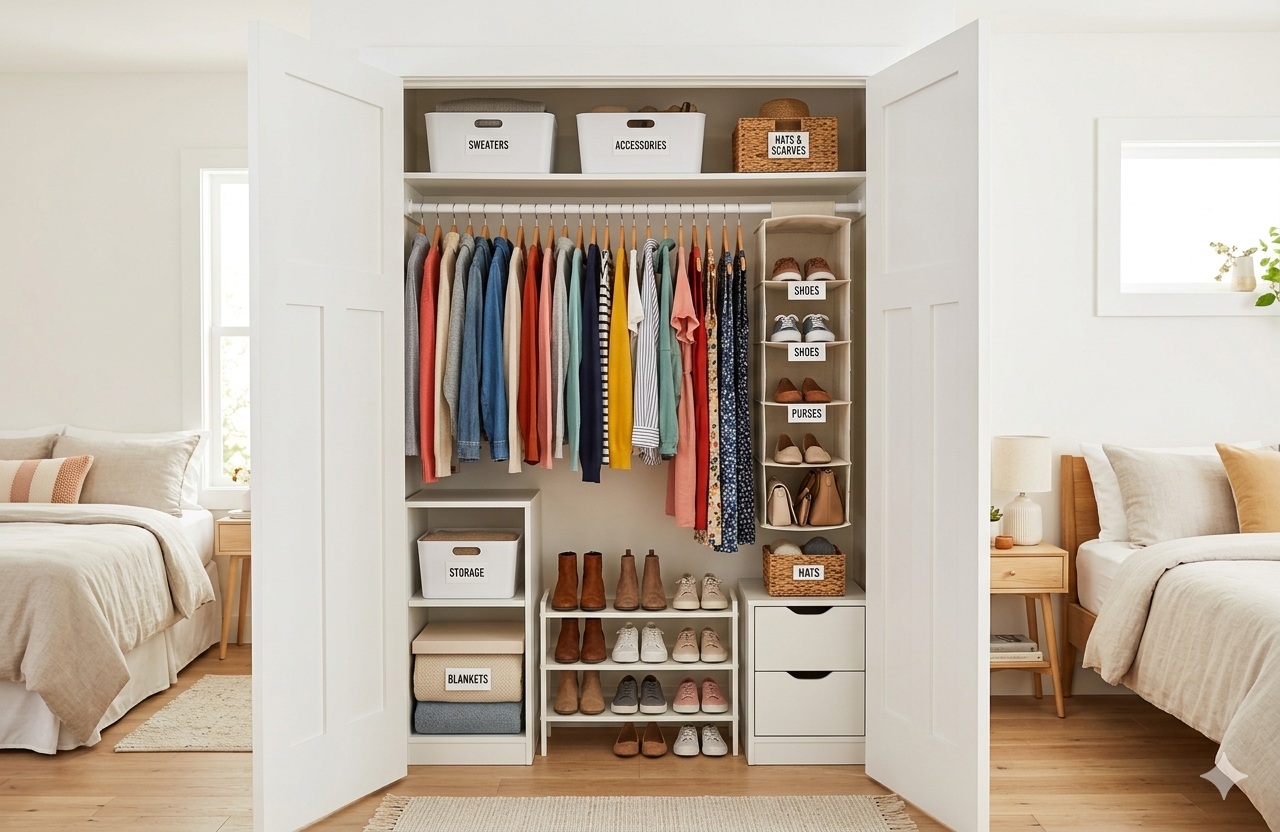
A small closet can easily become cluttered, messy, and frustrating to manage. When space is limited, even organizing a few clothes, shoes, or accessories can feel overwhelming. However, with the right small closet organization strategies, you can transform even the tiniest closet into a highly functional and visually appealing storage space.
The key is not having more space, but using the space you already have more efficiently. From smart folding techniques to clever storage tools, small changes can make a big difference. This article explores practical, easy-to-apply ideas that will help you maximize every inch of your closet while keeping everything neat and accessible.
Understanding the Challenge of a Small Closet
Small closets often fail not because of their size but because of poor organization. Most people unknowingly waste valuable space by:
- Hanging clothes inefficiently
- Not using vertical storage
- Keeping unused or seasonal items in daily space
- Ignoring small hidden areas like doors or corners
When these issues combine, even a moderately sized closet can feel cramped. The goal of small closet organization is to eliminate wasted space and create a system where everything has a clear place.
Step 1: Declutter Before You Organize
Before adding any storage solutions, the first and most important step is decluttering. No organization system works if the closet is filled with unnecessary items.
What to Remove:
- Clothes you haven’t worn in over a year
- Items that no longer fit
- Damaged or worn-out clothing
- Duplicate or unnecessary accessories
Practical Tip:
Use the “three-pile method”:
- Keep
- Donate
- Discard
This simple approach instantly frees up space and makes organizing much easier. A clean starting point is essential for effective small closet organization.
Step 2: Use Vertical Space Efficiently
One of the most overlooked areas in a small closet is vertical space. Most people only use eye-level storage, leaving valuable room unused above and below.
How to Use Vertical Space:
- Add extra shelves above hanging rods
- Install stackable storage bins
- Use hanging organizers for shoes or accessories
- Add hooks on the inside walls
By extending storage upward, you significantly increase capacity without expanding the closet footprint.
Example:
Instead of stacking sweaters on a single shelf, use multiple shelves or fabric bins stacked vertically. This keeps items neat and prevents collapsing piles.
Step 3: Invest in Slim and Multi-Functional Hangers
Hangers play a bigger role in small closet organization than most people realize. Bulky hangers take up unnecessary space and reduce capacity.
Best Choices:
- Slim velvet hangers for clothes
- Cascading hangers for layering items
- Multi-tier hangers for pants or skirts
Benefits:
- Saves up to 30–40% more hanging space
- Keeps clothes aligned and wrinkle-free
- Creates a uniform, visually clean look
Switching hangers alone can dramatically improve how much your closet can hold.
Step 4: Optimize Folding Techniques
Not everything should be hung. In fact, folding clothes properly can double your storage efficiency.
Best Folding Methods:
- Vertical folding (Marie Kondo style)
- Rolling clothes for drawers or bins
- File folding for easy visibility
What to Fold Instead of Hang:
- T-shirts
- Jeans
- Sweaters
- Gym wear
Folding clothes vertically allows you to see everything at once, reducing the chance of forgetting items buried at the bottom of stacks.
Step 5: Use Storage Boxes and Bins Wisely
Storage bins are essential tools for small closet organization. However, using the wrong type or too many can create clutter instead of solving it.
Smart Usage Tips:
- Use clear bins for visibility
- Label each container clearly
- Choose stackable designs
- Group similar items together
Ideal Categories:
- Seasonal clothing
- Accessories (belts, scarves, hats)
- Extra bedding or linens
Bins help create structure, making your closet look organized even when it’s full.
Step 6: Maximize Door Space
Closet doors are often ignored, but they offer valuable storage opportunities.
Door Organization Ideas:
- Over-the-door shoe racks
- Hanging pockets for accessories
- Hooks for bags or belts
- Small mirrors with storage compartments
This method is especially useful for extremely small closets where every inch matters.
Step 7: Create Zones for Better Structure
A well-organized closet should function like a system, not a random collection of items.
Suggested Zones:
- Daily wear section
- Work or formal clothes
- Seasonal storage
- Accessories section
- Shoes and footwear
When everything has a defined zone, it becomes easier to maintain order. You will spend less time searching and more time using your items efficiently.
Step 8: Use Lighting to Improve Visibility
Lighting is often overlooked in small closet organization, but it plays a crucial role in usability.
Lighting Options:
- Stick-on LED lights
- Motion sensor lights
- Battery-powered strip lights
Good lighting helps you:
- Quickly find items
- Keep the space visually clean
- Avoid overstuffing because everything is visible
A bright closet naturally encourages better organization habits.
Step 9: Rotate Seasonal Clothing
One of the best ways to save space in a small closet is by rotating clothes based on seasons.
How It Works:
- Store off-season clothes in bins or under-bed storage
- Keep only current-season clothing in the closet
- Rotate every 3–6 months
Benefits:
- Frees up hanging and folding space
- Keeps your closet relevant and manageable
- Reduces visual clutter
This simple habit significantly improves long-term organization.
Step 10: Maintain Your Closet Regularly
Organization is not a one-time task. Without maintenance, even the best system breaks down over time.
Maintenance Tips:
- Do a quick weekly tidy-up
- Re-fold or re-hang misplaced items
- Reassess unused clothing every few months
- Avoid overbuying new items
Consistency is the key to keeping your small closet organized in the long run.
Common Mistakes to Avoid
Even with good intentions, many people make mistakes that reduce efficiency.
Avoid These Errors:
- Overstuffing hanging rods
- Ignoring vertical space
- Mixing too many unrelated items
- Using oversized storage boxes
- Not labeling containers
Avoiding these mistakes will help your system stay functional and visually clean.
Benefits of a Well-Organized Small Closet
A properly organized closet is not just about appearance—it improves your daily life in several ways:
- Saves time when getting dressed
- Reduces stress and frustration
- Makes cleaning easier
- Helps you track your wardrobe better
- Encourages mindful shopping habits
A small closet organization system ultimately leads to a more efficient and peaceful lifestyle.
Conclusion
Small closets don’t have to feel limiting. With smart planning, decluttering, and the right storage techniques, even the smallest space can become highly functional. The goal of small closet organization is to maximize every inch while keeping your belongings accessible and neatly arranged.
By using vertical space, improving folding methods, choosing smart hangers, and maintaining a regular organization routine, you can completely transform your closet. It’s not about the size of your storage—it’s about how intelligently you use it.
Start small, stay consistent, and your closet will become one of the most organized spaces in your home.
 English
Join our community to interact with posts!