
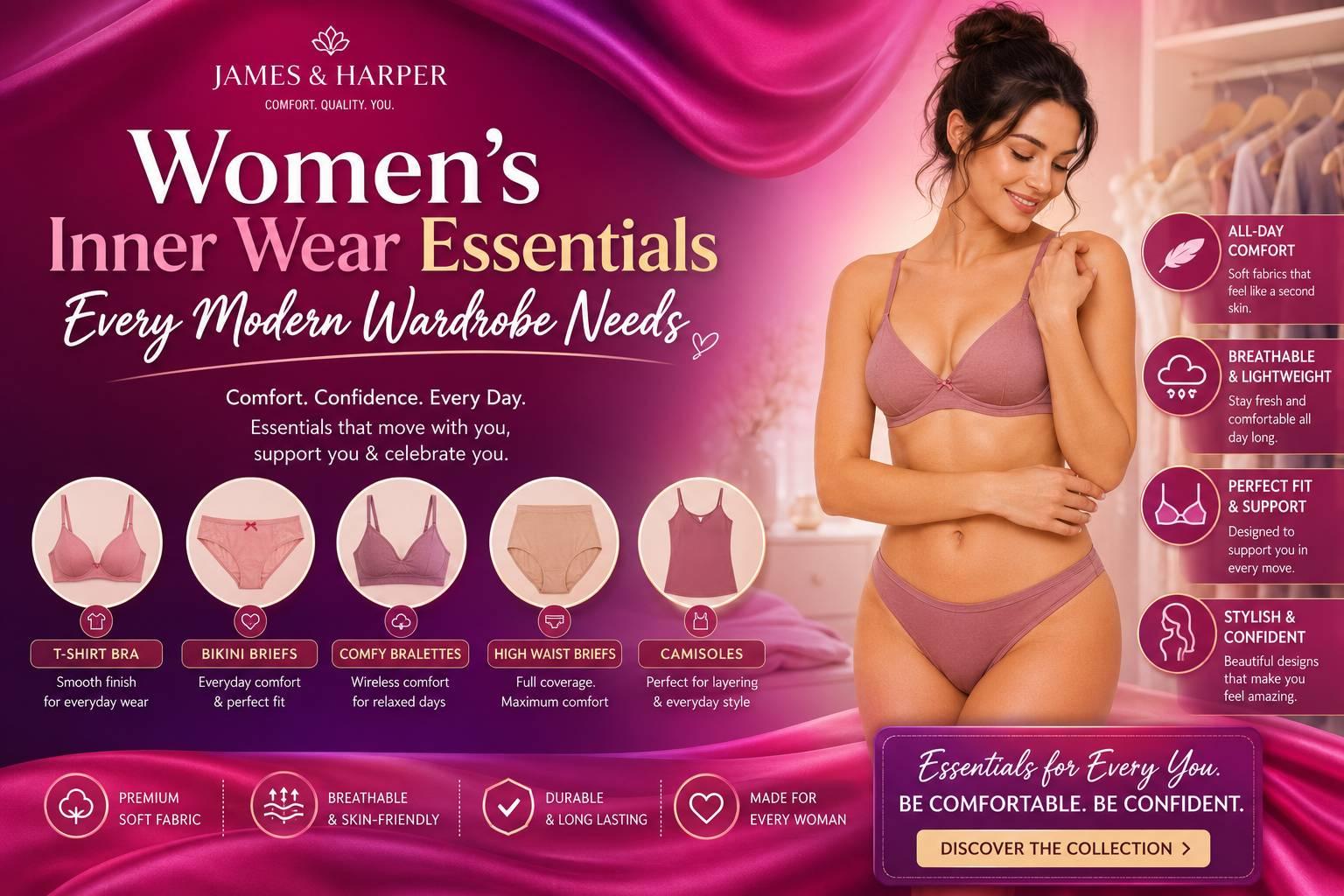
Have you ever worn a perfectly good outfit and still felt uncomfortable by noon? In many cases, the issue starts underneath the outfit, not with the outfit itself. Women's innerwear shapes comfort, ease of movement, layering, and even how clothing falls during a long day.
A modern wardrobe needs dependable basics before it needs more clothes. That means softer fabrics, better fits, clean finishes, and pieces that work through work hours, commutes, travel, and quiet time at home. Small choices at this level change daily wear more than most people expect.
Why Fabric And Fit Change Daily Comfort
Most people shop by appearance first and regret it later. Fabric and fit decide whether innerwear feels stable for ten hours or starts bothering the skin after two. In good Women's innerwear, cotton still does the heavy lifting because it breathes well, feels lighter on the skin, and usually holds up better for regular use than flashy fabric blends.
Fit needs the same level of attention. A waistband should stay in place without pressing too hard. Leg openings should not pull. Seams should not leave marks by the end of the day. James & Harper has built much of its appeal around that daily-use standard, which explains why comfort stays central across its product range. The difference sounds basic, but basic done well is hard to replace.
Wardrobe Basics That Earn Their Place
Buying randomly creates a drawer full of pieces that never really work. A better approach is to build around function. The most useful Women's innerwear styles usually cover daily wear, layering, smoother silhouettes, and seasonal use without making the wardrobe feel oversized or repetitive.
| Essential | Where It Works Best | What To Check Before Buying |
| Cotton Briefs | Daily wear | Breathability, soft elastic, shape retention |
| Full-Coverage Panties | Office hours, long days | Stable fit, no ride-up, gentle seams |
| Bikini Cuts | Lower-rise outfits | Flexible stretch, smooth edges |
| Camisoles | Layering under shirts and knits | Light fabric, easy movement, neat finish |
| Seamless Options | Fitted dresses or pants | Flat edges, low show-through |
| Thermal Base Layers | Travel and colder months | Warmth without heaviness, soft inner surface |
This kind of selection keeps the wardrobe practical. It also reduces the habit of replacing poor-quality basics every few months. In a category where comfort decides repeat purchases, durability and skin feel are not minor details.
Smart Signs You Need To Replace Old Innerwear
People often keep worn pairs far longer than they should. That usually leads to discomfort first and poor fit later. Better women's innerwear should still be replaced when it stops doing its job.
-
Waistbands start twisting, folding, or digging into the skin.
-
Fabric feels rougher after wash cycles.
-
Coverage shifts while walking or sitting.
-
Seams begin to show under outerwear.
-
Elastic loses recovery, and the fit turns loose.
-
Layering pieces stop sitting flat under shirts or sweaters.
These signs are easy to miss because they build slowly. Once they appear, the wardrobe starts working against the person wearing it. James & Harper addresses this problem well because the brand leans into breathable fabrics, softer finishes, and practical fits instead of pushing style without function.
Where Women's Thermal Fits In A Modern Wardrobe
Cold-weather basics often receive less attention than summer essentials, but that leaves a gap in the wardrobe. Women's thermal pieces help manage temperature without forcing bulky layers under daily clothing. That makes them useful for winter dressing, long flights, colder offices, and changing weather during travel.
The better women's thermal options stay close to the body, hold warmth, and still allow easy movement. They should not feel stiff, scratchy, or overly thick. When chosen well, thermal layers support shirts, knitwear, dresses, and workwear without changing the shape of the outfit. That is why they belong in the same planning process as briefs, camisoles, and seamless basics. They are not seasonal extras. They are functional wardrobe pieces.
Conclusion
A strong wardrobe rarely starts with statement pieces. It starts with fabric that feels right, fits that stay steady, and basics that perform without constant adjustment. Anyone reviewing comfort, coverage, layering, and wear life with more care will make better long-term choices in women's innerwear.
That approach also reduces wasteful buying and cuts down on items that stay unused in the drawer. Over time, better basics support better dressing habits because each layer works the way it should. In most wardrobes, the most useful pieces are not the loudest ones. They are the ones worn often, washed often, and trusted without a second thought.
 English
Join our community to interact with posts!