
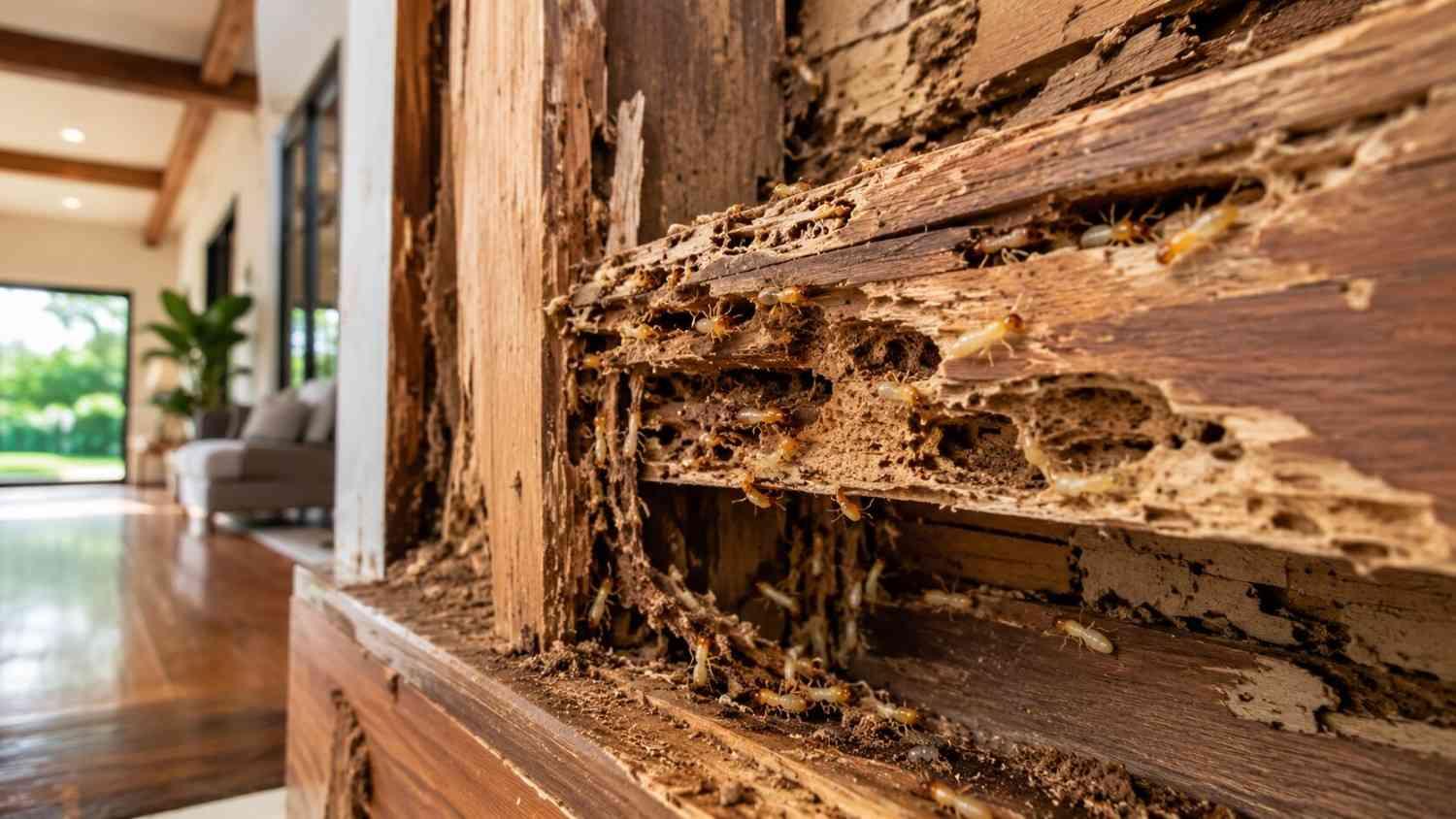
There are parts of the world where termite activity is seasonal, predictable, and manageable. Then there are environments where heat and humidity combine to create year-round conditions that termites do not just tolerate — they thrive in. If you live in a warm, humid region, your home is operating inside a climate that works in the termite's favor every single day of the year.
That is not an exaggeration. It is the biological reality of how termites operate and why termite control in warm, humid climates is not a seasonal concern but a permanent one. Understanding the relationship between your local climate and termite behavior is the first step toward protecting your home before the damage becomes visible — and expensive.
This article breaks down exactly how heat and humidity fuel termite activity, what is happening inside your home as a result, and what genuine professional treatment looks like when it is done correctly.
Heat — The Engine That Drives Termite Activity
Temperature is the single most important environmental factor in termite biology. Termites are cold-blooded insects, which means their body temperature and metabolic rate are directly controlled by the environment around them. In cold climates, termite colonies slow down significantly during winter months. In warm climates, that slowdown never comes.
What Warmth Does to a Termite Colony
• Accelerated reproduction — queen termites produce eggs at a rate directly proportional to temperature; in warm conditions a mature queen can lay thousands of eggs per day, continuously, without the seasonal pause that colder climates impose
• Year-round foraging — worker termites never stop searching for food when temperatures remain favorable; there is no dormant period, no winter break, no slowdown in the consumption of your home's structural timber
• Faster colony maturation — colonies in warm environments reach reproductive maturity faster, meaning they begin producing swarmers — the winged termites that establish new colonies — sooner and more frequently than in cooler regions
• Deeper soil penetration — warm soil temperatures allow subterranean termite colonies to establish deeper, more extensive tunnel networks that are harder to detect and treat comprehensively
In a warm climate, a termite colony operates at full capacity every month of the year. There is no cold snap to slow the damage, no frost to disrupt the foraging network, and no seasonal cue to interrupt reproduction. The colony simply grows, spreads, and consumes — continuously.
Humidity — The Fuel That Keeps Termites Alive
If heat is the engine of termite activity, humidity is the fuel. Subterranean termites — the species responsible for the vast majority of structural termite damage worldwide — cannot survive without consistent moisture. Their bodies desiccate rapidly in dry conditions, which is why they build sealed mud tubes when traveling above ground and why they gravitate toward the dampest areas of any structure they infest.
How Humidity Creates Ideal Termite Conditions
• Soil moisture — consistently damp soil allows subterranean termite colonies to maintain the moisture levels they need at the nest level while extending foraging tunnels across large distances through the earth beneath your home
• Condensation in wall cavities — high outdoor humidity combined with air-conditioned interiors creates condensation on pipes and structural surfaces inside walls, providing termites with water sources deep within the structure
• Wood moisture content — timber with elevated moisture content is significantly easier for termites to digest and colonize; humid conditions keep wood moisture levels perpetually elevated in ways that accelerate termite feeding activity
• Crawl space conditions — enclosed crawl spaces beneath homes in humid climates trap moisture against timber floor framing, creating precisely the damp, dark, undisturbed environment that subterranean termites seek when establishing new feeding sites
Humidity does not just support termite survival. It actively improves the conditions under which they feed, breed, and spread. A home in a high-humidity environment is a structurally superior habitat for termites compared to one in a drier climate, and that advantage compounds every year the colony goes undetected.
What the Combination of Heat and Humidity Means for Your Home
When heat and humidity work together, they do not simply add their individual effects. They multiply them. Warm temperatures accelerate every biological process in the termite colony. High humidity ensures those accelerated processes are never interrupted by moisture stress. The result is a colony that grows faster, forages more aggressively, and causes damage at a pace that homeowners in cooler, drier climates rarely experience.
The Specific Risks to Your Property
• Accelerated structural damage — timber that might take five years to show significant termite damage in a cooler climate can be substantially compromised in two to three years in a warm, humid environment
• Extended swarming season — termite swarms — the event during which colonies send out winged reproductives to establish new colonies — occur more frequently and across a longer period of the year in warm climates, increasing the rate at which new infestations establish
• Multiple species activity — warm, humid regions often support both subterranean and drywood termite species simultaneously, meaning a home may face two distinct types of infestation requiring different treatment approaches at the same time
• Faster colony recovery — a termite colony that is partially disrupted by inadequate treatment recovers more quickly in favorable conditions, meaning incomplete treatments fail faster in warm climates than they would elsewhere
The Signs That Heat and Humidity Have Already Given Termites the Advantage
Because warm, humid conditions accelerate termite activity, the damage that accumulates before detection is often more extensive than homeowners in other regions would expect. Knowing what to look for and acting immediately when any sign appears is critical:
• Mud tubes on foundation walls — sealed tunnels of compacted soil running up exterior or interior foundation surfaces, used by subterranean termites to travel between soil and timber while maintaining the humidity they need
• Hollow-sounding timber — tapping wooden surfaces and hearing a papery, hollow sound indicates that the interior has been consumed while the outer face remains intact
• Blistered or bubbling paint — moisture from termite activity or damage beneath a painted surface causes paint to bubble in patterns similar to water damage
• Discarded wings near entry points — swarmers shed their wings after landing to establish new colonies; piles of small translucent wings near windowsills, door frames, or vents signal active swarming nearby
• Sagging floors or ceilings — structural timber that has been sufficiently weakened begins to flex under load, creating visible deflection in floors and ceilings that were previously level
Each of these signs represents damage that has been developing for a significant period. In a warm, humid climate, the colony behind that damage is almost certainly larger and more established than a surface inspection would suggest.
Why Standard DIY Approaches Fail in High-Activity Climates
Consumer termite products are designed for general use across all climate types. In warm, humid regions where termite activity is year-round and colony growth is accelerated, these products face a fundamental disadvantage: the colony replenishes and recovers faster than a surface-level treatment can suppress it.
The Specific Gaps in Consumer Products
• No soil treatment depth — consumer products cannot penetrate to the depth at which subterranean termite colonies establish their nests in warm soil conditions, leaving the reproductive core of the colony completely untouched
• No humidity mitigation — DIY treatments address termites but do nothing to modify the moisture conditions that attracted them and continue to support the colony's recovery after treatment
• No structural assessment — consumer products come with no evaluation of the structural damage already done, meaning homeowners have no way of knowing the true extent of the problem they are treating
• Faster resistance development — in high-activity climates where colonies are larger and more genetically diverse, resistance to consumer-grade treatment chemicals can develop more rapidly than in smaller, slower-growing colonies
What Professional Termite Control Delivers That Climate Demands
Climate-Informed Inspection
A professional termite inspection in a warm, humid region is not the same as one conducted in a cooler, drier environment. The inspector understands which areas of the property are most vulnerable given the local climate — crawl spaces, soil contact points, areas of condensation buildup, and timber with elevated moisture content all receive focused attention.
Treatment Designed for Year-Round Activity
Professional termite treatment in high-activity climates uses soil treatment barriers, baiting systems, and timber treatments that are specifically selected and applied to address year-round colony activity rather than seasonal threats. The goal is not to reduce termite presence temporarily — it is to eliminate the colony and create conditions under which re-establishment is prevented.
Moisture and Exclusion Recommendations
Because humidity is as much a driver of termite activity as the termites themselves, professional pest control services include specific recommendations for reducing moisture conditions around and beneath the home. Improved crawl space ventilation, drainage correction, plumbing leak repair, and soil grading adjustments are all part of a complete treatment plan that addresses the climate factors driving the infestation, not just the infestation itself.
Ongoing Monitoring
In climates where termite pressure is year-round, a single treatment visit is not sufficient. Annual inspections and monitoring bait systems provide continuous protection, catching any new activity before it develops into a second infestation and giving homeowners documented confidence that their property remains protected.
The Longer You Wait the More the Climate Works Against You
In a temperate climate, delaying termite treatment for six months might mean six months of slowed, seasonal activity. In a warm, humid climate, six months of delay is six months of accelerated, year-round colony growth, feeding, and structural damage with no interruption.
The math of delay is always unfavorable. But in high-activity climates, it is especially so. Every week without professional treatment is a week the colony expands into new timber, the structural damage deepens, and the eventual repair bill grows.
Heat and humidity are not going away. The termites that thrive in them are not going to move on. The only variable in this equation is when you decide to act — and acting earlier is always the decision that costs less, damages less, and resolves the problem more completely.
 English
Join our community to interact with posts!