
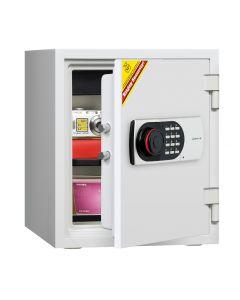
Here's an uncomfortable truth: most Australians only think about buying a safe after something's already gone wrong. A break-in, a house fire, a lost passport during peak travel season — these are the moments that turn "I should probably get a safe" into "I really need one, today."
But here's the good news: you don't have to wait for a wake-up call. Whether you're protecting family heirlooms, important documents, cash, or business assets, a good safe is one of the simplest, most cost-effective investments you can make for peace of mind.
Let's break down what you actually need to know before buying one.
Why Safes Matter More Than You Think
Australia isn't immune to home burglaries, and opportunistic theft remains one of the most common property crimes across the country. But safes aren't just about deterring thieves — they're about protecting what insurance can't always replace.
Think about it:
- Sentimental items like family jewellery or heirlooms have no real "replacement value"
- Important documents — passports, property deeds, wills — can take months to reissue if lost
- Fire and water damage destroy far more valuables each year than burglaries do
- Business owners often need secure, compliant storage for cash, data, or firearms
A safe isn't just a box. It's a buffer between your valuables and everyday disaster.
Not All Safes Are Created Equal
One of the biggest mistakes people make is assuming "a safe is a safe." In reality, safes are built for very different purposes, and choosing the wrong one means you're paying for protection you don't actually have.
Fire Safes vs. Burglary Safes
Fire safes are designed to keep contents intact during extreme heat, but they're not necessarily built to resist forced entry. Burglary safes, on the other hand, are constructed with reinforced steel and complex locking mechanisms to resist drilling, prying, and brute force — but they may offer little fire protection.
If you want genuine all-round protection, look for a safe rated for both fire resistance and burglary protection. Yes, it costs more upfront. But replacing irreplaceable items costs a lot more.
Home Safes vs. Commercial Safes
Home safes are typically smaller, designed to blend into a wardrobe, floor, or wall cavity. Commercial safes — used by retailers, pharmacies, and offices — are built for higher-value or higher-volume storage, often with compliance requirements attached (particularly for cash handling or firearms storage under Australian state regulations).
Gun Safes
Speaking of firearms — if you're a licensed gun owner in Australia, storage isn't optional. Each state and territory has specific legal requirements for firearm storage, and non-compliant storage can jeopardise your licence. A purpose-built gun safe isn't just a good idea; it's usually the law.
What to Actually Look for Before You Buy
When comparing safes, don't just look at price. Pay attention to:
- Locking mechanism — Electronic keypad, biometric, or traditional key/combination lock. Each has trade-offs in convenience versus security.
- Fire rating — Look for a stated fire rating (in minutes/hours at a specific temperature), not just a vague "fireproof" label.
- Anchor points — A safe that isn't bolted down can simply be carried away. Look for pre-drilled anchor holes.
- Steel thickness and construction — Thicker steel and multi-point locking bolts significantly increase resistance to forced entry.
- Certification — Independent testing certifications (like those used in the Australian security industry) give you confidence the safe performs as advertised, not just as marketed.
Where Should You Put It?
Even the best safe loses value if it's obvious. Skip the "safe in the wardrobe behind the coat rack" cliché — burglars know all the hiding spots too. Consider:
- Anchoring it to a concrete floor or internal wall
- Choosing a low-visibility location, not a display piece
- Keeping it away from areas prone to flooding if fire protection is a bigger priority than burglary protection
For businesses, positioning matters even more — safes should be easily accessible to authorised staff but out of sight from customers or public areas.
A Safe Is an Investment, Not an Expense
It's tempting to see a safe as a "nice to have." But when you weigh the cost of a quality safe against the value of what it protects — financial documents, family jewellery, business cash flow, legal compliance — the investment quickly justifies itself.
And unlike a lot of home security measures, a good safe doesn't need software updates, subscriptions, or maintenance contracts. Buy once, install it properly, and it protects your valuables for decades.
Ready to Protect What Matters?
Whether you're safeguarding your family's most valuable possessions or securing your business's daily operations, the right safe makes all the difference — and the wrong one can give you a false sense of security.
Browse our range of certified, Australian-compliant safes at Safes Australia and find the right fit for your home or business today.
 English
Join our community to interact with posts!