
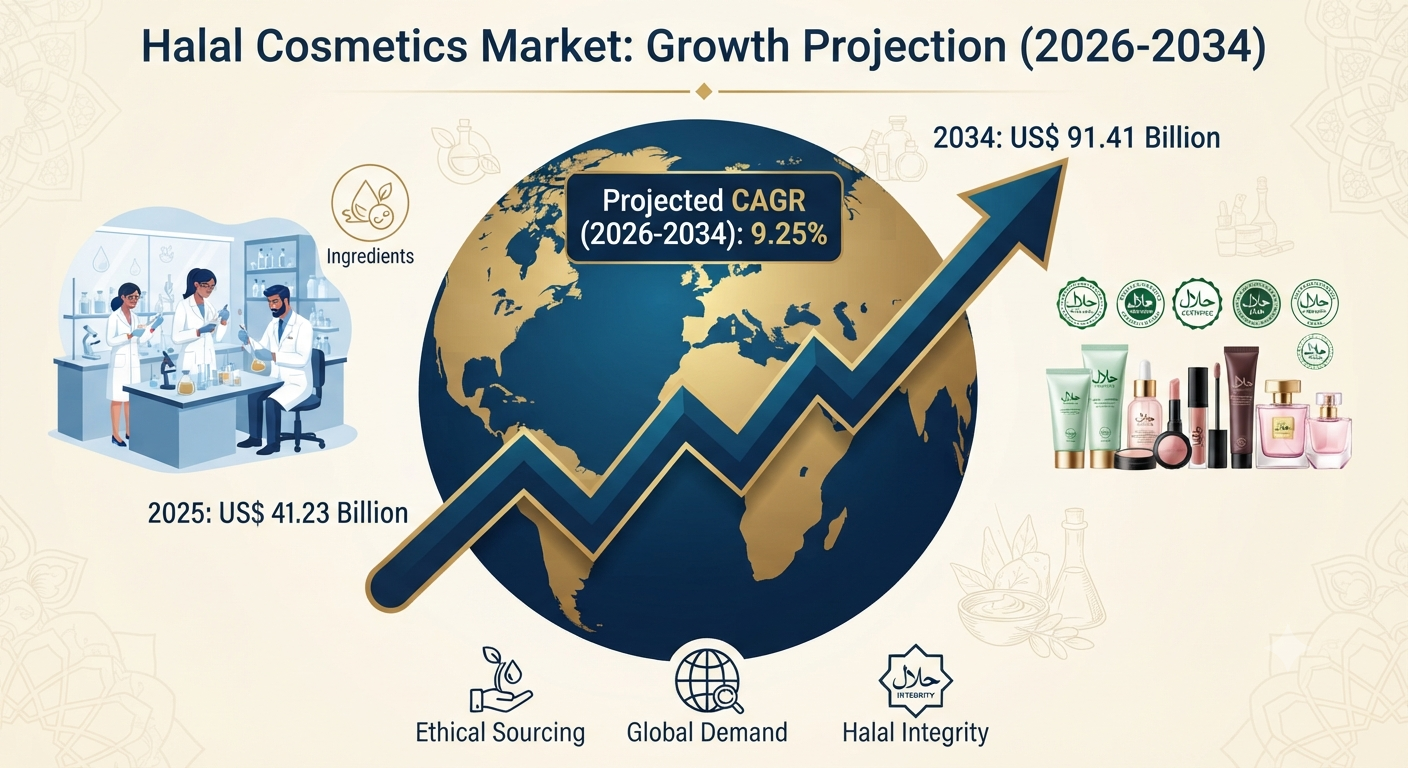
The global beauty landscape is undergoing a profound transformation as "halal" evolves from a niche religious requirement into a major pillar of the high-value functional beauty category. Driven by the convergence of ethical consumerism, ingredient transparency, and a rapidly expanding global Muslim population, the halal cosmetics market is experiencing robust growth.
According to recent market analysis, the Halal Cosmetics Market is expected to grow from US$ 41.23 billion in 2025 to US$ 91.41 billion by 2034, registering a Compound Annual Growth Rate (CAGR) of 9.25% during the forecast period of 2026–2034.
Download Free Sample Report: https://www.renub.com/request-sample-page.php?gturl=halal-cosmetics-market-p.php
Industry Overview: Beyond Religious Compliance
Halal cosmetics encompass personal care and beauty products—including skincare, makeup, haircare, and fragrances—manufactured, processed, and packaged in strict accordance with Islamic dietary and moral principles. Key requirements include:
-
Prohibition of Haram Ingredients: Products must be free from pork derivatives, alcohol, and ingredients derived from non-halal slaughtered animals or prohibited sources.
-
Hygienic Integrity: The entire value chain, from raw material sourcing and R&D to storage and distribution, must adhere to high standards of cleanliness and avoid cross-contamination with non-halal substances.
-
Ethical Production: Halal cosmetics are inherently cruelty-free and prioritize ethical manufacturing, making them highly attractive to a broader audience of conscious consumers.
Primary Growth Drivers
1. Demographic Shifts and Purchasing Power
The global Muslim population is projected to reach approximately 2.2 billion by 2034. This demographic is not only growing but also becoming increasingly affluent, particularly in regions like Southeast Asia, South Asia, and the Middle East. For these consumers, halal compliance is a non-negotiable preference, fostering a loyal and resilient customer base.
2. Convergence with "Clean Beauty" Trends
The rise of "clean," "vegan," and "cruelty-free" beauty movements has significantly broadened the appeal of halal products. Non-Muslim consumers are increasingly opting for halal-certified goods, valuing them for their natural ingredients, lack of harmful synthetic chemicals, and rigorous safety standards. This intersection of religious obligation and ethical consumerism is a major catalyst for market expansion.
3. Digital Transformation and Global Accessibility
The proliferation of e-commerce platforms and social media has democratized access to halal cosmetics. Small, artisanal brands can now reach international markets without needing physical retail footprints. Influencer marketing and online reviews have further built consumer confidence, allowing brands to communicate directly with a global audience.
Market Challenges: Navigating Complexity
Despite its rapid growth, the industry faces significant hurdles:
-
Regulatory Fragmentation: The lack of a unified, standardized global halal certification creates confusion. With dozens of certification bodies worldwide, manufacturers often struggle to navigate differing regional guidelines, which can complicate international trade.
-
Consumer Awareness: In non-Muslim majority regions, there is often a misconception that halal products are exclusively for Muslims. Educating consumers on the universal benefits of purity, safety, and ethical production remains a costly but necessary investment for brands.
-
Counterfeit Risks: The rise of fake "halal" products threatens consumer trust and undermines the integrity of certified brands. Establishing robust traceability, potentially through technology like blockchain, is becoming a priority for industry leaders.
Market Segments at a Glance
-
By Product Type: Skincare remains the dominant segment, reflecting the universal priority of skin health, while makeup is experiencing the fastest growth as brands innovate with long-wear, pigment-rich halal color cosmetics.
-
By Distribution Channel: Supermarkets and hypermarkets currently lead in sales due to their established reach, but online stores are identified as the fastest-growing channel, providing the convenience and transparency modern consumers demand.
Regional Highlights
-
Asia-Pacific: This region remains the global powerhouse, holding the largest market share. Countries like Indonesia, Malaysia, and India are anchored by well-established halal ecosystems and robust regulatory frameworks.
-
Middle East & Africa: A high-spending, mature market characterized by a young, brand-conscious population. Governments in countries like Saudi Arabia are actively investing in the halal industrial environment to boost both local production and exports.
-
North America & Europe: These markets are seeing increased interest from "clean beauty" advocates. Growth here is supported by premium brands launching halal-certified product lines to meet the diverse needs of modern consumers.
FAQs (Exclusively for Renub Research Analysis)
1. What is the projected market size of the halal cosmetics industry by 2034?
The halal cosmetics market is expected to reach a value of US$ 91.41 billion by 2034.
2. What is the forecast CAGR for the halal cosmetics market from 2026 to 2034?
The market is projected to grow at a CAGR of 9.25% during the forecast period.
3. Why are non-Muslim consumers increasingly buying halal cosmetics?
Non-Muslim consumers are drawn to the "clean beauty" profile of halal cosmetics, which emphasizes ingredient transparency, natural origins, cruelty-free practices, and the absence of harmful synthetic chemicals.
4. How is e-commerce impacting the growth of this market?
E-commerce has removed barriers to entry for smaller brands, allowing them to reach global markets without physical stores. It also provides consumers with easy access to product reviews and certification details, boosting overall confidence.
5. What is the biggest regulatory challenge facing the industry?
The lack of standardized, globally recognized halal certification is a primary challenge, as differing regional standards can cause confusion and create trade barriers for manufacturers.
6. Which product segment is currently leading in terms of market share?
Skincare currently holds the largest market share, as consumers prioritize products that keep their skin healthy and safe through halal-compliant formulations.
7. How do brands combat the issue of counterfeit halal cosmetics?
To protect consumer trust, brands are increasingly focusing on robust supply chain traceability and working with accredited certification bodies to ensure transparency from the raw material stage to the final product.
 English
Join our community to interact with posts!