
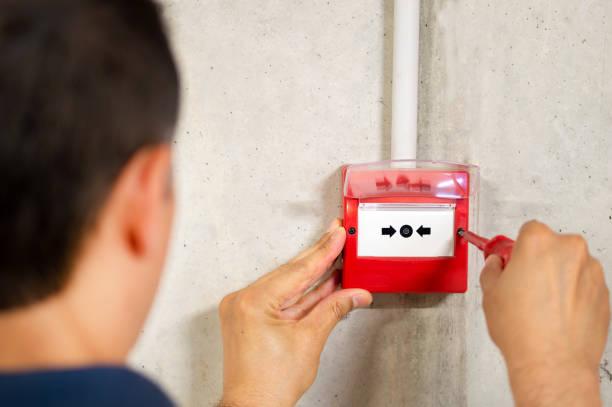
Hiring the wrong fire alarm company can cost you way more than just money. We're talking failed inspections, code violations, fines, and in a worst-case scenario, a system that doesn't actually work when something goes wrong. Most business owners and property managers don't know what to look for until after they've already signed a contract with someone who didn't deserve it. If you're looking at Commercial Fire Alarm Services in San Francisco CA, here are five things you need to check before you commit to anyone. Get these right and you'll save yourself a lot of headaches down the road.
1. Verify State Licensing and NICET Certification
This one's non-negotiable. Any company doing commercial fire alarm work in California needs to hold the right contractor licenses, and their technicians should have NICET certification (that's the National Institute for Certification in Engineering Technologies). Not every company is upfront about this. Some operate with techs who are still working toward certification, which isn't necessarily disqualifying, but you want to know the ratio of certified to uncertified staff before anyone touches your system.
Why does this matter beyond just following the rules? Your insurance carrier may ask for proof that licensed professionals installed and inspected your system. If you ever file a claim after a fire and the insurer finds out your alarm work was done by unlicensed contractors, that claim could get denied. That's a painful lesson. Ask for license numbers, check them with the California Contractors State License Board, and don't skip this step.
NICET certification levels go from I to IV. For complex commercial systems, you want at least a couple Level II or III certified techs on the crew. Simple to ask, easy for a reputable company to prove.
2. Confirm Experience With Your Building Type
Not all buildings are the same. A four-story office building, a warehouse with high-bay storage, and a multi-tenant retail strip all have completely different fire alarm requirements under NFPA 72, the National Fire Alarm and Signaling Code. Occupancy class matters. Device placement matters. Notification appliance coverage matters. A company that mostly does small office builds might not have the right experience for a multi-story mixed-use property.
Ask them directly: have you worked on buildings like mine? Get specifics. How many? In what neighborhoods or jurisdictions? San Francisco in particular has its own set of local amendments on top of state and national codes, so a company that's only worked in the suburbs may not know those wrinkles. That gap can cause you real problems during inspection.
References from similar building types are gold here. If a company can point you to three property managers with buildings like yours who are happy with the work, that tells you a lot.
3. Read the Service Contract Before You Sign Anything
This is where most people zone out. Don't. The contract is where the real promises either exist or don't. You need to look at a few specific things: inspection frequency, response time guarantees, and what's covered for parts and labor when something breaks.
Inspection frequency matters because California code requires periodic testing and inspection of commercial fire alarm systems, and the company you hire should be handling that on a schedule that keeps you compliant. Some contracts sound great until you realize inspections are only included once a year when your occupancy class requires more. Response time is another one. If your panel throws a trouble signal at 2 a.m. on a Saturday, how fast will someone actually show up? Get that in writing.
Parts coverage is often buried in the fine print. Some contracts cover labor but not parts. Others have a cap on parts cost per visit. Know what you're agreeing to before you sign, not after your first service call.
4. Ask About the Monitoring Center
A lot of business owners assume that because they have a fire alarm system, someone is always watching it. That's not always true. The quality of monitoring varies a lot depending on which central station your provider uses. You want a UL-listed monitoring center, meaning it's been independently certified to meet specific standards for reliability, backup power, and staffing. That's not just a nice-to-have. It's the kind of thing your insurer and your local AHJ (Authority Having Jurisdiction) will care about.
Ask the company directly: what central station do you use, and is it UL listed? Is monitoring 24/7 with no gaps? What's the protocol when an alarm signal comes in? A good provider will walk you through this without hesitation. If they get evasive or vague, that's a flag.
For anyone evaluating Commercial Fire Alarm in San Francisco CA, this step matters even more because the city's fire department has specific expectations around monitoring and alarm response. Make sure your provider knows those local requirements cold.
5. Check References and Inspection History
A company's track record with local fire marshals and AHJs tells you more than any sales pitch. Ask the company if they've had systems they've installed or maintained fail inspection. A good company won't have a perfect record (every company has had a re-inspection at some point), but they should be transparent about it and explain what happened and what they fixed.
You can also do a bit of your own digging. San Francisco's fire department keeps records of inspection violations tied to specific addresses. If a company has a pattern of systems failing at properties they service, that'll show up. It takes a little time, but it's worth it for a long-term service relationship.
CA FIRE ALARM INC is one company that comes up regularly when people in the Bay Area are asking around about reputable providers for this kind of work. Worth knowing the name as you compare your options. When you're checking references, ask specifically about the company's relationship with the local AHJ, since a provider who's known and trusted by fire officials tends to have fewer inspection surprises.
Also ask for at least two or three client references you can actually call, not just written testimonials on a website. Speak to people who've been with the company for more than a year. Ask them what happened the last time something went wrong. That answer will tell you more than anything else.
One more thing worth checking: does the company carry general liability and workers' compensation insurance? If a tech gets hurt on your property and the company doesn't have proper coverage, you could be on the hook. Get certificates of insurance before work starts.
Taking the time to check these five things before you hire anyone for Commercial Fire Alarm in San Francisco CA can be the difference between a system that protects your building and people, and one that looks fine on paper but fails when it matters most.
Frequently Asked Questions
How do I verify a fire alarm contractor's license in California?
You can check any contractor's license status through the California Contractors State License Board website at cslb.ca.gov. You'll need the company name or license number. It takes about two minutes and tells you whether the license is active, what classifications it covers, and whether there have been any disciplinary actions.
What is NICET certification and why should I care?
NICET stands for National Institute for Certification in Engineering Technologies. Technicians earn certification by passing exams and demonstrating real-world experience with fire alarm systems. Higher certification levels mean more complex systems they're qualified to work on. Hiring a company with NICET-certified techs helps make sure your system gets installed and maintained correctly, which matters for both code compliance and your insurance coverage.
How often does a commercial fire alarm system need to be inspected?
It depends on your building type and occupancy class, but most commercial properties in California require at least an annual inspection, and some systems require quarterly or semi-annual testing of specific components. Your local AHJ can tell you exactly what's required for your building. Don't rely solely on the alarm company to set the schedule without verifying it yourself.
What does UL-listed monitoring mean?
UL stands for Underwriters Laboratories. A UL-listed monitoring center has been independently tested and certified to meet specific standards for how alarm signals are received and acted on, including backup power, staffing requirements, and response protocols. It's a meaningful credential, not just marketing language. Your insurance provider and local fire officials may specifically require UL-listed monitoring.
Can I switch fire alarm companies if I'm unhappy with my current one?
Yes, but check your contract first. Many service agreements have auto-renewal clauses and early termination fees. You'll also want to make sure you get full documentation of your system, including as-built drawings and inspection records, before you make the switch. A new company will need that paperwork to pick up where the old one left off without starting from scratch.
 English
Join our community to interact with posts!