
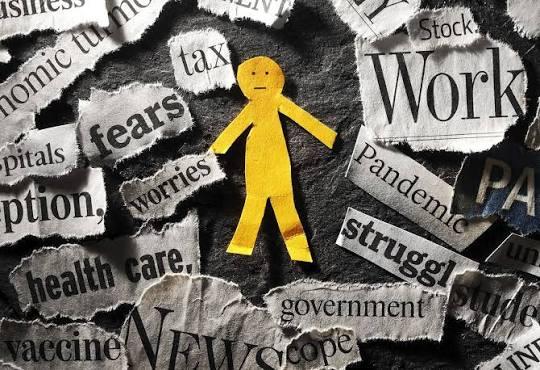
Almost everyone experiences a mild flutter of nerves before giving a major public speech or walking into a room full of strangers. This is normal, temporary apprehension. However, for individuals living with Social Anxiety Disorder (SAD), this fear is not reserved for a stage. It infects everyday interactions—eating in a public space, returning a phone call, or simply making eye contact with a cashier.
When you live with SAD, everyday life feels like a high-stakes performance where the audience is actively waiting for you to fail. Understanding the cognitive distortions that drive this intense fear of judgment is the critical first step toward dismantling the anxiety and reclaiming your social freedom.
The Cognitive Trap: The Spotlight Effect
At the core of Social Anxiety Disorder is a powerful psychological bias known as the Spotlight Effect. This is the phenomenon in which an individual drastically overestimates how much other people are noticing, judging, or remembering their actions and appearance.
If a person with SAD stumbles over a word during a meeting or spills a drop of coffee on their shirt, their brain perceives it as a catastrophic social failure that everyone in the room has committed to memory. The anxious brain operates under the false assumption that a giant, blinding spotlight is following them at all times, illuminating their flaws to the world.
In reality, human beings are inherently self-focused. Most people are far too consumed by their own internal "spotlights" to pay meaningful attention to the minor missteps of others. However, logic cannot easily override a dysregulated nervous system.
Shyness vs. Social Anxiety Disorder
It is vital to distinguish between normal introversion and a clinical anxiety disorder:
| Feature | Normal Shyness | Social Anxiety Disorder (SAD) |
| Duration of Fear | Mild discomfort that fades as the person "warms up" | Intense physiological panic that persists or worsens during the event |
| Physical Symptoms | Minor butterflies or slight blushing | Racing heart, severe sweating, nausea, and full-blown panic attacks |
| Life Impact | Does not dictate major life choices | Dictates career paths, prevents forming relationships, and severely limits daily life |
The Exhaustion of the Post-Mortem
The suffering of Social Anxiety Disorder does not end when the social event is over. Individuals with SAD frequently engage in a cognitive behavior known as the "post-mortem."
After a social interaction, the individual will spend hours, or even days, mentally replaying the conversation. They will obsessively analyze their own tone of voice, their facial expressions, and the perceived reactions of others, hunting for evidence that they sounded foolish or offensive. This relentless internal criticism ensures that the anxiety surrounding the next social event will be even higher, creating a self-perpetuating cycle of fear.
Breaking the Cycle with Digital Care
The cruelest irony of Social Anxiety Disorder is that the traditional solution—going to a clinic, interacting with a receptionist, sitting in a public waiting room, and speaking to a stranger in a small room—is the exact scenario that triggers the patient's panic. Because of this massive barrier, SAD is chronically under-treated.
Telepsychiatry completely bypasses this obstacle. By utilizing effective online therapy for social anxiety, individuals can initiate clinical treatment from the absolute safety of their own home.
How Remote Clinicians Treat Social Anxiety
Virtual therapists use highly structured frameworks to help you unlearn the fear of judgment:
-
Cognitive Restructuring (CBT): Clinicians help you identify and systematically dismantle the Spotlight Effect. You learn to challenge the automatic thought ("Everyone thinks I'm an idiot") with objective evidence ("People were looking at their phones, not at me").
-
Gradual Exposure Therapy: Remote therapists guide you through micro-exposures to build tolerance. This might start with something as small as making a phone call to a local store to ask their hours, progressing slowly to more complex social interactions, all while the therapist provides support.
-
Attention Shifting: Teaching the patient how to turn the "spotlight" outward. Social anxiety forces you to hyper-focus on your own internal sensations (e.g., "Is my face turning red?"). Therapy teaches you how to actively shift your focus entirely onto the other person and the external environment, naturally lowering the anxiety response.
You do not have to live your life braced for rejection. Engaging in specialized virtual anxiety counseling provides the tools you need to dim the spotlight, quiet your inner critic, and safely connect with the world around you.
Conclusion
Social Anxiety Disorder is an exhausting condition that tricks your brain into confusing human interaction with mortal danger. The fear of judgment feels absolute, but it is ultimately based on a cognitive illusion. By recognizing the trap of the Spotlight Effect and utilizing the low-friction accessibility of remote psychotherapy, you can rewrite your brain's threat response. True social confidence is not the belief that everyone will like you; it is the knowledge that you will be perfectly fine even if they do not.
Frequently Asked Questions (FAQ)
Does alcohol actually help with Social Anxiety Disorder?
While alcohol is a central nervous system depressant that temporarily numbs the anxiety response, it is a highly dangerous coping mechanism. Using alcohol as a "social lubricant" frequently leads to substance abuse. Furthermore, as the alcohol wears off, the brain experiences a severe rebound effect—often called "hangxiety"—where the social anxiety returns the next day with double the intensity.
Are introversion and social anxiety the same thing?
No. Introversion is a personality trait; it simply means you recharge your energy by being alone and find highly stimulating social environments draining. An introvert can have excellent social skills and no fear of judgment. Social anxiety is a clinical condition driven by intense fear, dread, and a malfunctioning threat-detection system.
How do I stop analyzing everything I said after a conversation?
The post-mortem is a mental compulsion. The most effective way to stop it is through Response Prevention. When you notice your brain starting to replay the conversation, mentally say "Stop," and immediately shift your physical environment or engage in a high-focus task (like a puzzle or a video game). You are actively denying your brain the opportunity to perform the anxious review.
 English
Join our community to interact with posts!