
Introduction
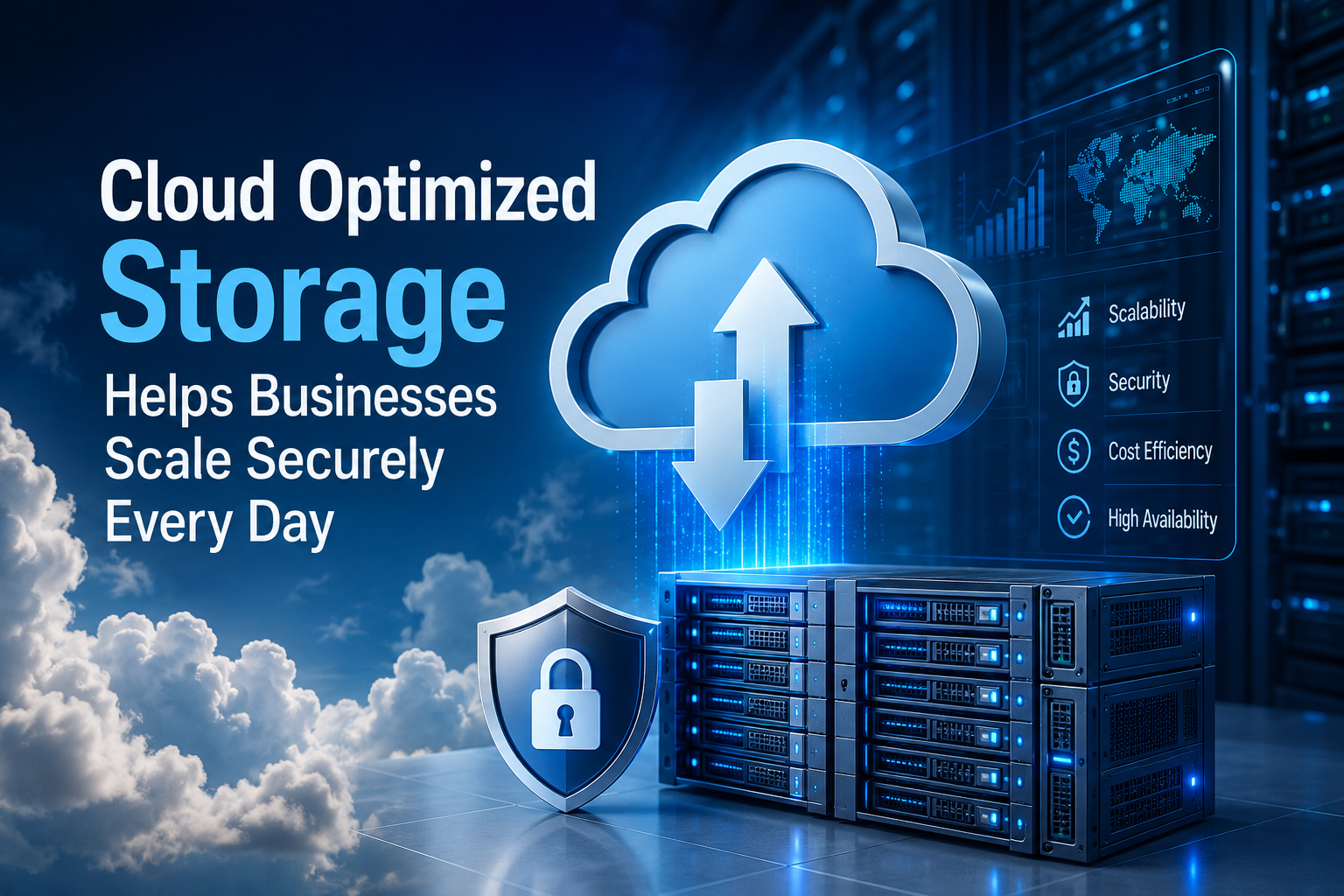
Modern organizations generate an incredible amount of data every single day. From customer records and business applications to videos, analytics, and AI workloads, the need for efficient storage continues to grow. Traditional storage systems often struggle to keep pace with increasing data volumes, higher performance expectations, and rising infrastructure costs. This is why many businesses are adopting cloud optimized storage to improve flexibility, reduce expenses, and simplify data management.
Unlike conventional storage environments, cloud optimized storage is designed to work efficiently across public, private, and hybrid cloud platforms. It enables organizations to store, access, and protect data without sacrificing performance. As businesses continue their digital transformation journey, choosing the right storage strategy becomes essential for maintaining operational efficiency and supporting future innovation.
Why Cloud Optimized Storage Matters for Modern Enterprises
Every business depends on data to make informed decisions, improve customer experiences, and power digital services. As data continues to expand, organizations require storage solutions that can scale without creating unnecessary complexity.
Cloud optimized storage delivers a modern approach by allowing businesses to efficiently manage structured and unstructured data across distributed environments. Instead of relying on expensive hardware upgrades, organizations can increase storage capacity when needed while paying only for the resources they use.
This flexibility helps IT teams respond faster to changing business demands while ensuring that important information remains available whenever users need it.
How Cloud Optimized Storage Improves Business Performance
Business operations rely on quick access to reliable information. Delays in retrieving files or processing large datasets can reduce productivity and impact customer satisfaction.
A well-designed cloud optimized storage environment improves application performance by placing data where it delivers the best balance between speed and cost. Frequently accessed files remain readily available, while older or less critical data can move automatically to lower-cost storage tiers.
This intelligent approach minimizes unnecessary expenses while maintaining high performance for mission-critical workloads. Organizations also benefit from faster backups, simplified disaster recovery, and improved system reliability.
Supporting Artificial Intelligence and Data Analytics
Artificial intelligence depends on clean, accessible, and scalable datasets. Machine learning models require continuous access to large volumes of information collected from different business systems.
Cloud optimized storage provides the foundation needed for AI initiatives by enabling secure access to data across multiple environments. Whether organizations are training predictive models, processing customer insights, or analyzing operational trends, efficient storage improves both speed and reliability.
Businesses investing in AI-ready infrastructure often discover that modern storage architecture significantly reduces delays caused by fragmented or isolated data repositories.
Hybrid Cloud Environments Benefit from Cloud Optimized Storage
Many organizations are not moving entirely to a single cloud provider. Instead, they operate hybrid environments that combine on-premises infrastructure with multiple cloud platforms.
Managing information across these environments can quickly become challenging without the right storage architecture.
Cloud optimized storage simplifies hybrid operations by providing consistent data accessibility, centralized management, and seamless movement of information between different locations. Employees can collaborate more effectively while IT teams maintain greater visibility over storage resources.
This approach also supports business continuity by allowing workloads to shift between environments whenever necessary.
Better Data Protection and Security
Data security remains one of the highest priorities for every organization. Cyber threats, accidental deletion, and hardware failures all create risks that can interrupt business operations.
Modern cloud optimized storage includes advanced security capabilities such as encryption, automated backups, version control, replication, and access management. These features help organizations protect sensitive information while meeting industry compliance requirements.
Because data is distributed intelligently across storage environments, recovery processes become faster and more reliable following unexpected disruptions.
Cost Efficiency Without Sacrificing Performance
Many businesses assume that increasing storage capacity always means higher expenses. However, outdated infrastructure often creates hidden costs through inefficient hardware utilization, excessive maintenance, and manual administration.
Cloud optimized storage helps organizations optimize spending by automatically placing data into the most appropriate storage tier. Frequently used files remain on high-performance storage, while archival information moves to more economical options.
This balanced approach improves operational efficiency while allowing businesses to control long-term infrastructure costs.
Simplifying Data Management Across Growing Organizations
As companies expand, managing storage manually becomes increasingly difficult. Different departments generate different types of data, making governance more complex.
A modern cloud optimized storage platform centralizes storage management while automating routine administrative tasks. IT teams gain improved visibility into storage utilization, performance metrics, and capacity planning.
Automation also reduces the risk of human error, allowing administrators to focus on strategic initiatives instead of repetitive maintenance activities.
Organizations can enforce consistent governance policies while ensuring data remains accessible to authorized users across multiple business locations.
Preparing for Future Digital Growth
Digital transformation continues to reshape industries around the world. Businesses are introducing cloud-native applications, IoT devices, advanced analytics, and AI-powered services that generate unprecedented amounts of information.
Without scalable infrastructure, these innovations can quickly overwhelm traditional storage systems.
Cloud optimized storage provides the flexibility required to support future business growth without requiring complete infrastructure replacement. Organizations can expand storage resources as workloads increase while maintaining reliable performance and strong security.
This adaptability allows companies to remain competitive as technology continues evolving.
Conclusion
Data has become one of the most valuable assets for modern organizations, making efficient storage more important than ever. Businesses need infrastructure that supports continuous growth, protects critical information, and delivers reliable performance across cloud environments.
Adopting cloud optimized storage allows organizations to reduce operational complexity, improve scalability, strengthen data security, and control infrastructure costs. It also creates a strong foundation for hybrid cloud adoption, artificial intelligence, analytics, and future digital initiatives.
As enterprises continue modernizing their technology landscape, investing in cloud optimized storage is no longer simply an infrastructure upgrade. It is a strategic decision that enables smarter data management, greater business agility, and long-term operational success in an increasingly data-driven world.
 English
Join our community to interact with posts!