
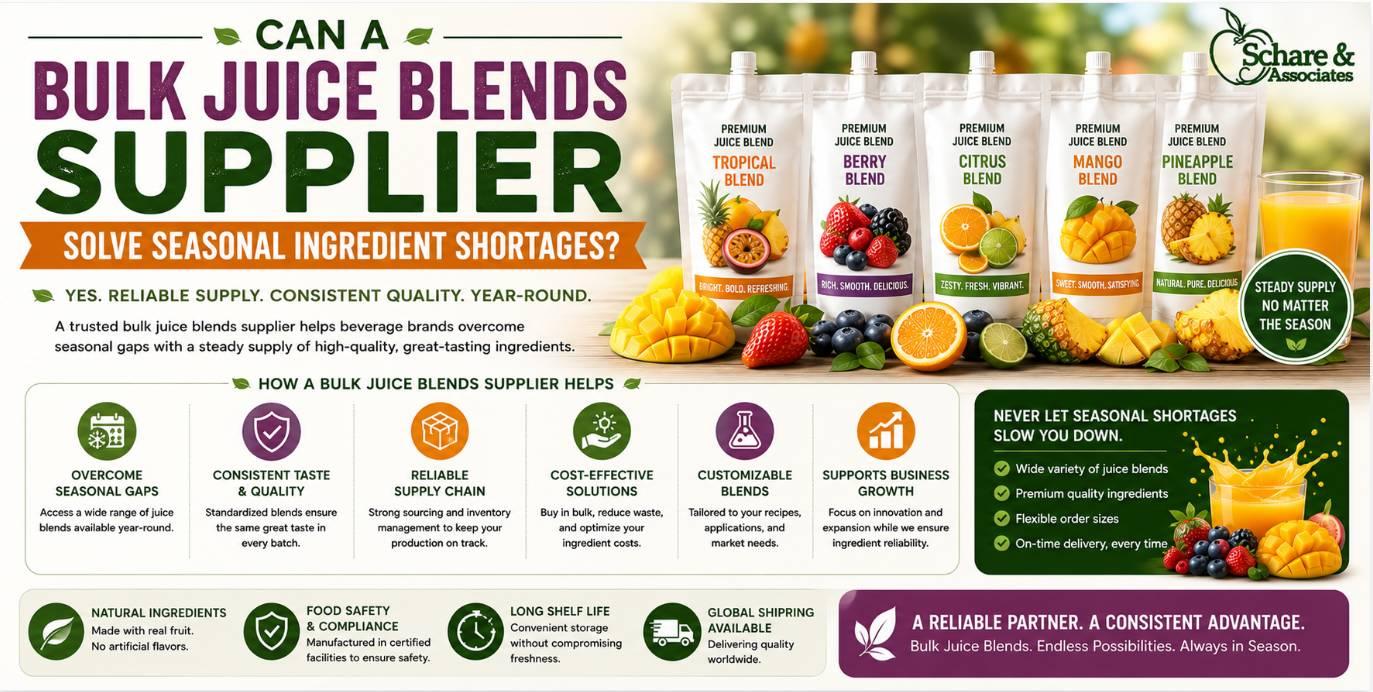
What does a beverage company do when mango gets expensive, berry supply drops, or citrus arrives with a different flavor profile? It cannot stop filling bottles until the next crop comes in. Production schedules, retailer orders, and customer expectations keep moving. A bulk juice blends supplier can help cover that gap through alternate fruit sources, concentrates, purees, and blended bases that fit an existing formula.
For businesses buying wholesale juice blends in the USA, this support can prevent a seasonal shortage from turning into missed orders or rushed reformulation.
Seasonal Shortages Usually Create Several Problems At Once
A weak harvest not only reduces volume. It can change sweetness, acidity, color, aroma, and how an ingredient behaves during processing. One lot of strawberry concentrate may taste bright and sharp. The next may arrive darker, sweeter, or flatter. That difference may look small on paper, but it can affect the finished drink.
A reliable bulk juice blends supplier gives manufacturers more than one product to buy. It gives them options. The supplier may source from another region, recommend a different concentrate strength, or combine two fruit inputs to bring the formula closer to its approved target.
This is why companies sourcing wholesale juice blends in the USA should ask about origin flexibility before a shortage begins. A supplier that depends on one crop area may face the same problem as the buyer.
Blending Gives Formulators More Room To Work
Manufacturers may struggle to protect single-fruit formulas during a poor season. A blend creates more flexibility. Apple or white grape concentrate may support sweetness. Lemon can correct acidity. Puree can add body. Another fruit may improve color or restore a missing top note.
That work requires control. A bulk juice blends supplier should understand Brix, pH, flavor balance, viscosity, and the effect of heat processing. A replacement that tastes fine in a sample cup may react differently after pasteurization or storage. It may separate, lose color, or leave a heavier finish.
JuiceDeals lists blends with concentrates, purees, frozen fruit, extracts, and other bulk ingredients. That range can make the search easier when a buyer needs more than one component to repair a formula.
Buyers Should Test The Replacement Before Approving It
Seasonal pressure often leads to fast decisions. That is where mistakes start. A lower-priced substitute may create more cost later if it changes the recipe, slows filling, or causes a quality hold.
Before approval, buyers should review:
-
Brix, acidity, pH, color, and flavor tolerances
-
Fruit origin and whether that origin may change
-
Packaging size, storage temperature, and shelf life
-
Minimum order quantity and expected lead time
-
Traceability, allergen records, and food safety documents
-
Samples for bench work, pilot batches, and shelf testing
Businesses purchasing wholesale juice blends in the USA should compare the new ingredient against the finished product, not only the old raw material. The real question is simple: does the final beverage still meet its target?
Inventory Access Can Prevent Panic Buying
Not every shortage needs a permanent formula change. Sometimes a manufacturer only needs enough product to cover six weeks. In other cases, the crop problem may last through the year. Those situations need different buying decisions.
A capable bulk juice blends supplier can separate emergency coverage from long-term supply. It may offer a stocked blend for the immediate run, then develop a more stable option for future orders. Packaging affects the choice, too. Aseptic drums may work for one plant, while frozen pails or bag-in-box formats may suit another.
JuiceDeals also focuses on discounted and hard-to-find food ingredients. That may help manufacturers locate usable inventory outside their usual contracts when regular distributors have limited stock.
Companies looking for wholesale juice blends in the USA should still check whether the supplier can restock that inventory. A one-time lot may solve today’s problem, but it should not become the only plan for next quarter.
A Better Supply Plan Starts Before The Shortage
The strongest buyers prepare alternatives while supply remains stable. They qualify for more than one origin, keep current specifications, test backup ingredients, and record acceptable ranges for color, sweetness, and acidity. This work takes time, but it keeps pressure away from the production floor later.
Procurement, quality, and product development should agree on what can change and what cannot. A fruit source may change without affecting the label. A new sweetening component may require a review. Packaging may affect storage space or thawing time. These details need attention before purchase orders go out.
Can A Supplier Remove Seasonal Risk Completely?
No supplier can control weather, port delays, crop disease, or sudden demand. Still, the right partner can reduce the damage. Buyers should compare sourcing reach, technical support, documentation, packaging choices, and repeat-order capability before they commit.
For companies buying wholesale juice blends in the USA, a review of backup ingredients and supply terms can create a steadier production plan. That is the point where consulting with a bulk juice blends supplier becomes more useful than making another last-minute purchase.
 English
Join our community to interact with posts!