
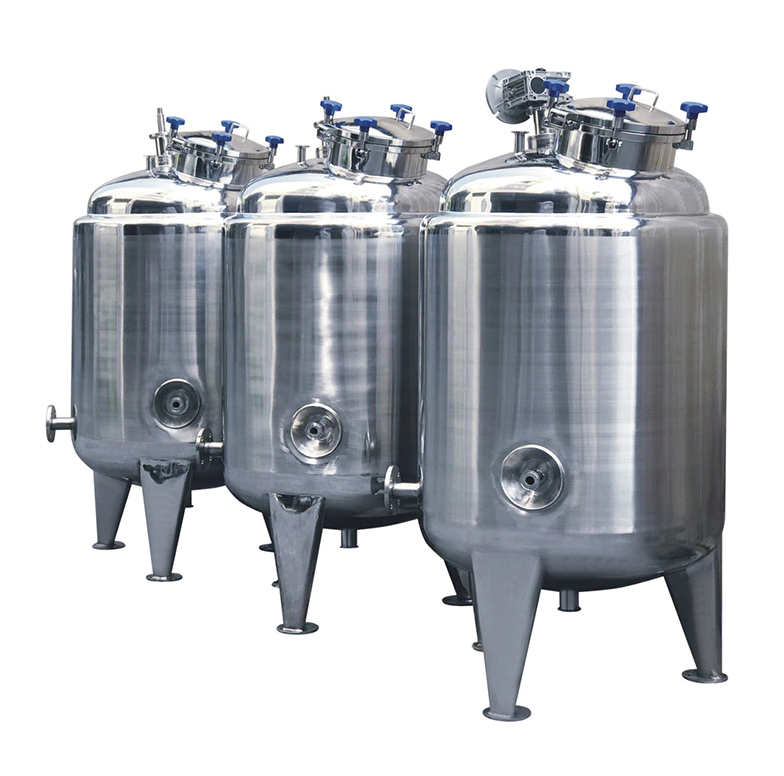
Choosing the right Stainless Steel Emulsification Mixer requires consideration of product characteristics, production volume, and processing goals. Manufacturers often evaluate viscosity range, ingredient type, cleaning requirements, and desired particle size reduction before selecting equipment.
A key feature of the mixer is its high-shear mixing capability. The rotor and stator create intense mechanical forces that disperse particles and droplets throughout the formulation. This process is useful when producing emulsions, suspensions, creams, gels, and other products that require a uniform structure.
The Stainless Steel Emulsification Mixer is commonly installed in food, cosmetic, pharmaceutical, and chemical facilities. In each of these sectors, consistent blending can help maintain product quality. A stable emulsion may reduce separation during storage and contribute to a more predictable manufacturing result.
Stainless steel construction supports durability and sanitation. The material resists corrosion and can withstand repeated cleaning cycles. For production environments that process different products throughout the day, easy cleaning can help shorten changeover times and support hygiene procedures.
Another consideration is process flexibility. Some formulations are thin and require only moderate shear, while others are thick and demand stronger mixing action. Variable speed controls and different rotor-stator configurations allow the Stainless Steel Emulsification Mixer to adapt to these requirements.
Temperature management may also be important. Certain ingredients dissolve more effectively when heated, while others must remain below specific temperatures. When connected to jacketed vessels or external thermal systems, the mixer can operate within a controlled temperature range.
To maintain reliable operation, facilities typically implement routine maintenance programs. Cleaning after each batch, inspecting seals, checking bearings, and monitoring motor performance can help reduce wear and extend equipment service life.
As production systems become more automated, emulsification mixers are often integrated with dosing units, sensors, and control software. This integration can improve repeatability and provide better monitoring of process parameters.
By offering strong dispersion capability, hygienic construction, adjustable operation, and compatibility with automated systems, the Stainless Steel Emulsification Mixer continues to be a practical choice for manufacturers seeking consistent and efficient processing across a wide variety of applications.
 English
Join our community to interact with posts!