
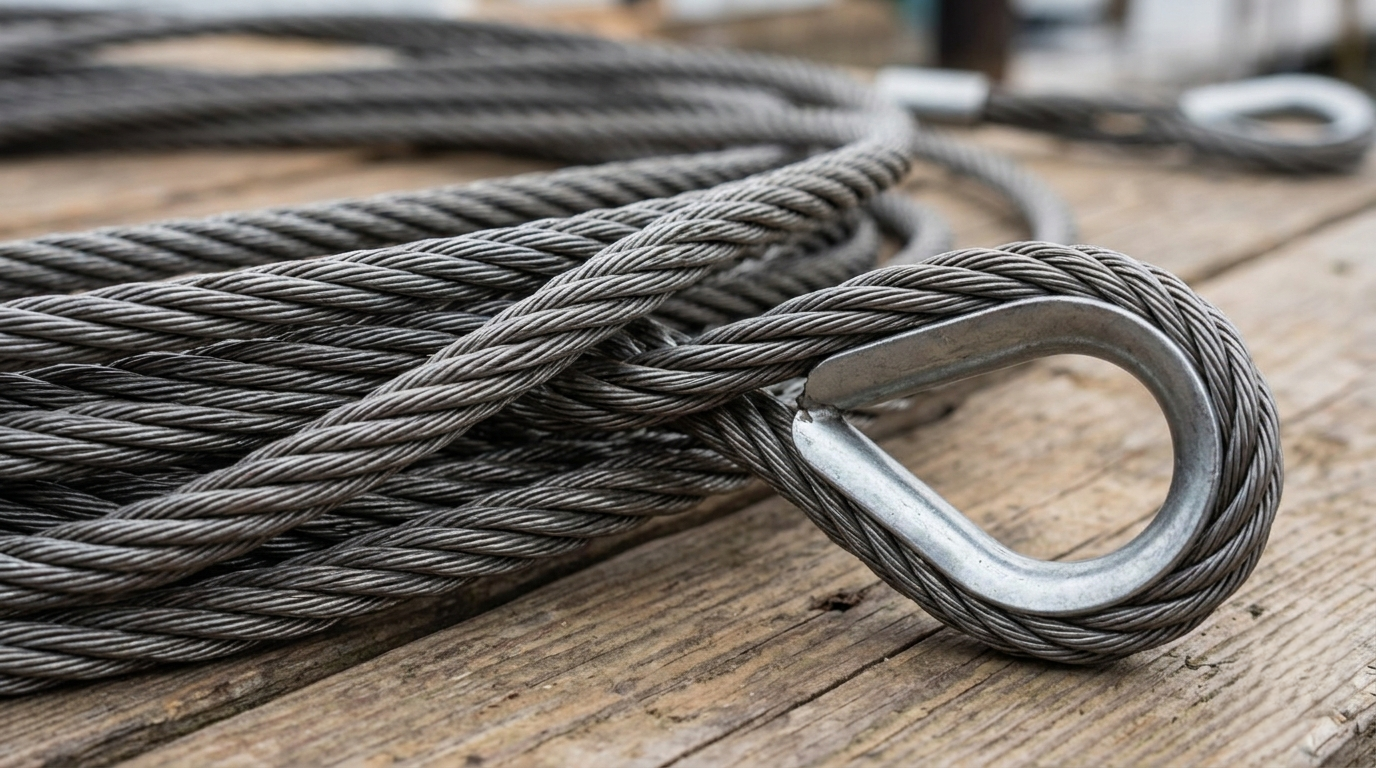
Safety is a top priority in the construction and material handling sectors. Every day, workers lift, move, and carry heavy equipment, building materials, and machinery, all of which require dependable lifting solutions. Wire Rope is a crucial component that makes these tasks safer.
Wire Rope, known for its extraordinary strength, durability, and flexibility, is frequently used in cranes, hoists, elevators, winches, and lift systems. When correctly selected and maintained, it reduces workplace hazards, enhances operational efficiency, and facilitates the safe handling of big loads.
Let's look at how wire rope contributes to safer building sites and material handling activities.
What is Wire Rope?
Wire rope is formed by twisting several steel wires into strands that are then looped around a central core. This design allows it to withstand enormous loads while being flexible enough for lifting and pulling applications.
Unlike typical ropes or chains, wire rope is designed to withstand harsh industrial environments. It has exceptional wear resistance, high tensile strength, and delivers consistent performance even in harsh settings.
Provides Exceptional Load-Bearing Strength
Heavy steel beams, concrete blocks, machinery, and structural components all need to be lifted during construction operations. Material handling facilities also handle a huge volume of items throughout the day.
Under typical operating conditions, high-quality Wire Rope is intended to safely carry substantial loads without stretching or breaking.
Its superior strength aids in:
-
Lift large things safely.
-
Reduce equipment failures.
-
Support stable lifting operations.
-
Increase worker confidence.
Choosing the appropriate wire rope for the load capacity is one of the most crucial elements in occupational safety.
Reduces the Risk of Load Failure
Falling loads are one of the most dangerous risks on any construction site. A faulty or low-quality lifting component might result in significant accidents.
When properly produced, Wire Rope provides exceptional reliability during lifting activities. Its numerous strands enhance strength, ensuring that even if individual wires wear, the rope retains structural integrity until replacement is necessary.
Routine inspections help to limit the risk of unexpected failures.
Provides Excellent Flexibility
Ropes are commonly used in construction and industrial lifting equipment to bend around pulleys, sheaves, and drums.
Wire Rope combines strength and flexibility, allowing it to travel effortlessly through lifting systems while maintaining its performance.
This flexibility helps:
-
Increase lifting efficiency.
-
Reduce mechanical stress.
-
Avoid quick jerking motions.
-
Ensure improved load control.
Smooth lifting operations contribute directly to a safer workplace.
Performs Well in Tough Environments
Construction sites subject equipment to dust, muck, wetness, sunshine, chemicals, and changing weather conditions.
Many different types of Wire Rope, particularly galvanized or corrosion-resistant versions, are designed to survive such extreme conditions.
This resilience allows lifting operations to proceed safely while minimizing equipment deterioration and maintenance requirements.
Supports Safe Crane Operations
Cranes are some of the most common usage of wire rope.
Cranes, whether lifting building materials or transporting industrial equipment, rely on strong and dependable wire ropes to operate well.
Quality wire rope benefits cranes:
-
Lift loads steadily.
-
Maintain equilibrium.
-
Minimize swinging.
-
Improve operator control.
-
Reduce lifting dangers.
Crane wire ropes that are properly maintained contribute greatly to overall site safety.
Improves Material Handling Efficiency
Material handling equipment is widely used in warehouses, industrial plants, logistics centers, and shipping facilities.
Wire Rope is widely used in:
-
Hoists.
-
Winches.
-
Overhead cranes.
-
Conveyor lifting systems.
-
Dockside Lifting Equipment.
Reliable lifting equipment enables users to transport objects more efficiently while lowering manual handling injuries.
Helps Prevent Equipment Downtime
Unexpected equipment failures can cause project delays, increased expenses, and risky circumstances.
Using robust wire rope and performing routine maintenance helps prevent:
-
Sudden rope failure.
-
Expensive repairs.
-
Production delays.
-
Emergency replacements.
Preventive maintenance ensures that lifting activities run safely and efficiently.
Easy to Inspect for Wear
One advantage of wire rope is that it frequently shows signs of wear before failing completely.
Operators can check for:
-
Broken wires.
-
Corrosion.
-
Flattened portions.
-
Kinks.
-
Bird-caging.
-
Excess wear.
Regular inspections allow deteriorated ropes to be replaced before they constitute a safety risk.
Supports Compliance with Safety Standards
Many businesses have stringent safety standards for lifting equipment.
Using Certified Wire Rope that fulfills established quality standards allows organizations to comply with workplace safety regulations while also protecting personnel and assets.
Routine inspections, maintenance records, and appropriate installation all help to ensure regulatory compliance and safe operations.
Proper Maintenance Optimizes Safety
Even high-quality wire ropes require frequent maintenance.
Some of the recommended practices are:
-
Lubricating the rope regularly.
-
Keeping it clear of dirt and trash.
-
Avoiding Overloads.
-
Inspecting before each use.
-
Replacing damaged ropes promptly.
-
Storing in dry and protected regions.
Following these easy actions considerably increases the rope's lifespan while ensuring safe performance.
Wire Rope Selection Is Important
Not all wire ropes are appropriate for all applications.
Factors to consider are:
-
Load capacity.
-
Rope Construction Diameter.
-
Core type.
-
Environmental circumstances.
-
The frequency of use.
Choosing the correct wire rope offers maximum safety, a longer service life, and improved lifting performance. Consulting with an experienced provider can help firms select the best solution for their specific needs.
Final Thoughts
In construction and material handling, safety is dependent on employing reliable equipment and adhering to established operating procedures. The strength, flexibility, and durability that are required for safe lifting and load movement are provided by wire rope, which is essential.
Wire rope is a crucial component of modern industrial processes, serving to reduce the risk of equipment failure, improve crane performance, and assist efficient material handling. Businesses may make their workplaces safer, decrease downtime, and increase productivity by investing in high-quality wire rope, conducting frequent inspections, and adhering to maintenance best practices.
 English
Join our community to interact with posts!