
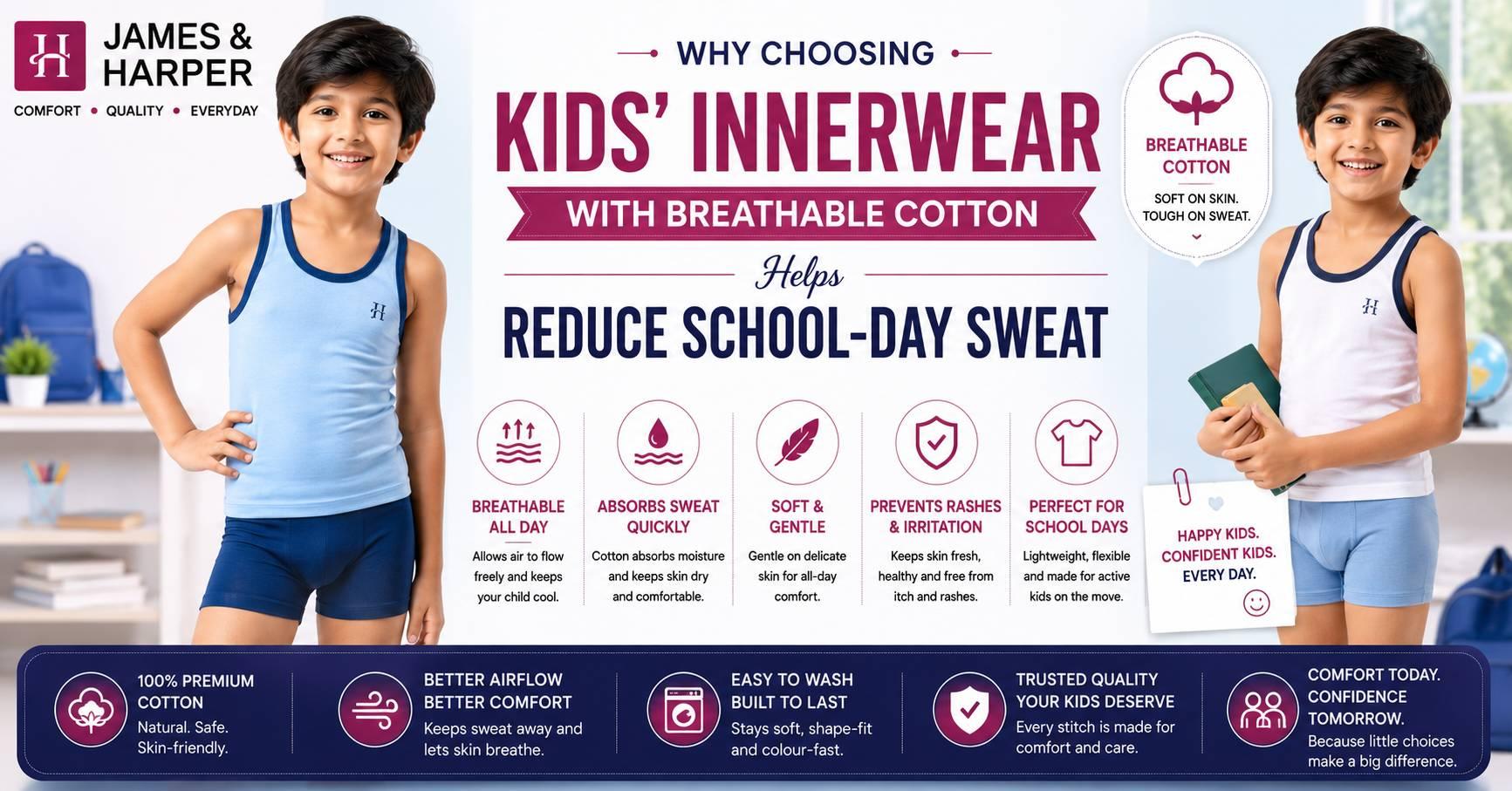
Does your child come home from school with a damp waistband, itchy skin, or a uniform that feels uncomfortable by lunchtime? That often points to the first layer, not the uniform itself. Kids' inner wear made from breathable cotton can help release body heat and absorb everyday moisture before it stays trapped against the skin. In winter, kids' thermal clothing should do something similar while keeping the body warm. The goal is not to stop sweat completely. Children move, run, climb stairs, and play. The better choice is fabric that handles moisture without creating rubbing or heaviness.
Why School-Day Sweat Starts Under The Uniform
Most school uniforms involve more than one layer. There may be underwear, a vest, a shirt, shorts or trousers, and sometimes a sweater. Once the child starts moving, warm air collects between those layers. Poor ventilation makes that worse.
Breathable Kids Inner Wear gives heat a way out. Cotton absorbs moisture, but the weave and thickness also affect how quickly it dries. Thick fabric may feel sturdy, yet it can become warm after several hours. Very thin fabric can feel cool, though it may stretch or bunch under clothing. Parents need a middle ground: soft fabric, enough airflow, and a fit that stays in place.
James & Harper focuses on soft, skin-friendly garments with child-friendly fits, which suits children who spend long school hours in uniforms.
How Cotton Helps Reduce Friction And Irritation
Sweat does not always cause a rash on its own. The problem often starts when damp fabric keeps rubbing the same area. Waistbands press into the stomach. Leg openings rub while the child walks. Seams can scratch when the skin is already warm.
Good Kids Inner Wear should reduce these pressure points. The fabric needs to feel smooth, but the construction deserves equal attention. A soft waistband that stretches without digging in can make a noticeable difference during a full school day.
Parents can check a few things before buying:
-
Press the waistband between two fingers and see whether the elastic feels sharp or stiff.
-
Rub the inside seams lightly against the wrist to check for rough stitching.
-
Stretch the fabric and watch whether it returns to shape without curling.
-
Choose a close fit, but leave enough room for movement and growth.
These checks take less than a minute. They often tell more than a bright print or a familiar age label.
What Makes A Better Base Layer For Active Children
Children rarely stay still through a school day. They bend, sit cross-legged, run during recess, and carry heavy bags. Underwear that shifts, twists, or rides up quickly becomes a distraction.
Well-fitted kids' inner wear should move with the body and settle back into place. Cotton-rich blends can help when a small amount of stretch improves shape retention. Still, the fabric should not feel slick, overly tight, or heat-heavy. Parents should also avoid buying several sizes too large. Loose garments fold under uniforms and create friction.
Cold weather brings another concern. Kids' thermal sets need to fit close enough to hold warmth, but not so tight that they restrict movement. A bulky top can gather under a school shirt. Thick trousers may also make the uniform waistband feel tighter. Lightweight layering usually works better because the child stays warm without feeling packed into clothing.
How Washing Changes Softness, Fit, And Breathability
The first wash can change a garment. Too much detergent may leave cotton stiff. Excess fabric softener can coat the fibers and reduce absorbency. High dryer heat can weaken elastic and shrink fabric unevenly.
Wash children's base layers with mild detergent and use only the amount needed. Rinse them thoroughly. Air drying often protects elastic better, although low dryer heat can work when time is limited. Stop using a garment once the waistband becomes hard, the seams start rubbing, or the leg openings lose shape.
The same care applies to Kids' Thermal clothing. Wash it after active use, especially after outdoor play or travel. Dry it fully before storage. Damp fabric develops odor quickly and may start feeling rough.
James & Harper links its children's range with durable stitching, soft fabric, and everyday comfort at an accessible price point.
How To Choose The Right Option For Each Season
Warm weather calls for lighter fabric and fewer layers. School transport counts too. A child who walks, cycles, or waits outdoors may need more breathable clothing than one who travels in an air-conditioned car.
During colder months, parents should think beyond thickness. A good Kid's Thermal layer should keep warmth close without causing overheating once the child enters a heated classroom. Ask how the clothing feels after several hours, not only while dressing.
In the end, the best Kids Inner Wear keeps the first layer light, soft, and steady through lessons, travel, and play. A suitable Kid's Thermal should add warmth without bulk or trapped dampness. When sweating or irritation continues despite a better fit and fabric choice, consulting a pediatrician or dermatologist is the sensible next step.
 English
Join our community to interact with posts!