
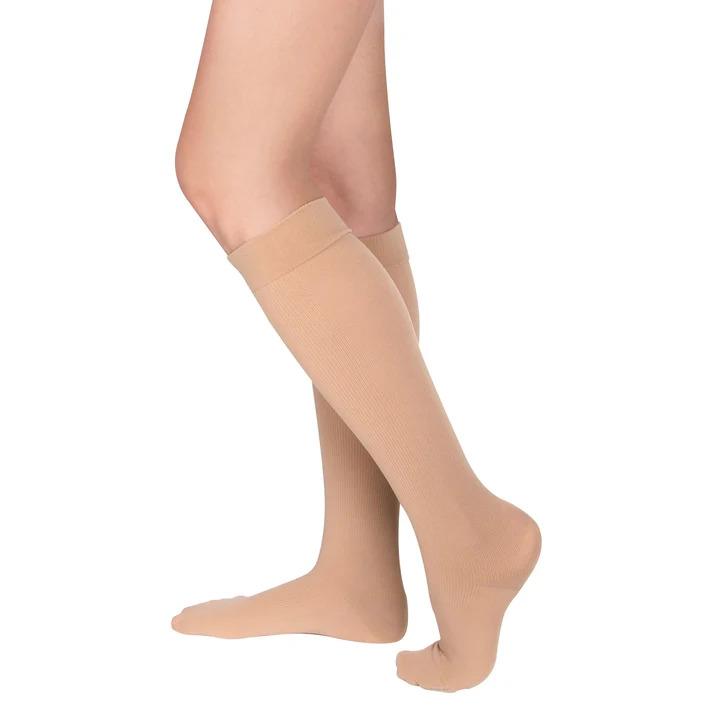
20 30 compression socks are designed to provide graduated compression along the lower leg while maintaining a practical fit for everyday wear. They can be useful for people who spend long hours sitting, standing, walking, traveling, or participating in active routines. With the right size and construction, compression socks can combine supportive pressure with comfortable coverage.
Understanding 20 30 Compression
The term 20 30 mmHg refers to the compression range of the socks. These socks are designed to provide graduated compression, with pressure generally greatest around the ankle and gradually decreasing higher up the leg.
Because 20 30 mmHg is a stronger compression level than lighter everyday compression, selecting the correct size and using the socks appropriately is especially important.
Why Choose 20 30 Compression Socks?
A good pair of compression socks can provide a supportive feeling during activities and periods of prolonged sitting or standing. They may be considered for:
-
Long workdays spent on your feet
-
Extended periods of sitting
-
Travel and commuting
-
Walking and active routines
-
Everyday leg support
-
People who have been advised to use this level of compression
The design can also make compression socks a convenient alternative to more extensive compression garments when below knee coverage is sufficient.
Finding the Right Fit
Proper sizing is one of the most important factors when choosing 20 30 compression socks. Measure the areas recommended by the manufacturer and compare your measurements with the product size chart.
The socks should fit smoothly without excessive wrinkles or folds. Avoid rolling the top down, as this can create uneven pressure. A secure fit should not cause excessive tightness, numbness, tingling, or changes in skin color.
Materials Matter
Compression socks are available in a variety of fabrics. If you plan to wear them for several hours, consider materials that offer breathability, flexibility, and a comfortable feel against the skin.
A reinforced heel and toe can also be useful for durability, especially for people who wear compression socks frequently.
When to Seek Professional Guidance
Compression garments are not appropriate for everyone. People with circulation concerns or certain medical conditions should speak with a healthcare professional before using 20 30 mmHg compression socks.
If you experience unusual pain, numbness, tingling, significant swelling, or skin discoloration while wearing compression socks, remove them and seek appropriate medical advice.
Making Compression Part of Your Routine
The right 20 30 compression socks can be a practical addition to an active or busy lifestyle. By choosing an appropriate size, comfortable material, and suitable design, you can make supportive legwear easier to incorporate into your daily routine.
SNUG360 offers thoughtfully selected compression and support products focused on comfortable fit, practical functionality, and everyday use.
 English
Join our community to interact with posts!