
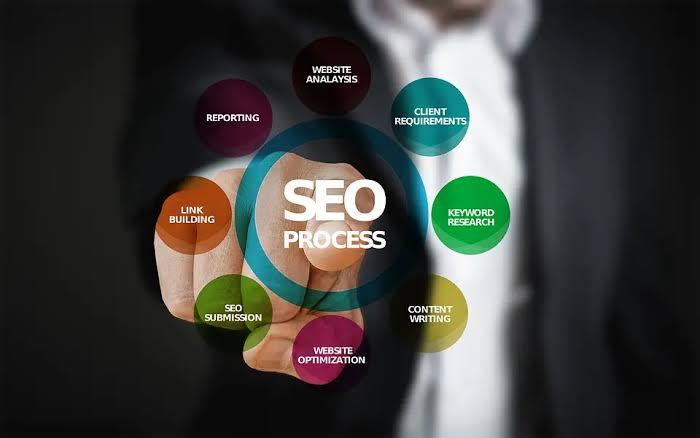
For most startups, SEO begins with a difficult question: where should a small company invest when larger competitors already dominate the search results?
Established businesses often have stronger domains, larger content libraries, dedicated marketing teams, and years of accumulated backlinks. A startup or small business may have only a handful of pages, limited marketing resources, and an immediate need to generate leads.
Trying to copy the SEO strategy of a much larger competitor is rarely the answer.
Startups need a more focused approach.
The goal should not be to rank for every keyword in the industry or publish hundreds of articles. It should be to identify the search opportunities most closely connected to customers, build genuinely useful pages around them, and gradually create authority in areas where the business has something meaningful to offer.
When done well, SEO can become a long-term customer acquisition asset rather than another marketing expense.
Why SEO Is Different for Startups
SEO principles do not fundamentally change based on company size, but priorities do.
A large company may be able to invest simultaneously in technical SEO, digital PR, hundreds of content pieces, international expansion, programmatic pages, and conversion optimization.
A startup usually cannot.
Every marketing dollar has an opportunity cost.
If a small business spends three months publishing content that generates traffic but no qualified leads, that time and budget could have been used on product development, sales, paid acquisition, or higher-intent SEO opportunities.
That makes prioritization one of the most important parts of startup SEO.
A good strategy should answer questions such as:
-
Which searches indicate genuine buying intent?
-
Which topics can the company credibly compete for?
-
Which existing pages have the highest revenue potential?
-
What technical issues are preventing important pages from performing?
-
Which content can support customers before they make a purchase?
-
What SEO work can realistically influence leads and revenue?
The answers should determine what gets worked on first.
Start With Customer Problems, Not Keyword Volume
One of the easiest ways to waste a startup SEO budget is to chase keywords simply because they have high search volume.
Large numbers look attractive in keyword research tools.
But search volume does not tell you whether the people performing those searches are potential customers.
Suppose a startup sells inventory management software for independent retailers.
A broad term such as “inventory management” may receive significant search demand, but it can attract students, researchers, enterprise buyers, software users, and people looking for basic definitions.
A more specific query such as “inventory management software for small retail stores” may have far less volume but much stronger commercial relevance.
For startups, that difference matters.
Instead of asking, “Which keyword has the most searches?” ask:
“Which search would we most want our ideal customer to make?”
Useful keyword opportunities often come from:
-
Product or service searches
-
Industry-specific searches
-
Use-case searches
-
Problem-focused queries
-
Pricing questions
-
Comparison searches
-
Alternative searches
-
Location-based searches
-
Integration queries
-
Questions frequently asked during sales calls
A smaller keyword that consistently attracts the right buyers can be more valuable than a broad term generating thousands of irrelevant visits.
Build Revenue Pages Before Publishing Hundreds of Blog Posts
Many businesses begin SEO by starting a blog.
That can be useful, but it is often not the best first priority.
Before investing heavily in informational content, startups should make sure their main commercial pages deserve to rank.
That includes product pages, service pages, industry pages, location pages, and important use-case pages.
Imagine a small marketing software company offering three separate products but describing all of them briefly on one “Solutions” page.
Search engines have limited information for understanding which product should appear for which query.
Potential customers also receive very little detail.
Dedicated pages allow each offering to clearly explain:
What the product or service does.
Who it is designed for.
What problems it solves.
How the process works.
What features or deliverables are included.
How it differs from alternatives.
What questions buyers commonly ask.
What the next step should be.
These pages sit much closer to revenue than most informational articles.
A startup with limited resources may therefore gain more from improving five important commercial pages than publishing fifty generic blog posts.
Use Content to Support Real Buying Decisions
Once commercial pages are properly established, content becomes a powerful way to expand organic visibility.
The important question is what to write about.
Instead of creating articles around random high-volume topics, startups should map content to questions customers ask during their buying journey.
For example, a cybersecurity startup offering penetration testing could create content around questions such as:
“How often should a company conduct penetration testing?”
“Penetration testing vs vulnerability assessment”
“How much does penetration testing cost?”
“What happens during a penetration test?”
“Does SOC 2 require penetration testing?”
Each topic attracts someone experiencing a problem directly related to the startup's service.
This creates a natural path from informational content to a commercial page.
The same approach works across industries.
A bookkeeping company can answer questions about accounting costs and financial processes.
A SaaS company can explain workflows and integrations.
A local contractor can address common repair problems.
A consulting business can explain regulatory or operational challenges.
The strongest content strategy sits close enough to the company's expertise that the business can provide insights beyond information already available everywhere else.
Do Not Mistake Traffic for Growth
Organic traffic is useful, but it is not the same thing as business growth.
A startup could increase search traffic by 300% and still see almost no improvement in revenue.
This happens when content attracts people who are unlikely to purchase.
Consider two pages.
The first article receives 10,000 organic visits each month and generates three qualified leads.
The second receives 700 visits and generates 25 qualified leads.
From a pure traffic perspective, the first page looks substantially more successful.
From a business perspective, the second may be far more valuable.
SEO reporting for startups should therefore move beyond pageviews and rankings.
Useful metrics can include:
-
Organic leads
-
Qualified leads
-
Demo requests
-
Calls
-
Trial signups
-
Ecommerce revenue
-
Landing-page conversion rates
-
Non-brand organic traffic
-
Customer acquisition cost
-
Pipeline influenced by organic search
Rankings still matter, but they are a means to an outcome rather than the final objective.
Technical SEO Should Make the Website Easy to Understand
Technical SEO can sound intimidating to small businesses because discussions often involve crawling systems, JavaScript rendering, structured data, canonicalization, and server configurations.
Most early-stage websites do not need an unnecessarily complex technical SEO program.
They need strong fundamentals.
Important pages should be crawlable and indexable.
Navigation should make sense.
URLs should be clear.
Pages should load reasonably quickly.
Internal links should connect related content.
Old or duplicate pages should not create unnecessary confusion.
Mobile visitors should be able to use the site without difficulty.
Titles and headings should accurately describe page content.
An XML sitemap should help search engines discover important URLs.
One problem worth addressing early is website structure.
Startups often add pages quickly as the company changes.
A new campaign creates another landing page.
A product gets repositioned.
An old service remains live.
Another team launches a similar page.
Within a year, several URLs may target almost the same topic.
Creating logical website architecture from the beginning can prevent significant SEO cleanup later.
Small Businesses Should Take Local Search Seriously
For businesses serving customers within specific locations, local SEO can sometimes produce stronger commercial opportunities than broad national content.
A person searching for “how does plumbing work” is probably not looking to hire someone immediately.
A person searching for “emergency plumber near me” has a very different level of intent.
Small local businesses should ensure search engines and customers can easily understand:
Where the company operates.
Which services it provides.
How customers can contact it.
Which areas it serves.
What previous customers say about the business.
A strong local strategy can involve optimizing the company's business profile, earning legitimate customer reviews, creating useful location-specific information, maintaining consistent business details, and building relevant local mentions.
Location pages can also be valuable when the company genuinely serves different markets.
However, publishing hundreds of nearly identical city pages with only the location name changed rarely creates a strong user experience.
Each page should exist because it provides something useful to customers in that location.
Build Backlinks Around Relevance and Expertise
Startups often hear that they need backlinks to rank.
That is directionally true for many competitive searches, but the way links are acquired matters.
A hundred unrelated links from weak websites are not automatically more valuable than a handful of strong, contextually relevant mentions.
Small businesses can build authority through:
Original research.
Useful statistics.
Industry reports.
Free calculators or tools.
Templates.
Partnerships.
Expert commentary.
Podcasts and interviews.
Customer case studies.
Digital PR.
Relevant guest contributions.
The strongest opportunities generally have a legitimate reason for referencing the company beyond the existence of a backlink.
For example, a startup with proprietary industry data may publish a report that journalists and industry publications naturally want to reference.
That builds authority while also creating brand exposure.
Make Internal Linking Part of the Strategy
Startups sometimes spend considerable effort earning external backlinks while paying very little attention to links between their own pages.
Internal links help both visitors and search engines understand how content fits together.
Suppose a startup has a commercial page about payroll software.
It also publishes articles about payroll compliance, payroll mistakes, payroll costs, employee classifications, and payroll automation.
Those articles should not exist as isolated pieces.
Where useful, they can link back to the main payroll software page and to each other.
This creates a topic cluster that makes navigation easier and reinforces the relationship between informational and commercial content.
Internal linking also gives older content another opportunity to contribute value.
Whenever a startup publishes a new important page, it should consider which existing pages could naturally reference it.
Know When Professional SEO Support Becomes Useful
Founders can often handle basic SEO themselves when a website is small.
That changes as the company grows.
Keyword research becomes more complex. Content priorities compete with one another. Technical issues appear. Multiple pages target similar searches. Backlink acquisition becomes necessary. Analytics need to connect organic traffic with business outcomes.
At that point, external support can help provide structure.
Professional startup SEO services from a specialist such as OzoPro can help small businesses identify which technical, content, keyword, and authority-building opportunities deserve attention first instead of trying to execute every possible SEO tactic at once.
The important factor is prioritization.
A useful SEO partner should be able to explain why a specific page, keyword, or technical improvement matters to the business.
Simply reporting that twenty articles were published or one hundred keywords improved does not answer the more important question:
Did organic search contribute to meaningful business growth?
Avoid Copying Enterprise SEO Strategies Too Early
One of the biggest advantages startups have is focus.
Large companies often need complicated approval processes and must manage enormous websites containing thousands or millions of URLs.
A small company can make decisions much faster.
That agility should be used strategically.
If customers repeatedly ask a new question, a startup can publish a detailed answer quickly.
If a specific industry segment begins converting well, the business can build content specifically for that market.
If a competitor overlooks a niche use case, the startup can establish topical authority around it.
Trying to look like a large company too early can eliminate this advantage.
A startup does not need 5,000 blog posts because its competitor has 5,000 blog posts.
It needs the right pages for the customers it wants to acquire.
A Practical SEO Priority Framework for Startups
When budget and time are limited, sequence matters.
Start by ensuring that search engines can crawl and index the website correctly.
Then identify the products, services, industries, locations, and use cases most directly connected to revenue.
Build or improve those commercial pages.
Research the questions customers ask before purchasing and create supporting content around them.
Connect relevant pages through internal links.
Earn credible mentions and backlinks where they make sense.
Track which landing pages produce qualified leads and revenue.
Then invest more heavily in areas that demonstrate real commercial potential.
This approach prevents SEO from becoming a collection of disconnected tactics.
Every activity should support a broader objective.
SEO Should Become a Compounding Business Asset
Startups will rarely beat established competitors by simply spending more on SEO.
They can compete by being more focused.
A small business can understand a specific customer segment better, answer difficult questions more clearly, move faster when search behavior changes, and create content based on first-hand experience rather than generic information.
That is where an effective startup SEO strategy becomes valuable.
The objective is not maximum traffic.
It is to build a growing collection of pages that attract the right people, answer meaningful questions, establish credibility, and create opportunities for customers to discover the business without requiring a paid click every time.
For startups operating with limited resources, that distinction matters.
SEO works best when it is treated as a long-term business asset—one built deliberately around customer needs, commercial relevance, useful expertise, and measurable growth.
 English
Join our community to interact with posts!