
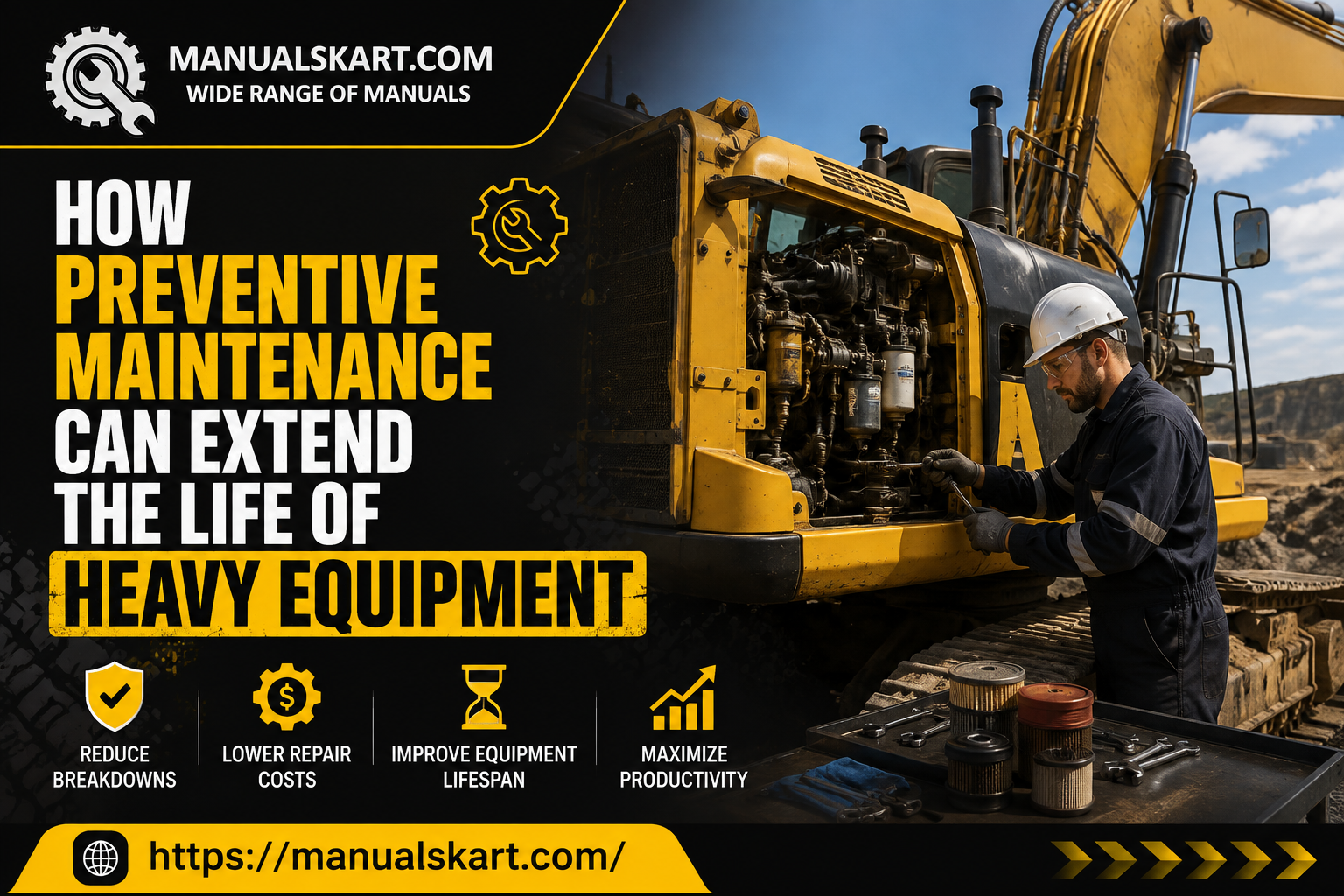
Heavy equipment is designed to handle demanding jobs, but even the toughest machines require consistent care. Excavators, wheel loaders, bulldozers, backhoes, and other construction machines operate under significant loads and are regularly exposed to dust, vibration, heat, moisture, and abrasive materials. Over time, these conditions can affect engines, hydraulic systems, transmissions, undercarriages, electrical components, and attachments.
Preventive maintenance provides a systematic way to manage this wear before it develops into a major failure. Instead of waiting until a machine stops working, equipment owners and technicians can inspect critical components, follow scheduled service intervals, identify early warning signs, and replace worn parts at the appropriate time.
A well-planned maintenance program does more than reduce breakdowns. It can improve equipment reliability, support consistent performance, reduce unnecessary downtime, and help owners get more useful working hours from their machines.
What Is Preventive Maintenance?
Preventive maintenance is planned equipment care performed at predetermined intervals or according to operating hours, manufacturer recommendations, machine condition, or usage patterns.
Unlike corrective maintenance, which takes place after a fault occurs, preventive maintenance focuses on reducing the likelihood of avoidable failures.
Typical preventive maintenance activities include:
Checking engine oil and coolant levels
Inspecting hydraulic systems for leaks
Replacing filters at recommended intervals
Lubricating moving components
Inspecting hoses, belts, and electrical connections
Checking tires, tracks, and undercarriage components
Inspecting attachments and work tools
Monitoring unusual noises, vibration, or temperature
Recording maintenance activities and inspection findings
The exact maintenance requirements vary by equipment type and model. Technicians should always follow the applicable manufacturer's recommendations rather than applying the same schedule to every machine.
Why Preventive Maintenance Matters for Heavy Equipment
Heavy equipment represents a significant investment for construction companies, contractors, farmers, rental businesses, and fleet operators. When a machine remains productive, it contributes to project efficiency. When it fails unexpectedly, the consequences can extend beyond the repair itself.
An unexpected failure may result in:
Equipment downtime
Delayed projects
Emergency repair costs
Additional labor requirements
Replacement-part delays
Reduced fleet productivity
Lost operating hours
Preventive maintenance cannot guarantee that a machine will never fail. Components can still fail unexpectedly, and operating conditions can change. However, regular inspections and servicing can help identify many developing problems before they become more serious.
1. Early Detection Helps Prevent Major Failures
Small problems often provide warning signs before they become major mechanical failures.
A hydraulic hose may develop a small leak. A belt may show cracking. An engine may begin consuming more oil than usual. A machine may develop an unusual vibration or produce a sound that was not present previously.
If these signs are ignored, the affected component may eventually fail and potentially damage other systems.
Regular inspections allow technicians to investigate these changes while the problem is still manageable. Early intervention can sometimes prevent a relatively simple repair from becoming a much larger job.
For this reason, preventive maintenance should include both scheduled servicing and careful observation of equipment behavior.
2. Proper Lubrication Reduces Wear
Many heavy equipment components depend on proper lubrication to operate efficiently. Pins, bushings, bearings, joints, and other moving parts experience friction during normal operation.
Insufficient lubrication can increase friction and accelerate wear. Contaminated lubricant can also affect component performance. On the other hand, applying excessive lubricant where it is not required may also cause problems.
The correct lubrication method depends on the component and machine. Maintenance personnel should therefore verify lubrication points, lubricant specifications, and service intervals using the appropriate technical documentation.
Consistent lubrication can help control friction and support longer component life, particularly in equipment that operates for long hours in demanding environments.
3. Fluid Checks Protect Critical Systems
Engine oil, hydraulic fluid, coolant, transmission fluid, and other fluids perform important functions within heavy machinery.
Fluid levels and condition can provide useful clues about equipment health. Low fluid levels may indicate a leak or excessive consumption. Contamination can affect component performance, while degraded fluids may no longer provide the protection required by the system.
Filters are equally important. A clogged filter can restrict flow, while a damaged filter may allow contaminants to reach sensitive components.
Scheduled fluid and filter inspections should be based on the machine's recommended maintenance requirements. Technicians should also pay attention to changes in fluid appearance, smell, level, or consumption when carrying out routine inspections.
4. Preventive Maintenance Reduces Unplanned Downtime
Unexpected equipment downtime can disrupt an entire project.
Consider a construction site that depends on a single excavator for excavation work. If that machine develops a major hydraulic or engine problem without warning, the project may have to wait while technicians diagnose the fault, source parts, and complete the repair.
Preventive maintenance helps fleet managers identify maintenance requirements before they become emergency situations.
Planned maintenance can also be scheduled around project requirements. Instead of waiting for a machine to fail during an important operation, managers can arrange inspections and servicing during planned periods.
This approach makes maintenance more predictable and can improve overall fleet availability.
5. Regular Inspections Support Better Equipment Performance
A machine does not have to experience a complete breakdown to indicate that something is wrong.
Slow hydraulic movement, excessive fuel consumption, overheating, abnormal vibration, unusual exhaust smoke, or reduced operating power may indicate an underlying issue.
Routine maintenance provides an opportunity to investigate these symptoms before they become more severe.
Technicians can compare current observations with previous inspection records to identify gradual changes. This is particularly useful for fleet operators because equipment performance can be monitored over an extended period.
6. Follow Manufacturer-Specific Maintenance Requirements
One of the most important principles of preventive maintenance is using information that matches the equipment being serviced.
Two machines may perform similar tasks but have completely different maintenance requirements. Fluid specifications, filter types, torque settings, adjustment procedures, inspection intervals, and component designs can vary between manufacturers and models.
For Caterpillar machinery, Caterpillar equipment manuals PDF can provide useful model-specific information for maintenance, operation, troubleshooting, and repair. Technicians can use the appropriate documentation to verify procedures instead of relying on assumptions or generic instructions.
This is especially important when performing maintenance tasks involving hydraulic systems, engines, transmissions, electrical systems, and other critical components.
7. Keep Accurate Maintenance Records
A maintenance record provides a history of what has been done to a machine and when the work was completed.
A useful record may include:
- Equipment model and serial number
- Current operating hours
- Date of inspection
- Maintenance performed
- Parts replaced
- Fluids and filters changed
- Problems discovered
- Technician observations
- Recommended future work
These records help maintenance teams understand equipment history and identify recurring problems.
For fleet operators, maintenance records can also help determine which machines require immediate attention and which components appear to have unusually high replacement rates.
Accurate records are particularly valuable when equipment is shared among multiple operators or maintenance teams.
8. Train Operators to Identify Warning Signs
Operators are often the first people to notice changes in machine behavior because they work with the equipment every day.
A trained operator may recognize that an excavator is moving more slowly, a loader is producing an unusual sound, or a machine is vibrating differently from normal.
Operators should be encouraged to report these observations rather than continuing to operate the machine without investigation.
Daily walk-around inspections can also help identify visible issues such as:
- Fluid leaks
- Damaged hoses
- Loose components
- Tire or track damage
- Broken lights
- Attachment problems
- Warning indicators
- Visible cracks or damage
Good communication between operators and maintenance personnel can prevent minor observations from being overlooked.
9. Consider the Working Environment
Not every machine experiences the same level of stress.
Equipment operating in quarries, demolition sites, mines, agricultural fields, muddy conditions, or highly dusty environments may experience accelerated wear compared with machines working under less demanding conditions.
Dust and abrasive materials can affect filters, seals, undercarriage components, and other systems. Extreme temperatures can also influence fluids, batteries, cooling systems, and engine performance.
Maintenance planning should therefore consider the actual working environment while still following the manufacturer's requirements.
When conditions are particularly severe, qualified maintenance personnel may need to evaluate whether additional inspections or servicing are appropriate.
10. Use Technical Documentation During Maintenance
Technical manuals can make preventive maintenance more structured by providing equipment-specific information
For example, Volvo equipment service manual can help technicians working on Volvo machinery understand relevant service procedures, component information, troubleshooting processes, and maintenance requirements.
Having the correct documentation available can reduce uncertainty during servicing. Instead of relying entirely on memory or general repair knowledge, technicians can verify specifications and procedures for the particular equipment they are working on.
This becomes increasingly important as equipment becomes more sophisticated and incorporates advanced electronic, hydraulic, and emissions-control systems.
11. Inspect Undercarriage and Attachments Regularly
The undercarriage is exposed to considerable stress, especially on tracked equipment.
Tracks, rollers, idlers, sprockets, bushings, and related components can gradually wear as the machine operates. Excessive wear can affect machine movement and may increase repair costs if components are not inspected at appropriate intervals.
Attachments also require regular attention. Buckets, teeth, cutting edges, hydraulic lines, couplers, and mounting points can experience significant wear depending on the application.
Routine inspection allows technicians to identify worn components and plan replacements before they interfere with productivity.
12. Preventive Maintenance Can Improve Long-Term Equipment Value
Proper maintenance can also influence the long-term value of heavy equipment.
A machine with documented servicing and a consistent maintenance history can provide buyers with greater confidence when it is eventually sold or traded.
More importantly, maintenance helps protect the machine's working condition throughout its useful life.
Extending equipment life does not mean operating a machine indefinitely without replacing components. It means managing wear, repairing problems appropriately, and maintaining the equipment according to its intended requirements.
Building a Practical Preventive Maintenance Schedule
A preventive maintenance program does not have to be complicated. A basic schedule can divide tasks according to frequency.
Daily Checks
Operators can perform walk-around inspections, check fluid levels, inspect for leaks, examine tires or tracks, and report unusual operating conditions.
Weekly Checks
Maintenance personnel can inspect hoses, belts, attachments, lubrication points, electrical connections, and visible signs of wear.
Scheduled Service
Oil, filters, lubrication, adjustments, and other required servicing should be completed according to the appropriate operating-hour or calendar-based intervals.
Periodic Inspections
Major components and systems should be evaluated for wear, performance changes, and developing faults. Findings should be documented and repairs planned accordingly.
The actual schedule should always be based on the specific machine and applicable manufacturer's documentation.
How Digital Manuals Can Support Maintenance Teams
Modern maintenance teams often need quick access to technical information. Digital manuals can make it easier to search for specific procedures, specifications, diagrams, and troubleshooting information without carrying large printed documents around a job site.
For technicians working with Komatsu machinery,komatsu parts manual can be useful when checking model-specific maintenance and repair information.
The important consideration is not simply having a manual available but ensuring that the documentation corresponds to the equipment being serviced.
Common Preventive Maintenance Mistakes to Avoid
Even companies with maintenance programs can make mistakes that reduce their effectiveness.
Ignoring Small Leaks
A small leak can indicate a damaged seal, hose, fitting, or component. Ignoring it may allow the problem to become more serious.
Skipping Scheduled Service
Delaying oil, filter, lubrication, or inspection tasks can increase wear and affect equipment reliability.
Using the Wrong Parts or Fluids
Components and fluids should meet the specifications applicable to the machine. Substituting unsuitable products can create additional problems.
Relying Only on Operator Experience
Experienced operators provide valuable insight, but technical maintenance should also follow documented procedures and manufacturer requirements.
Failing to Record Maintenance
Without accurate records, it becomes difficult to determine when a component was serviced, what work was performed, or whether a problem has occurred repeatedly.
Conclusion
Preventive maintenance is one of the most practical ways to protect heavy equipment from unnecessary wear and avoidable downtime. Regular inspections, proper lubrication, fluid and filter servicing, component checks, accurate records, and operator involvement all contribute to a more reliable maintenance program.
The goal is not simply to repair machines when they fail. It is to understand their condition, identify potential problems early, and perform the right maintenance at the right time.
Using equipment-specific technical information also makes the process more reliable. Maintenance teams can make better decisions when they have access to documentation that matches the exact machine they are servicing.
ManualsKart provides a wide selection of service manuals, repair manuals, operator manuals, and parts catalogs for construction, agricultural, and industrial equipment. For equipment owners, technicians, and fleet managers, combining reliable technical documentation with a consistent preventive maintenance program can help keep machinery productive and support a longer, more useful operating life.
Frequently Asked Questions
1.How often should heavy equipment receive preventive maintenance?
Maintenance frequency depends on the equipment model, operating hours, workload, environment, and manufacturer's recommendations. Daily inspections may be combined with scheduled services based on operating hours or calendar intervals.
2.Can preventive maintenance completely prevent equipment breakdowns?
No. Preventive maintenance cannot eliminate every possible failure. However, it can help identify wear and developing faults early and reduce failures associated with neglected maintenance.
3.What is the most important part of preventive maintenance?
There is no single task that is most important for every machine. Regular inspections, correct lubrication, fluid and filter maintenance, scheduled servicing, and following model-specific requirements all play important roles.
4.Why should maintenance records be kept?
Maintenance records provide a history of inspections, repairs, replaced parts, and servicing. They help technicians identify recurring problems and plan future maintenance more effectively.
5.Should operators perform maintenance themselves?
Operators can perform approved daily inspections and basic checks, but technical repairs and servicing should be completed by appropriately trained personnel following the applicable equipment documentation and safety procedures.
6.Can preventive maintenance extend the life of heavy equipment?
Yes. Proper maintenance can help control component wear, identify problems early, maintain system performance, and reduce damage caused by neglected servicing. The actual service life will still depend on operating conditions, equipment design, usage, and maintenance quality.
 English
Join our community to interact with posts!