
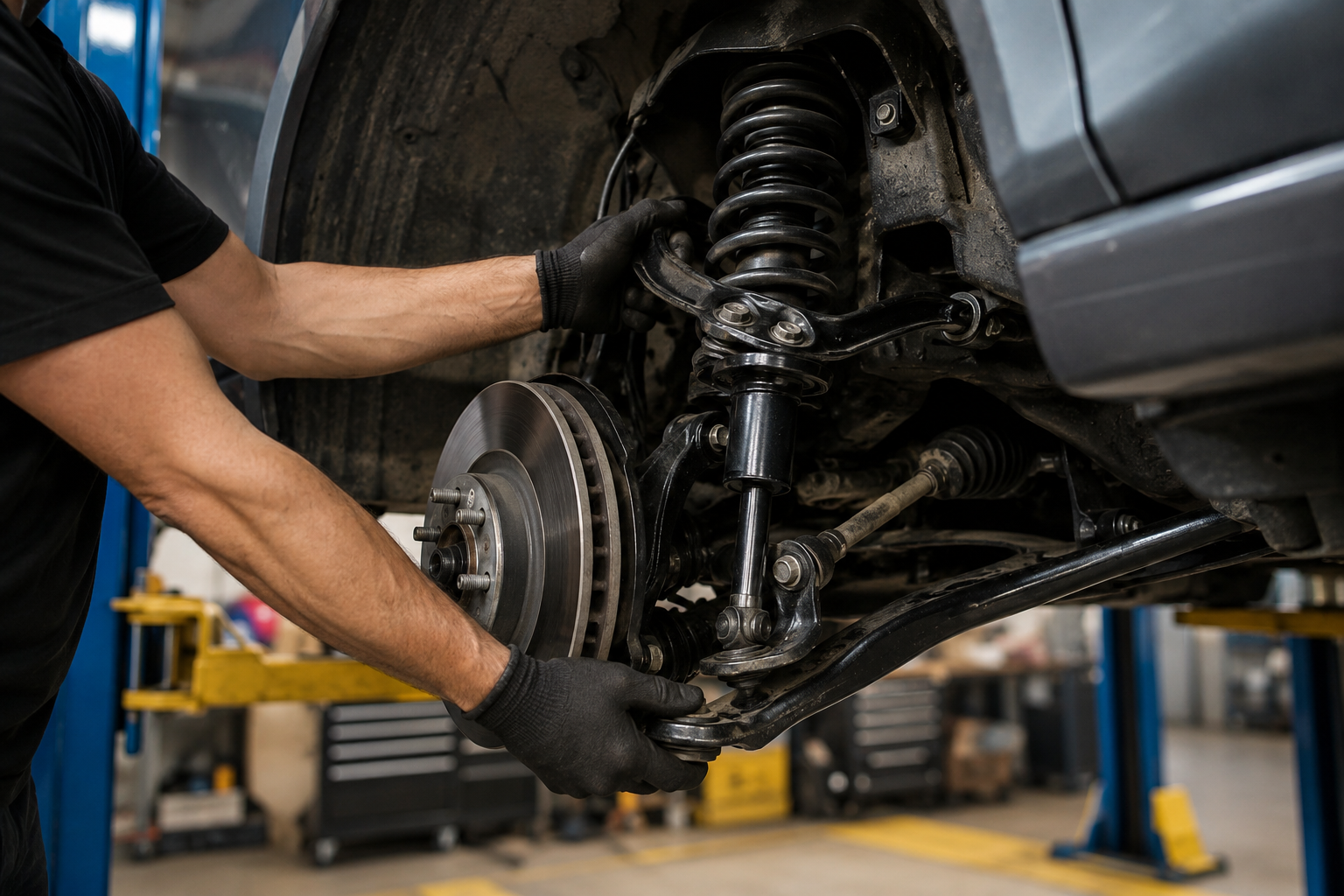
Car suspension repair can become necessary when your vehicle starts showing changes in ride quality, steering, or handling. The suspension system plays an important role in keeping the tires connected to the road while helping absorb bumps and uneven surfaces. Because suspension components wear gradually, knowing the early warning signs can help drivers address problems before they become more serious.
One of the easiest signs to notice is a rough or uncomfortable ride. If your car feels unusually stiff over potholes, speed bumps, or rough pavement, worn shocks, struts, or other suspension components could be responsible. A vehicle that feels different from its usual driving behavior should not be ignored.
Excessive bouncing is another common warning sign. After passing over a bump, the vehicle should settle relatively quickly. If it continues bouncing several times, the shocks or struts may no longer be controlling the movement properly. This can affect comfort as well as the vehicle's stability.
Uneven tire wear can also point toward suspension trouble. When suspension parts become worn or damaged, the tires may not maintain consistent contact with the road. This can lead to uneven tread wear, particularly along the inner or outer edges. Checking tire condition regularly can help identify these changes early.
Drivers may also notice steering problems. Pulling to one side, drifting while driving, or feeling less stable during turns can have several causes, including alignment, tire, steering, or suspension issues. A professional inspection can help determine which component is responsible instead of assuming the problem comes from one part.
Unusual noises are another reason to pay attention. Clunking, knocking, squeaking, or rattling sounds from underneath the vehicle may indicate worn bushings, ball joints, control arms, sway bar links, mounts, or other components. These noises can become more noticeable when driving over uneven roads or making turns.
A visual inspection can sometimes reveal additional clues. A vehicle sitting lower on one side, leaking fluid around a shock or strut, or visibly damaged components may indicate that the suspension needs attention. However, some problems are hidden and require proper testing to identify.
Regular suspension inspections can help maintain predictable handling, even tire wear, and a comfortable ride. If your vehicle develops unusual noises, excessive bouncing, uneven tire wear, or steering changes, getting the system checked can help identify the cause. Addressing problems at the right time can make suspension repair simpler and help keep the vehicle safer and more comfortable to drive.
 English
Join our community to interact with posts!