
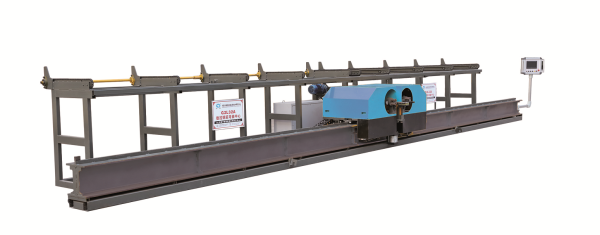
Reinforcement steel is an essential part of modern construction, providing strength and structural stability to concrete buildings, bridges, foundations, and infrastructure projects. As construction requirements continue to grow, contractors and steel fabrication businesses need reliable ways to process rebar accurately and efficiently. Manual bending methods can become increasingly difficult when projects involve high production volumes and strict dimensional requirements. An automatic rebar bending machine provides a modern solution for businesses seeking greater productivity and consistency in reinforcement steel processing.
One of the key advantages of automated rebar bending technology is its ability to deliver repeatable results. Construction projects often require large quantities of reinforcement bars with specific shapes and bending angles. Producing these components manually can take significant time while increasing the possibility of variations between individual pieces. Automated machinery can follow programmed parameters, helping operators produce consistent bends throughout a production cycle.
Efficiency is another important factor for modern steel processing operations. Traditional rebar bending may involve repeated measuring, positioning, and manual forming. These steps can consume valuable working hours and create bottlenecks when production demands increase. Automation can streamline these repetitive processes, allowing businesses to handle larger workloads in a more organized manner while making better use of available labor.
Precision is particularly important when reinforcement components must match engineering and construction specifications. Accurate bending helps ensure that prepared rebar is suitable for its intended application. CNC-controlled technology provides greater control over production settings, enabling operators to establish required parameters before processing begins. Consistent output can make reinforcement assembly and installation more straightforward on construction sites.
An automatic rebar bending machine can also help improve workplace organization. Instead of requiring workers to perform every bending operation manually, automated systems allow operators to supervise the process and focus on important tasks such as material preparation, machine configuration, quality inspection, and production planning. This can reduce the burden of repetitive operations and create a more structured production environment.
Another benefit is improved production flexibility. Different construction projects may require reinforcement bars in various shapes and dimensions. Programmable bending equipment can support changing production requirements by allowing operators to adjust processing parameters according to project specifications. This flexibility can be valuable for fabrication businesses serving multiple customers and handling different types of reinforcement orders.
Better process control can also contribute to more efficient material management. When rebar is processed according to defined specifications, businesses can organize production around actual project requirements. Accurate processing and reduced unnecessary handling may help minimize avoidable material losses while supporting more efficient use of available steel. For high-volume operations, even small improvements in material management can have a meaningful impact over time.
Automated rebar bending equipment can support a wide range of construction applications. Reinforcement bars are used in columns, beams, foundations, slabs, tunnels, bridges, and many other structural projects. Having dependable machinery available allows steel processors and contractors to prepare reinforcement components efficiently and maintain consistent production standards across different applications.
For growing construction and steel fabrication businesses, automation can provide a practical path toward increased production capacity. Rather than relying exclusively on additional manual labor as demand rises, companies can introduce equipment designed to simplify repetitive processing tasks. This can help businesses maintain efficient workflows while responding to increasingly demanding project schedules.
Choosing the right reinforcement processing equipment is ultimately about creating a balance between productivity, accuracy, flexibility, and reliable operation. Modern automatic bending technology can help companies strengthen their production processes and improve the consistency of their finished reinforcement components. By adopting efficient machinery, businesses can prepare for larger workloads and build a more capable steel processing operation.
As construction continues to evolve, efficient rebar processing will remain an important part of successful project execution. Advanced automation gives manufacturers and contractors an opportunity to modernize their workflows, improve production consistency, and meet the growing expectations of today's construction industry.
 English
Join our community to interact with posts!