
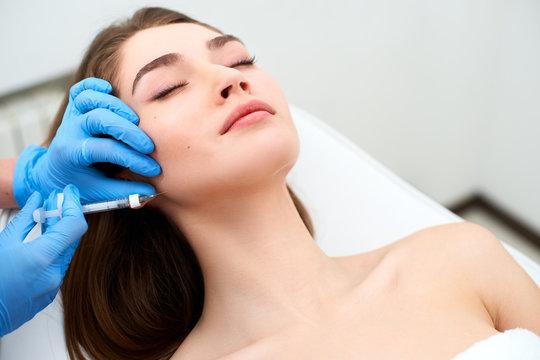
Not every facial wrinkle requires the same approach. Some lines become noticeable when you raise your eyebrows, others appear when you smile, while certain creases may remain visible even when your face is relaxed. Understanding where facial movement is creating the most noticeable changes can help you think more clearly about aesthetic goals. Botox injection in Dubai is used in several facial areas, with each application serving a different purpose depending on the underlying muscle activity and the desired appearance.
Start With the Area That Bothers You Most
A useful starting point is to identify the feature that attracts your attention when you look in the mirror.
For some people, it may be horizontal forehead lines. For others, the main concern could be vertical lines between the eyebrows or small wrinkles extending from the outer corners of the eyes.
Rather than approaching facial rejuvenation as a treatment for the entire face, focusing on a specific concern can make the aesthetic objective much clearer.
The same treatment does not need to be applied everywhere. Different facial regions have different movement patterns and contribute differently to facial expression.
Forehead Lines and Brow Movement
The forehead moves whenever the eyebrows are raised. This repeated movement can create horizontal lines across the upper face.
These lines may initially disappear when the forehead relaxes but can become increasingly noticeable over time.
For someone whose primary concern is forehead movement, the aesthetic objective may involve creating a smoother-looking upper face without eliminating normal expression.
The forehead also interacts visually with the eyebrows, so its appearance should be considered as part of the overall upper-face balance.
Why the Forehead Needs a Balanced Approach
The forehead contributes to eyebrow movement and facial communication. Excessive reduction in movement may change the way the face naturally expresses emotion.
For this reason, the goal is often controlled softening rather than complete immobilization.
A balanced appearance can help the forehead look smoother while allowing the surrounding features to retain their natural character.
Frown Lines Between the Eyebrows
The area between the eyebrows behaves differently from the forehead. Repeated inward movement can create vertical creases commonly known as frown lines.
These lines can sometimes make the face appear serious or tense even when the person is relaxed.
For individuals concerned primarily with this area, the aesthetic focus may be on softening the appearance of these creases and creating a calmer-looking expression.
The surrounding eyebrows and eye area also influence the final appearance, making overall facial proportions relevant.
Crow’s Feet Around the Eyes
The outer eye area is another frequently discussed treatment zone. Smiling and squinting naturally activate the muscles around the eyes, creating fine lines that may become more noticeable with time.
Crow’s feet are closely connected to genuine facial expression. Therefore, completely removing movement may not be the desired outcome.
A subtle approach can focus on reducing the prominence of lines while allowing the eyes to remain expressive during smiling and other natural reactions.
Lower-Face Applications Are Different
Botox is not limited to traditional upper-face wrinkle concerns. Certain applications involve muscles in the lower face or jaw region.
For example, the masseter muscles along the sides of the jaw can contribute to a broader-looking lower face when they are particularly developed.
Addressing muscle activity in this region is different from treating forehead wrinkles. The purpose may be related to facial contour rather than conventional wrinkle reduction.
Why Muscle Anatomy Matters
Every treatment area has its own anatomy and movement pattern. The muscles around the eyes serve a different purpose from those around the jaw, forehead, or neck.
This means that the aesthetic goal should be matched to the specific muscle group involved.
Understanding this distinction can help individuals avoid thinking of Botox as a one-size-fits-all treatment.
Neck Concerns Require a Different Perspective
Some people are concerned about visible vertical neck bands or muscle-related changes along the lower face and neck.
The platysma muscle can become more noticeable in certain individuals as facial aging progresses. Its activity may contribute to visible bands or changes in the appearance of the jaw and neck transition.
This type of application is different from treating facial expression lines. The neck has important functional roles, so any aesthetic consideration must take its anatomy into account.
Why One Facial Area May Affect Another
The face works as a connected system rather than a collection of isolated features.
Changing the appearance of the forehead can influence how the eyebrows are perceived. Adjusting the appearance of the jaw area can affect how the lower face looks in relation to the cheeks and chin.
This is why facial harmony is often more important than treating the largest possible number of lines.
A smaller, carefully considered improvement may produce a more natural overall effect than trying to address every visible wrinkle.
Dynamic Wrinkles Versus Other Signs of Aging
Before deciding which area to focus on, it is useful to understand whether muscle movement is actually responsible for the concern.
Dynamic wrinkles appear or become more pronounced during facial movement. Other lines may be associated with changes in skin elasticity, hydration, collagen, or facial volume.
Botox primarily affects muscle activity. It is therefore not a universal solution for every type of facial aging.
This distinction can help establish more realistic expectations and prevent confusion about what a particular treatment is intended to accomplish.
Matching Treatment Goals With Personal Preferences
Two people may have the same visible wrinkle but completely different aesthetic goals.
One person might want the smallest possible improvement, while another may prefer more noticeable smoothing. Someone else may be more concerned about maintaining strong facial expression than achieving maximum wrinkle reduction.
There is no single definition of an ideal result.
The right approach should reflect the individual's comfort level, facial features, and desired degree of change.
Subtle Does Not Mean Ineffective
Aesthetic improvement does not have to be dramatic to be visible.
Softening one particularly prominent expression line can change the overall impression of the face. Similarly, reducing strong muscle prominence in a specific area may subtly alter facial proportions.
The most appropriate result is not necessarily the most obvious one. For many people, the ability to look refreshed without appearing significantly different is the main objective.
What Influences the Choice of Area?
Several considerations can help determine which facial area deserves attention.
The first is the type of wrinkle or muscle-related concern. The second is how strongly that area moves during everyday expressions. Skin quality and the depth of existing lines also matter.
Personal priorities are equally important. If one feature is causing the greatest dissatisfaction, focusing on that concern may provide more meaningful improvement than treating several minor areas.
Facial balance should remain part of the decision, particularly when considering multiple areas.
Building a More Thoughtful Facial Aesthetic Plan
Aesthetic care can be approached as a process of prioritization rather than a checklist of procedures.
Start by identifying the features that influence your appearance most. Consider whether they are connected to muscle activity, skin changes, or another factor. Then think about how any improvement might interact with surrounding facial features.
This approach encourages realistic expectations and reduces the temptation to pursue unnecessary changes.
Final Thoughts
Different facial areas require different aesthetic considerations, which is why Botox injection in Dubai should not be viewed as a single treatment with the same purpose everywhere. Forehead lines, frown lines, crow’s feet, jaw-related muscle prominence, and neck concerns each involve different anatomy and aesthetic goals.
Choosing the right treatment focus is ultimately about understanding your individual features and deciding which changes would make the most meaningful difference. At TAJMEELS CLINIC, the emphasis is on personalized aesthetic planning and balanced results that complement the natural structure and expression of the face.
 English
Join our community to interact with posts!