
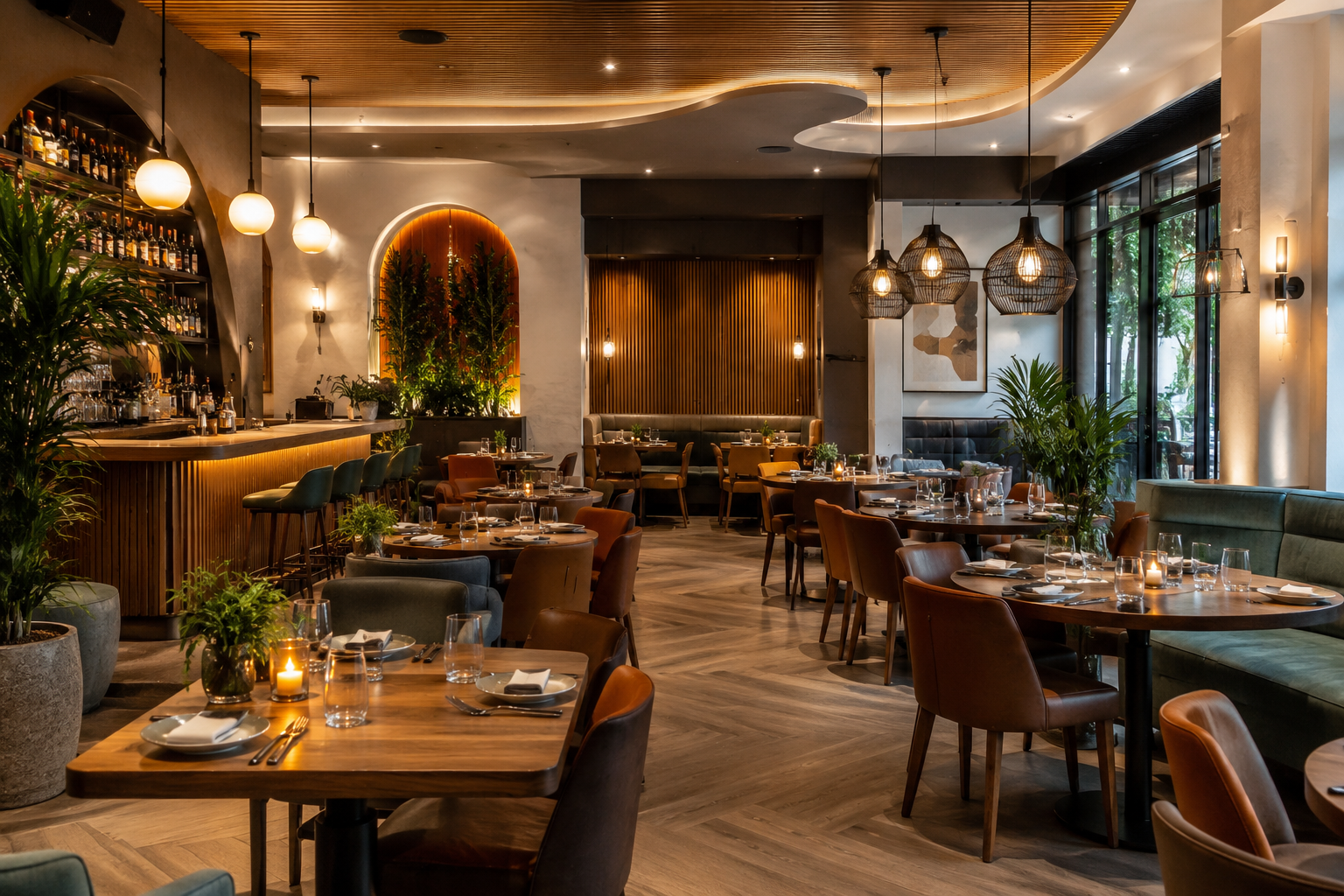
Strong restaurant interior design ideas should do more than make a dining room look attractive. They should support the restaurant's brand, improve customer comfort, guide movement, and create a practical environment for staff. Seating, lighting, acoustics, materials, colors, and layout all work together to shape the guest experience.
What Makes a Restaurant Interior Stand Out?
A memorable restaurant usually has a clear visual identity. The interior should feel connected to the food, service style, and overall brand.
For example, a casual restaurant may use approachable furniture and energetic design elements, while a fine dining space may benefit from refined finishes, controlled lighting, and more spacious seating arrangements.
Consider these elements:
-
Color palette
-
Furniture
-
Lighting
-
Flooring
-
Wall treatments
-
Artwork
-
Signage
-
Decorative features
-
Table arrangement
Consistency matters. Individual design elements should support the same overall concept rather than competing for attention.
How Should I Arrange Restaurant Seating?
Seating should provide enough comfort and privacy without wasting valuable floor space.
A mix of tables, booths, bar seating, or flexible arrangements can accommodate different customer groups. Tables should also provide sufficient space for servers to move between guests.
The entrance and waiting area should remain clear so arriving customers do not interfere with active dining areas.
How Does Lighting Affect Restaurant Atmosphere?
Lighting can dramatically change the mood of a dining space. Ambient lighting provides general illumination, while accent lighting can highlight artwork, architectural details, tables, or branded elements.
The right lighting level depends on the restaurant concept. A breakfast café may need brighter lighting, while an evening-focused restaurant may benefit from softer illumination.
Do Not Overlook Acoustics
A beautiful restaurant can still provide a poor experience if customers struggle to hear each other.
Ceiling treatments, wall finishes, upholstery, curtains, and other acoustic elements can help reduce excessive sound reflection. These solutions should be incorporated into the design without compromising the visual concept.
Frequently Asked Questions
What is the most important part of restaurant interior design?
Layout is one of the most important elements because it affects customer comfort, staff movement, seating capacity, and overall restaurant efficiency.
How often should a restaurant interior be remodeled?
There is no fixed schedule. Remodeling may become worthwhile when the interior looks outdated, no longer reflects the brand, requires frequent repairs, or does not support current customer and operational needs.
 English
Join our community to interact with posts!