
Customers want speedier service, consistent food quality, improved hygiene, and more environmentally friendly corporate practices. At the same time, restaurant owners are seeking for ways to reduce operating costs while maintaining food quality.
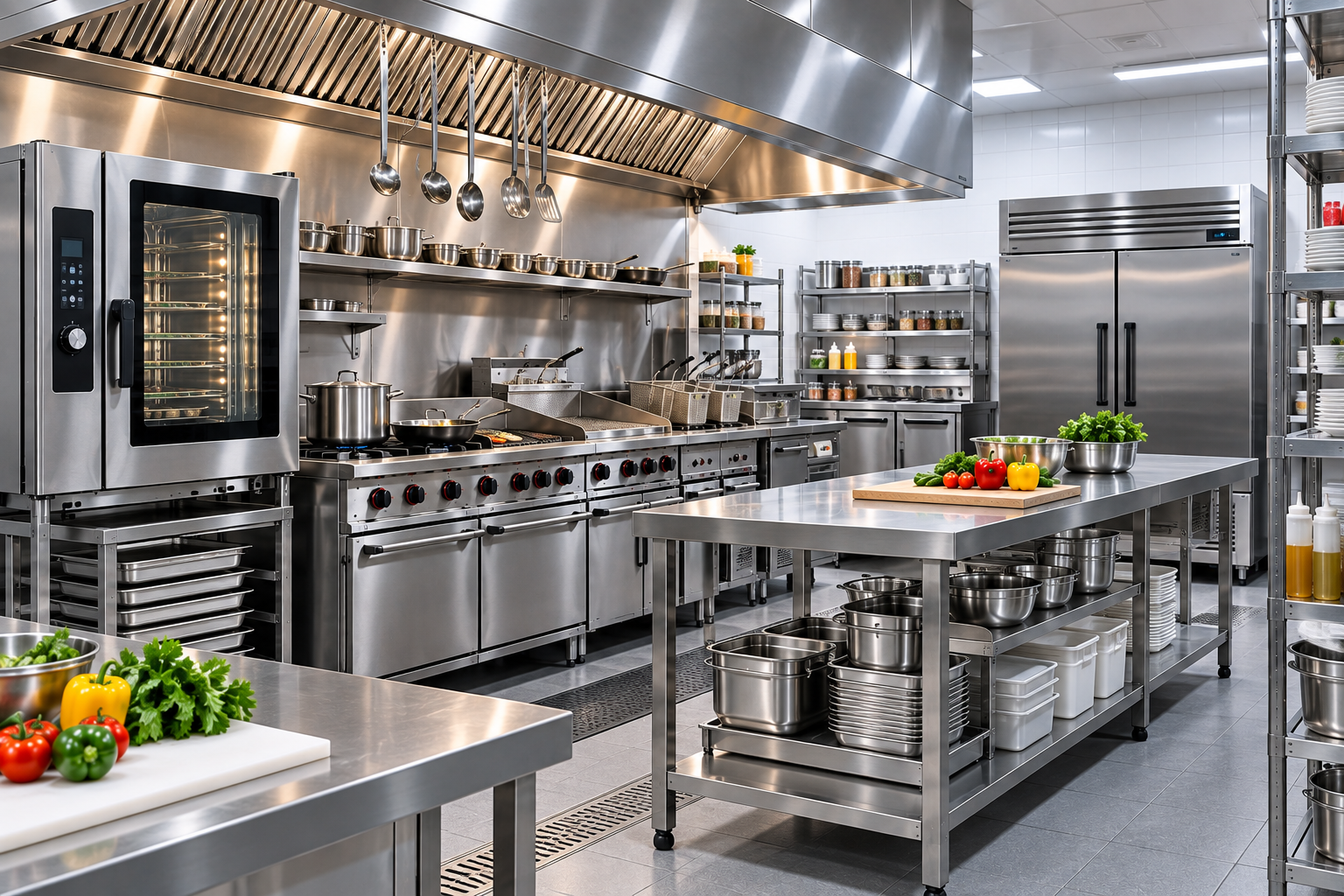
These innovations are influencing the way professional kitchens are built and outfitted. Modern restaurant kitchen equipment is no longer limited to cooking. Energy efficiency, automation, intelligent technology, adaptability, and ease of maintenance are all becoming increasingly significant.
If you're opening a restaurant or upgrading an existing kitchen, here are some key equipment trends to watch in 2026.
1. Smart Kitchen Equipment
Connected equipment is becoming more beneficial in modern commercial kitchens.
Smart ovens, refrigerators, freezers, and other appliances can provide temperature, operational performance, and equipment status. Some systems can also provide alarms when temperatures exceed the specified range or when maintenance is required.
For restaurant operators, this can make it easier to monitor equipment and detect possible problems before they cause costly breakdowns.
2. Energy-Efficient Equipment
Restaurants are particularly concerned about energy consumption because cooking and refrigeration equipment frequently operates for extended periods of time.
In 2026, energy efficiency remains an essential consideration when buying equipment. High-efficiency kitchen appliances, refrigeration systems, induction equipment, and demand-controlled ventilation can all help to reduce energy waste.
While more efficient equipment may require a larger initial investment, lower running expenses might make it a wise long-term choice.
3. Induction Cooking Technology
Induction cooking is gaining popularity in commercial kitchens due to its fast and precise heating.
Unlike traditional gas cooking, induction directs heat to appropriate cookware. This can increase cooking control while minimizing the amount of heat produced into the kitchen.
Induction technology might be a good alternative for restaurants that want to enhance working conditions and save energy.
However, the appropriate cooking method is determined by the menu, kitchen workflow, available electrical capacity, and cooking requirements.
4. Compact and Space-saving Equipment
Restaurant kitchens are not necessarily vast, especially in metropolitan areas and delivery-oriented enterprises.
Compact equipment is thus becoming more crucial. Multi-function appliances can complete multiple cooking or preparatory activities while taking up less space.
Under-counter refrigerators, small ovens, modular cooking lines, and space-saving storage systems can help firms make better use of their limited kitchen space.
The idea isn't only to squeeze more equipment into a kitchen. Its purpose is to design an effective arrangement in which employees may move comfortably and work fast.
5. Multifunctional Cooking Equipment
Restaurant operators are increasingly seeking equipment that can fulfill many functions.
Combination ovens are an excellent example. Depending on the type, they can accommodate a variety of culinary techniques, including steaming, baking, roasting, and more.
Multi-functional equipment can reduce the number of individual appliances necessary while also providing greater flexibility when menus alter.
This flexibility might be especially beneficial for eateries that are growing.
6. Automation in food preparation
Automation is another trend affecting commercial kitchens.
Automated cooking and preparation equipment can aid with repetitive operations and produce more consistent outcomes. This is especially useful for restaurants with large order quantities or standardized menus.
Automation does not always imply replacing kitchen staff. Instead, technology can eliminate repetitive duties and allow people to concentrate on activities requiring more attention and ability.
The most useful automation will typically be equipment that answers a specific operational need, rather than technology installed merely because it is new.
7. Improved refrigeration and cold storage
Every professional kitchen requires reliable refrigeration.
Modern refrigeration technology is increasingly geared toward temperature stability, energy efficiency, improved organization, and easier monitoring.
Restaurants are also focusing more on cold rooms, blast chillers, freezers, and other specialized storage equipment as they seek better ways to manage materials and prepared foods.
Maintaining proper storage conditions can help to preserve food quality and avoid wasteful waste.
8. Equipment Designed for Easy Cleaning
Hygiene is always a top priority in the food industry, and equipment design is responding accordingly.
Smooth surfaces, accessible components, removable parts, and easy-to-clean designs can all help to cut down on routine cleaning time.
This is especially useful in busy kitchens where equipment may need to be cleaned multiple times during the working day.
Choosing equipment with appropriate hygiene features can help improve both cleanliness and staff efficiency.
9. Sustainable Kitchen Solutions
Sustainability is becoming an increasingly essential factor for restaurant operators.
Along with energy-efficient appliances, restaurants are looking into technologies that can assist decrease water usage, food waste, and wasteful energy use.
Efficient dishwashers, induction cooking, enhanced refrigerators, and demand-based ventilation are some of the technologies that can help create a more sustainable kitchen.
Sustainability can be financially beneficial to restaurant businesses by reducing resource usage.
10. Flexible and Modular Kitchen Designs
Restaurant concepts can evolve rapidly. A company may offer delivery services, update its menu, expand production, or open new sites.
Modular restaurant kitchen equipment can help you react to these changes. Equipment can be organized around the kitchen's workflow and, in some situations, enlarged or altered as needs evolve.
This flexibility is especially valuable for expanding restaurants and multi-brand cloud kitchens.
Choosing the Right Equipment for 2026
Following trends is beneficial, but restaurant managers should avoid purchasing equipment just because it is considered current.
The proper equipment should be suitable for your menu, kitchen size, production volume, staff workflow, energy requirements, budget, and future goals.
Before making a purchase, think about the equipment's capacity, operating expenses, maintenance requirements, warranty, spare parts availability, and after-sales service.
Final Thoughts
The restaurant kitchen of 2026 is becoming smarter, more efficient, versatile, and environmentally conscious. Businesses may increase kitchen performance in a variety of ways, including linked appliances, induction cooking, compact designs, automation, sophisticated refrigeration, and modular equipment.
However, the best restaurant kitchen equipment isn't always the most technologically advanced alternative. It is the equipment that addresses real operating needs and provides consistent performance day after day.
Understanding these patterns and carefully selecting equipment allows restaurant operators to create kitchens that are better equipped for today's demands and tomorrow's development.
 English
Join our community to interact with posts!