
 Finding a dependable Mango pulp exporter in India can be challenging when your business needs consistent taste, food safety, reliable documentation, and timely international delivery. A low-quality batch can affect beverages, desserts, dairy products, bakery fillings, and other finished foods.
For international buyers, choosing the right mango pulp exporter is therefore not simply about price. It is about product consistency, sourcing, processing, packaging, compliance, and professional communication.
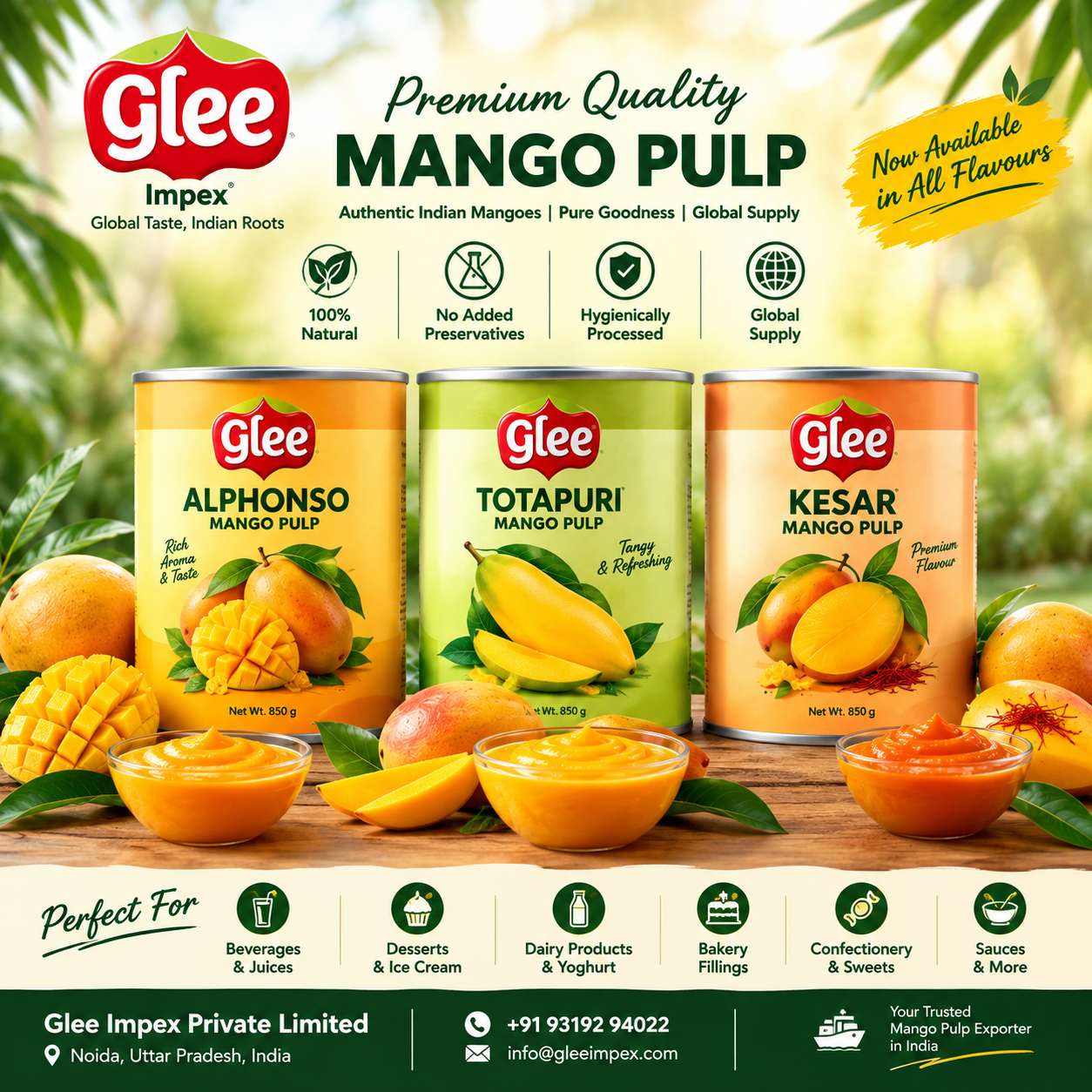
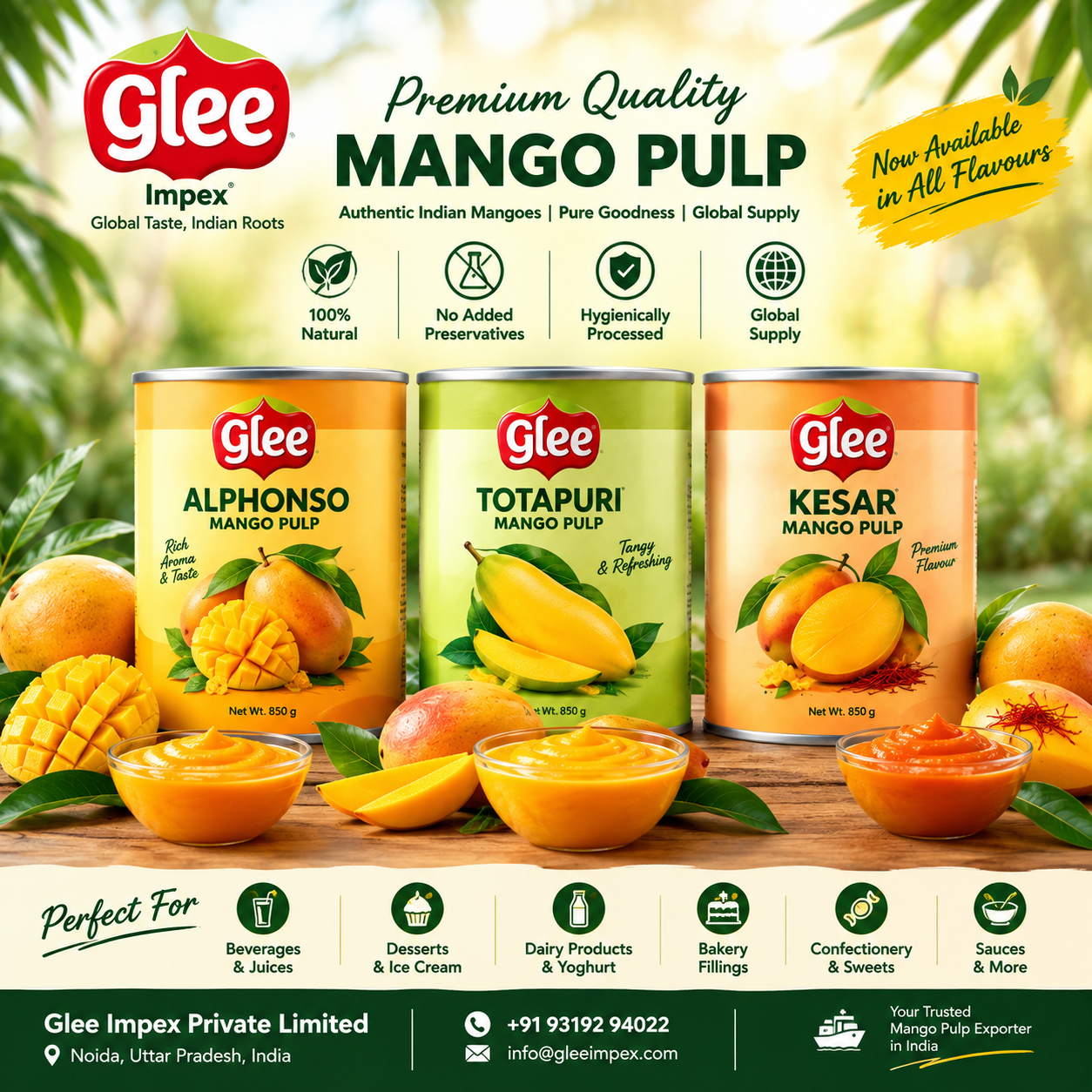
Glee Impex Private Limited, based in Noida, Uttar Pradesh, supplies Indian mango pulp for international markets. Its website highlights Alphonso Mango Pulp, Totapuri Mango Pulp, and Kesar Mango Pulp, processed hygienically with focus on purity, taste, and consistency.
Why Choose a Mango Pulp Exporter in India?
India has a strong mango-growing and processing ecosystem, giving international buyers access to several commercially important mango varieties. According to APEDA, Indian mango pulp includes varieties such as Alphonso, Totapuri, Neelum, and Kesar. APEDA also identifies major processing clusters in Chittoor, Andhra Pradesh, and Krishnagiri, Tamil Nadu.
India's export infrastructure also supports international demand. APEDA reports that India exported 62,864.13 metric tonnes of mango pulp during FY 2025–26, with major destinations including the USA, UK, Saudi Arabia, the Netherlands, and Germany.
For a buyer searching for the best mango pulp exporter in India, these factors make supplier verification especially important.
Mango Pulp Varieties for International Buyers
Alphonso Mango Pulp
Known for its rich aroma, attractive colour, and distinctive flavour, Alphonso mango pulp is suitable for premium beverages, desserts, dairy products, confectionery, and other food applications.
Buyers searching for alphanso mango pulp or alphanso mango puree should confirm the exact product specification, packaging format, processing method, and quality parameters before placing a bulk order.
Totapuri Mango Pulp
Totapuri mango pulp is widely used in food processing because of its suitability for commercial applications. A reliable totapuri mango pulp exporter should be able to provide clear specifications and consistent batches.
For international sourcing, buyers looking for a totapuri mango pulp exporter in India should evaluate fruit sourcing, processing hygiene, documentation, packaging, and logistics rather than relying only on online listings.
Kesar Mango Pulp
Kesar is another recognised Indian mango variety used in processed mango products. A kesar mango pulp exporter can serve manufacturers looking for distinctive flavour and colour profiles.
Before selecting a kesar mango pulp exporter in India, buyers should request product specifications and applicable quality documentation for their destination market.
What Makes a Professional Mango Pulp Exporter Different?
A professional supplier understands that international food trade requires more than supplying a product.
Glee Impex describes itself as an international agro-exporting company and lists Noida, Uttar Pradesh, India as its business location. Its mango pulp page specifically states that its products are processed hygienically while focusing on purity, taste, and consistency.
This approach is important for buyers using mango pulp in commercial production, where changes in colour, flavour, texture, or consistency can affect the final product.
Platforms such as TradeIndia can help buyers discover suppliers, but online listings should be treated as an initial sourcing step. Buyers should independently verify the exporter’s company details, specifications, documentation, samples, and commercial terms before entering into a transaction.
Mango Pulp Export Process from India
A structured export process helps reduce misunderstandings and delays.
1. Product Requirement
The buyer first communicates the required variety, quantity, packaging, destination country, specifications, and intended application.
2. Product and Quality Discussion
The exporter confirms available varieties such as Alphonso, Totapuri, or Kesar and discusses applicable specifications and packaging.
3. Sample or Specification Approval
Where required, buyers can review samples or technical specifications before confirming the commercial order.
4. Documentation and Compliance
Export documentation depends on the product and destination. India's DGFT states that an Importer Exporter Code (IEC) is mandatory for export/import activities unless specifically exempted.
Food businesses in India are also subject to FSSAI licensing or registration requirements under the Food Safety and Standards framework.
Depending on the shipment and destination, documentation may include commercial invoices, packing lists, shipping documents, certificates of origin, food-safety documents, and other destination-specific certificates.
5. Packaging and Shipment
Mango pulp needs packaging appropriate for its processing method, shelf-life requirements, handling conditions, and destination regulations. APEDA notes that mango pulp may be frozen after pasteurisation or processed for applications such as juices, nectars, jams, bakery products, yoghurt, ice cream, and confectionery.
6. Delivery and Buyer Support
Professional communication should continue after dispatch, including shipment documentation and coordination with the buyer or logistics partner.
Quality Assurance and Certifications
Quality assurance should begin with raw-material selection and continue through processing, packing, storage, and dispatch.
Buyers should ask an export company in India for relevant food-safety and product documentation rather than accepting unsupported certification claims. Requirements can vary according to the destination country, product specification, and buyer's intended application.
For businesses involved in import and export in India, legal compliance and accurate export documentation are essential. DGFT's Foreign Trade Policy confirms the importance of IEC compliance for export/import activity.
Ethical Sourcing and Confidential Business Dealings
Responsible sourcing is increasingly important in international food trade. Buyers should seek transparent information about sourcing, processing, specifications, and documentation.
Confidentiality is equally important in B2B relationships. Product formulations, pricing, packaging requirements, private-label information, customer details, and commercial discussions should be handled professionally and only shared where necessary for fulfilling the business relationship.
These practices help create the foundation for long-term India trade relationships rather than one-time transactions.
Why Glee Impex for Mango Pulp Export?
Glee Impex's official mango pulp page identifies its core mango pulp varieties as Alphonso, Totapuri, and Kesar and states that the company focuses on hygienic processing, purity, taste, and consistency. The company lists its location as Noida, Uttar Pradesh, India.
Its official contact page lists +91 93192 94022 and the Noida, Uttar Pradesh address for business enquiries.
For buyers comparing a top exporter in India, practical verification remains important: review specifications, confirm documentation, discuss packaging and quantities, and establish clear commercial terms before ordering.
Frequently Asked Questions
1. Which mango pulp varieties are available from India?
Common commercial varieties include Alphonso, Totapuri, Kesar, and Neelum. APEDA specifically lists these varieties within India's mango pulp sector.
2. How do I choose a reliable mango pulp exporter?
Check the supplier's company details, product specifications, food-safety documentation, packaging capability, export experience, communication, and ability to meet destination-market requirements.
3. What is the difference between Alphonso and Totapuri mango pulp?
They differ in flavour profile, colour, characteristics, and typical processing applications. The appropriate choice depends on the buyer's final product and required specification.
4. Is IEC required for export from India?
DGFT states that IEC is mandatory for export/import activities unless an exemption applies.
5. Where can I buy bulk mango pulp from India?
International buyers can approach established exporters directly and use recognised trade directories such as APEDA's exporter directory for supplier research and verification.
Conclusion: Build a Reliable Mango Pulp Supply Chain
Successful India export is built on quality, compliance, communication, and dependable supply—not simply a low quotation. Whether you need Alphonso, Totapuri, or Kesar mango pulp, selecting a professional mango pulp exporter in India can help your business manage quality and international sourcing more effectively.
Glee Impex Private Limited supplies mango pulp from Noida, Uttar Pradesh, with its website highlighting Alphonso, Totapuri, and Kesar varieties and a focus on purity, taste, and consistency.
Looking for mango pulp for your international business? Contact Glee Impex at +91 93192 94022 to discuss your required variety, quantity, packaging, destination, and export requirements.
 English
Join our community to interact with posts!