
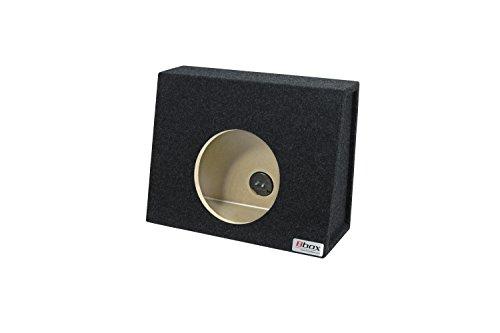
A subwoofer enclosure 12 inch can provide the low-frequency foundation a vehicle audio system needs while maintaining a practical footprint. A well-designed enclosure does more than house the woofer; it creates the acoustic environment that controls how the driver moves and how bass energy is produced inside the cabin. For listeners who want stronger low-end presence without turning their vehicle into a dedicated audio build, the right 12-inch enclosure offers a useful balance between performance and space.
Bass quality depends on much more than the diameter of the subwoofer. Enclosure design, internal air volume, construction, driver compatibility, amplifier configuration, and vehicle acoustics all contribute to the finished sound. When these components are selected as one system, a 12-inch subwoofer can deliver substantial low-frequency impact while retaining definition across different types of music.
The enclosure should therefore be viewed as an important part of the audio system rather than an accessory added at the end of an installation. A carefully chosen design can help the subwoofer operate within its intended range and make it easier to integrate powerful bass into the vehicle's existing speakers.
The Enclosure Is Part of the Acoustic System
A subwoofer produces sound by moving its cone, but the enclosure influences how that movement behaves. Depending on its design, the cabinet can control the driver's response, affect efficiency, and shape the character of the bass reaching the cabin.
Sealed and ported enclosures accomplish this in different ways. A sealed cabinet uses an enclosed volume of air to provide mechanical control, while a ported design incorporates a tuned opening that interacts with the driver's output.
The right choice depends on the subwoofer and the listener's priorities. A compact sealed design may appeal to someone looking for controlled and responsive bass, while a properly engineered ported enclosure may be preferred when a different balance of output and efficiency is desired.
Begin With the Subwoofer Specifications
One of the easiest mistakes in an enclosure project is selecting a box based only on physical size. Two 12-inch subwoofers can have very different enclosure requirements.
Before choosing a cabinet, review the manufacturer's specifications for recommended enclosure volume, mounting depth, cutout dimensions, impedance, and power handling. These details help determine whether a particular enclosure is actually appropriate for the driver.
Matching the woofer to the enclosure also helps avoid unnecessary modifications. A physically compatible installation is not necessarily an acoustically optimized one, so specifications should guide the selection process.
Internal Volume Shapes the Response
The air space inside the cabinet has an important relationship with the subwoofer. In a sealed enclosure, the trapped air influences cone movement. In a ported design, internal volume also works with the port dimensions and tuning frequency.
This means external measurements alone are not enough when comparing enclosures. Wall thickness, bracing, the space occupied by the woofer, and other internal components can change the usable volume.
A precision-fit enclosure should therefore be evaluated according to its actual internal design rather than simply how large it looks from the outside.
Why a 12-Inch Format Works Well in Vehicles
A 12-inch subwoofer sits in a useful middle ground for many automotive audio systems. It can provide significant low-frequency output while remaining easier to package than some larger multi-subwoofer arrangements.
That makes the format suitable for a range of applications, from everyday sedans and SUVs to pickup trucks where available cabin or cargo space may be limited.
The enclosure's dimensions still need to work with the vehicle. Before installation, measure the intended location and consider seat movement, cargo access, wiring routes, storage requirements, and clearance around surrounding components.
Precision Fit Is About More Than Dimensions
A precision-fit installation should account for the entire environment around the enclosure. The cabinet needs to sit securely without interfering with seats, trim, storage areas, or other vehicle equipment.
Mounting stability is particularly important. A heavy enclosure containing a moving subwoofer should not be allowed to shift during acceleration, braking, or cornering.
A secure fit also helps prevent secondary noises. When the cabinet moves against a floor, wall, or trim panel, it can create rattles that become especially noticeable once the system begins producing stronger bass.
Cabinet Construction Makes a Difference
A subwoofer enclosure experiences repeated mechanical forces whenever the driver operates. The cabinet should be rigid enough to maintain its shape rather than flexing excessively with the woofer.
Strong joints, durable panels, suitable reinforcement, and a secure mounting surface all contribute to a more dependable enclosure. Construction quality also matters for long-term use because automotive environments expose equipment to vibration, temperature changes, and occasional impacts.
The objective is not simply to build the heaviest possible box. It is to create a structurally sound cabinet that provides the driver with a stable acoustic environment while remaining practical for the vehicle.
Sealing and Panel Integrity
For a sealed enclosure, maintaining an airtight cabinet is particularly important. Unwanted leaks can change the behavior of the air chamber and reduce the consistency of the intended design.
Attention should be given to cabinet seams, terminal connections, and the interface between the woofer and its mounting surface. The subwoofer should be secured firmly and sealed appropriately against the enclosure.
These details may seem small compared with the size of the subwoofer, but they can influence the reliability and consistency of the complete installation.
Amplifier Selection Should Match the Driver
The amplifier is another major part of the system equation. It needs to operate within the subwoofer's impedance requirements and provide appropriate power without creating unnecessary distortion.
Avoid assuming that the highest available power rating automatically produces the best result. Gain settings, signal quality, impedance, crossover configuration, and the subwoofer's capabilities all matter.
A properly matched amplifier allows the woofer to produce strong bass while remaining within its intended operating range. It also makes the system easier to tune for everyday listening.
Integrating Bass With the Main Speakers
A powerful subwoofer should complement the front and rear speakers rather than compete with them. If the low frequencies are set excessively high, vocals and instruments can become overshadowed.
Crossover settings provide a way to divide frequency responsibilities between the subwoofer and full-range speakers. The exact settings depend on the equipment and vehicle, but the objective is consistent: create a smooth transition between the low-frequency and midrange portions of the system.
Phase and level adjustments may also influence how the subwoofer blends with the rest of the speakers. Small tuning changes can have a noticeable effect in a compact vehicle cabin.
Control the Vehicle's Acoustic Weak Points
Once a subwoofer is installed, previously unnoticed rattles can become obvious. License plates, door panels, trunk trim, plastic clips, rear decks, and other lightweight components can react to stronger bass.
The solution is not always to reduce subwoofer output. Instead, identify the specific component creating the noise and address that area.
Sound-deadening materials can be useful for controlling unwanted panel vibration in appropriate locations. Combining enclosure quality with targeted acoustic treatment can make the system sound cleaner because less energy is being converted into distracting mechanical noise.
Installation Safety Deserves Attention
A high-quality enclosure still requires a careful installation. Wiring should be routed where it is protected from sharp edges, excessive heat, moving components, and accidental crushing.
The enclosure itself should be secured using an appropriate mounting method for the vehicle. It should not become a loose object inside the cabin or cargo area.
Also consider amplifier ventilation and access to vehicle equipment. An installation that performs well acoustically but creates service or safety problems is not a complete solution.
Making Compact Bass Work Harder
A 12-inch enclosure can offer impressive low-frequency performance without requiring an oversized audio build, but achieving that balance depends on thoughtful system design.
Start with the subwoofer's requirements, then select an enclosure with appropriate internal volume and construction. Confirm that the cabinet physically fits the vehicle and can be secured properly. From there, match the amplifier, configure the crossover, address unwanted rattles, and fine-tune the system from the driver's listening position.
The result should not simply be louder bass. The goal is bass that adds weight and depth to the music while remaining controlled enough to work naturally with the rest of the audio system. With the right combination of enclosure design, driver selection, installation, and tuning, a 12-inch setup can become a powerful yet practical centerpiece of a vehicle's sound system.
 English
Join our community to interact with posts!