
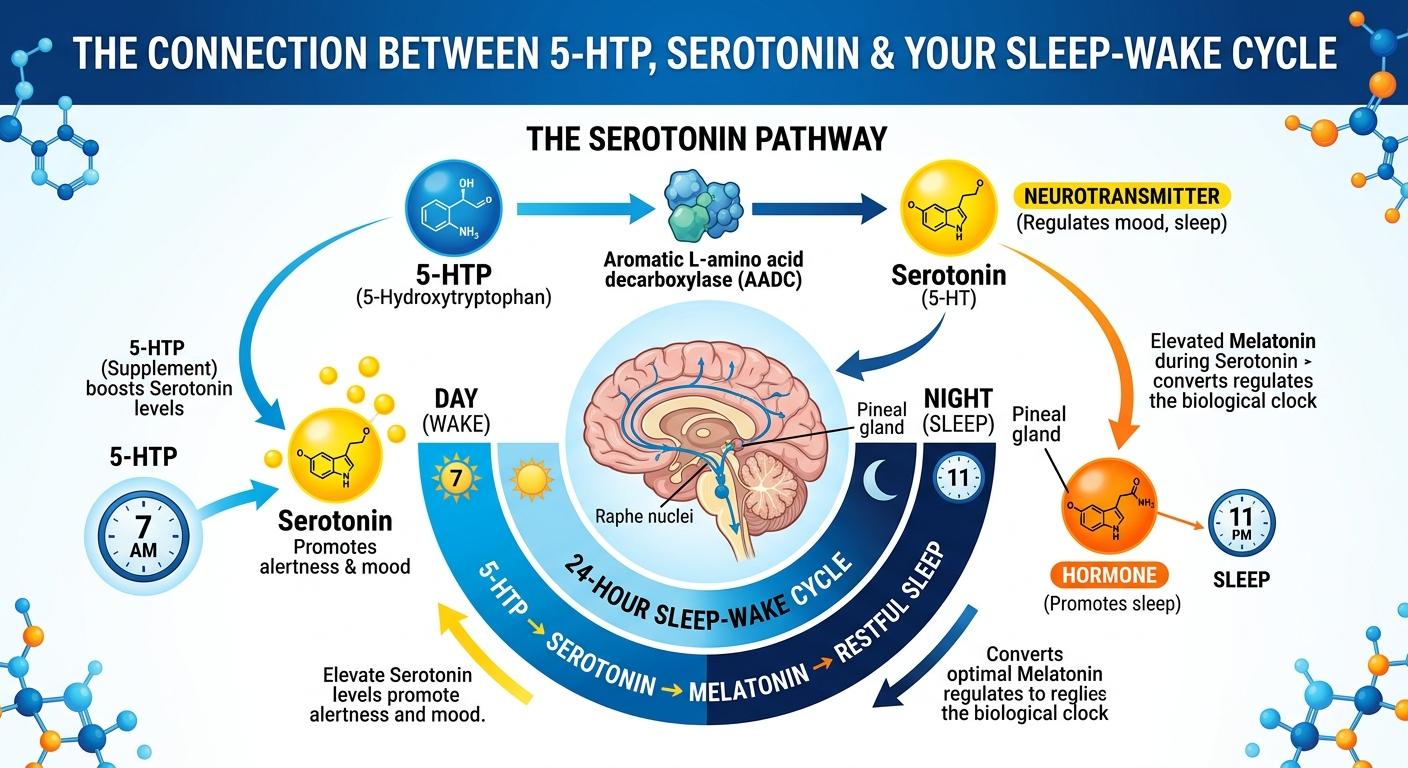
Sleep is closely connected to the way your body manages hormones and brain chemicals throughout the day. One compound that often comes up in conversations about sleep and relaxation is 5-HTP, short for 5-hydroxytryptophan. It is involved in the production of serotonin, a neurotransmitter that plays a role in mood, relaxation and several processes connected with sleep.
Understanding how 5-HTP and serotonin fit into the sleep-wake cycle can help explain why some people consider 5-HTP when looking for ways to support a consistent evening routine.
What Is 5-HTP?
5-HTP is a naturally occurring compound that the body can make from the amino acid tryptophan. It acts as an intermediate in the pathway used to produce serotonin.
Unlike serotonin, which does not readily cross the blood-brain barrier, 5-HTP can cross it. Once in the brain, it can be converted into serotonin with the help of vitamin B6.
Because serotonin is involved in a variety of body functions, including mood, appetite and sleep, 5-HTP is commonly discussed as a nutritional supplement for supporting relaxation and general wellbeing.
However, taking 5-HTP does not automatically mean that someone will sleep better. Sleep depends on many factors, including daily habits, stress, light exposure, caffeine intake, physical activity and the body's natural circadian rhythm.
How Serotonin Relates to Sleep
Serotonin is best known as a neurotransmitter associated with mood, but its role extends beyond emotional wellbeing. It also participates in the biological processes that help regulate sleep.
Serotonin is involved in the production of melatonin, a hormone that helps signal to the body that it is time to prepare for sleep. In a simplified pathway, serotonin can be converted into melatonin in the pineal gland.
This relationship helps explain why serotonin is often mentioned when discussing the sleep-wake cycle. The process is not as simple as increasing serotonin and automatically producing better sleep, but serotonin is one component of the wider system involved in sleep regulation.
The body's production and use of these compounds also interact with the internal clock, which responds strongly to environmental cues such as light and darkness.
Understanding the Sleep-Wake Cycle
Your sleep-wake cycle is controlled by a combination of your circadian rhythm, sleep pressure and environmental signals.
The circadian rhythm is an approximately 24-hour internal timing system that helps coordinate periods of alertness and sleepiness. Light exposure is one of its most important signals. Bright light, particularly in the morning, can help reinforce daytime alertness, while darkness in the evening supports the body's preparation for sleep.
Melatonin naturally tends to rise in the evening as part of this process. Serotonin is connected to melatonin production, which is why researchers and wellness professionals often discuss serotonin when explaining sleep biology.
A consistent routine can also reinforce these natural signals. Going to bed and waking up at similar times, reducing bright light before bed and creating a relaxing environment can all support healthy sleep habits.
Where Does 5-HTP Fit In?
5-HTP sits within the biochemical pathway between tryptophan and serotonin. Because of this, it has attracted interest in research related to mood, sleep and other areas of wellbeing.
Some studies have investigated whether 5-HTP supplementation may influence sleep or related measures, but the evidence is not strong enough to treat it as a guaranteed solution for sleep problems. Individual responses can also vary.
For someone considering 5-HTP, it is useful to view it as one possible part of a broader wellness routine rather than a replacement for healthy sleep habits.
A simple evening routine might include lowering the lights, avoiding stimulating activities close to bedtime, limiting caffeine later in the day and giving yourself enough time to wind down.
5-HTP and Relaxation Before Bed
The connection between 5-HTP, serotonin and sleep is particularly interesting when looking at the transition from daytime activity to nighttime rest.
Relaxation is not the same thing as sleep, but feeling calmer before bed can make it easier to follow a consistent bedtime routine. Stress and an active mind can make the transition into sleep more difficult, so creating a predictable wind-down period may be helpful.
Some people choose to include supplements containing 5-HTP as part of this routine. If you do, follow the product's directions carefully and consider discussing supplementation with a healthcare professional, particularly if you take medicines or have an existing health condition.
5-HTP can interact with medicines that affect serotonin, including some antidepressants and other medications. Combining products that increase serotonin without professional guidance may carry risks.
Everyday Habits Still Matter
It is easy to focus on one nutrient or supplement when thinking about sleep, but the sleep-wake cycle is influenced by many interconnected factors.
Regular physical activity, a balanced diet, consistent sleep times and appropriate exposure to natural daylight can all contribute to a healthy routine. Keeping the bedroom comfortable, reducing unnecessary noise and limiting stimulating screen use before bed may also help.
Caffeine deserves particular attention because its effects can last for several hours. Alcohol may make some people feel sleepy initially but can interfere with sleep quality later in the night.
These everyday factors can be just as important as what you take before bedtime.
A Balanced Approach to Better Sleep
5-HTP, serotonin and melatonin are connected through the body's natural biochemical pathways, making 5-HTP an interesting compound when exploring the science behind sleep.
However, sleep is not controlled by one substance alone. The circadian rhythm, light exposure, daily habits, stress levels and overall health all contribute to how easily you fall asleep and how well you stay asleep.
If you are considering 5-HTP, think of it as part of a wider approach to wellbeing rather than a quick fix. Building consistent sleep habits and speaking with a healthcare professional when necessary can help you make informed choices about supplements and your nighttime routine.
Understanding the connection between 5-HTP and serotonin can provide useful insight into sleep biology, but supporting your sleep-wake cycle ultimately involves looking at the whole routine, not just one ingredient.
 English
Join our community to interact with posts!