
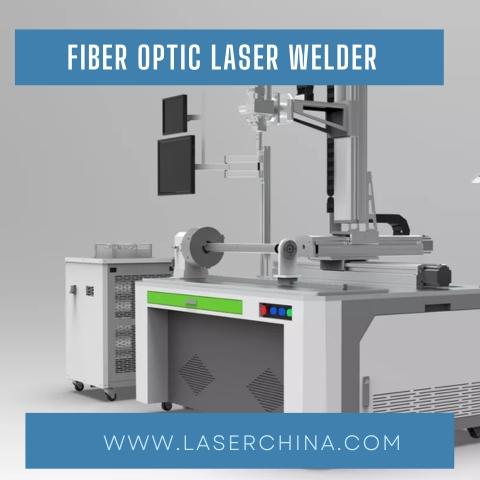
Modern metal fabrication demands welding technology that delivers precision, speed, consistency, and a clean finish. Fiber laser welding has become an important solution for manufacturers looking to improve production efficiency while maintaining reliable weld quality. A fiber optic laser welder uses a concentrated laser beam delivered through optical fiber to create accurate and controlled welds. This focused heat source can help reduce distortion and post-welding finishing requirements.
What Makes Fiber Laser Welding Different?
Traditional welding processes distribute heat over a comparatively wider area, while fiber laser technology concentrates energy directly on the joint. This controlled approach supports narrow weld seams, precise heat input, and consistent results. Depending on the material, joint design, and machine configuration, fiber laser welding can also provide high processing speeds and reduced thermal distortion.
High Precision for Professional Applications
Precision is one of the most valuable characteristics of modern laser welding. The focused laser beam allows operators to control the welding area accurately, making the technology suitable for applications where dimensional accuracy and appearance matter. Industries working with stainless steel, carbon steel, aluminum, and other metals can benefit from controlled laser energy and repeatable welding parameters.
For manufacturers handling detailed assemblies or demanding production requirements, this precision can help maintain consistent weld quality across multiple components. Reduced heat spreading can also help minimize unwanted deformation around the welding area.
Faster Production and Better Efficiency
Production speed plays an important role in modern fabrication. Fiber laser welding can process many joints faster than conventional manual welding methods, depending on application conditions and machine settings. Faster processing can help manufacturers increase output while reducing cycle times.
The technology also supports automation, making it suitable for production environments where repeatability and consistent processing are important. Automated systems can integrate with robotic equipment and CNC platforms for continuous manufacturing operations.
Clean Welds with Reduced Post-Processing
A focused laser beam creates a concentrated heat-affected zone, which can help reduce distortion and produce clean, narrow weld seams. This can be particularly useful when the finished appearance of the product is important.
With appropriate machine parameters and material preparation, manufacturers may require less grinding, polishing, or other finishing after welding. Reducing post-processing can contribute to a more streamlined production workflow and improved overall manufacturing efficiency.
Versatile Solution for Metal Fabrication
Laser welding technology can be applied to many metal fabrication requirements. Stainless steel products, sheet metal assemblies, automotive components, electrical enclosures, precision parts, and various industrial structures can all benefit from controlled laser welding.
The right machine configuration depends on factors such as material type, thickness, joint design, required welding speed, and production volume. Selecting suitable laser power and welding parameters is therefore essential for achieving the desired results.
Why Choose LaserChina?
LaserChina focuses on providing modern laser processing solutions designed around industrial manufacturing requirements. Its laser welding technology is intended to support precision, productivity, and consistent processing across different fabrication applications.
When selecting welding equipment, manufacturers should consider laser source quality, welding head configuration, cooling performance, control functions, operating requirements, and compatibility with their intended materials. A carefully selected system can provide a practical foundation for improving welding operations and production capability.
Upgrade Your Welding Process
For businesses seeking accurate, efficient, and flexible metal joining technology, a fiber optic laser welder can provide a modern approach to professional fabrication. With focused energy delivery, high processing potential, clean weld formation, and automation compatibility, fiber laser welding continues to support evolving manufacturing requirements. LaserChina offers solutions for businesses looking to advance their welding capabilities with modern laser technology.
 English
Join our community to interact with posts!