
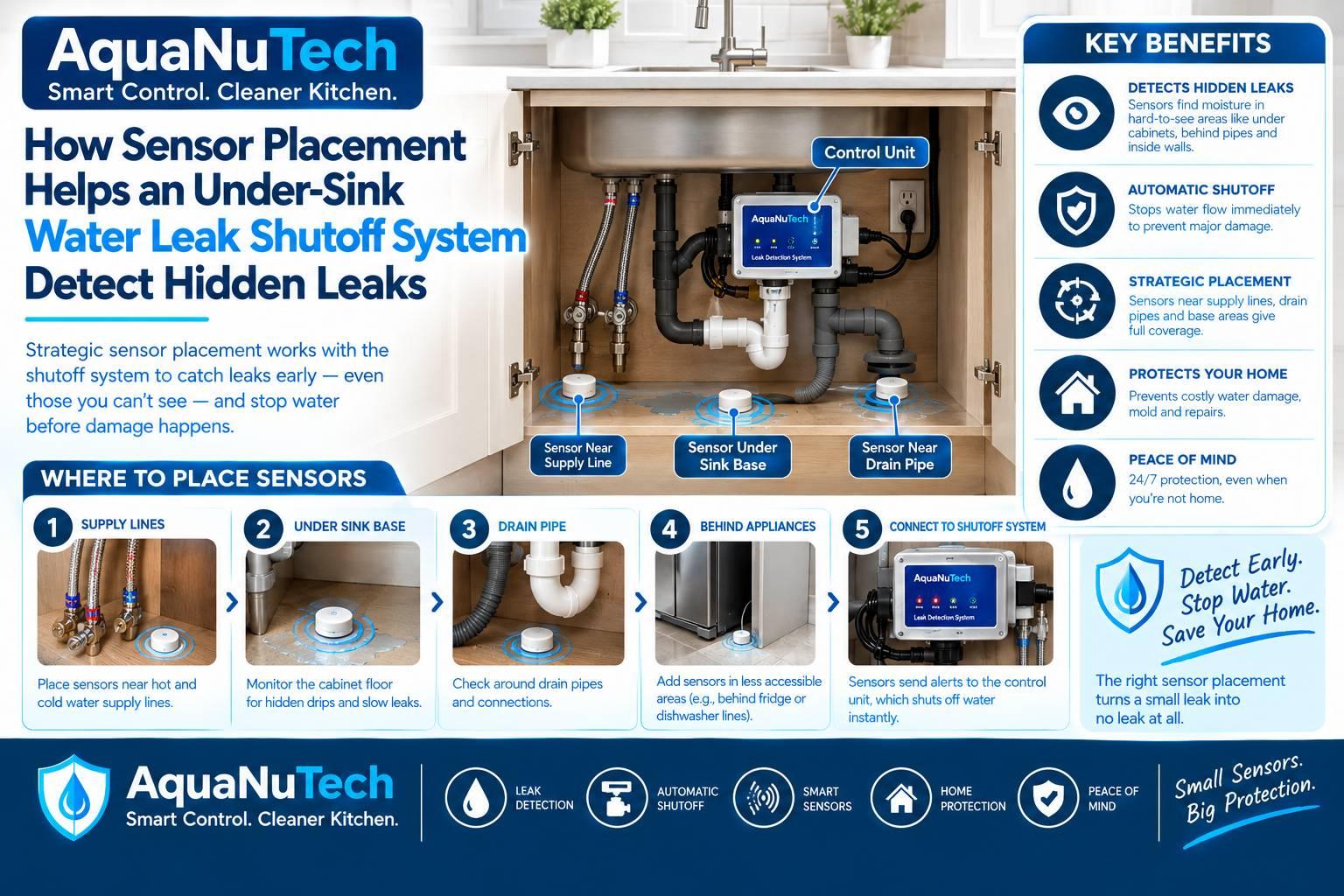
What happens when a filter connection leaks inside a closed cabinet, but the water never reaches the sensor? A detector can function as intended and still miss that particular water path. Placement determines whether escaping water contacts the sensing surface and starts the response.
An under sink water leak shutoff system therefore needs more consideration than finding an empty spot beside the plumbing. Homeowners comparing an easy install water leak prevention device should examine where water could collect, which supply the valve controls, and how cabinet storage might interfere.
Trace the Water Path Before Choosing a Location
Water escaping from a fitting may follow tubing before dropping onto the cabinet base. A container, raised shelf liner, or appliance tray can then redirect it. The nearest open space may offer convenient access without receiving water from the connection that needs monitoring.
Consider a filter housing positioned inside a tray. If the detector stands outside that tray, water could collect around the filter without reaching its sensors. Moving the detector requires checking the manufacturer’s placement instructions and the surrounding equipment.
For an under sink water leak shutoff system, the useful question is where a plausible leak would travel. An easy install water leak prevention device still needs that assessment. Convenience cannot establish whether the chosen location intercepts water.
Keep the Sensing Surface Exposed to Potential Leaks
AquaNuTech specifies sensors on the underside of its LD4141 control box, which makes the surface beneath the unit relevant to detection.
An absorbent cloth beneath a detector may change how water reaches it. A raised support can separate the sensing contacts from water collecting below. Stored bottles can shift the unit when someone reaches for cleaning supplies.
The installation should preserve the sensing arrangement the manufacturer specifies. It should also leave enough access for inspection without requiring someone to move equipment or pull on tubing.
An under sink water leak shutoff system depends on contact at its sensing points; it does not monitor every connection from a distance. Assessing an easy install water leak prevention device should therefore include both initial placement and the likelihood that household use will disturb it.
Match Automatic Shutoff to the Connected Supply
Detection and water control perform different jobs. A sensor identifies water at its location. The valve interrupts the supply that passes through it.
This distinction becomes relevant when a cabinet contains separate hot and cold lines, a filter branch, and an instant hot water tank. Closing a valve on one branch does not establish control over the others.
An under sink water leak shutoff system can help limit continued flow from a downstream leak on the controlled supply. Water already inside tubing or equipment may remain after the valve closes.
AquaNuTech states that its detector sounds an alarm and shuts off the cold-water supply when water reaches its sensors. That operating sequence explains the value of an easy install water leak prevention device while keeping its coverage specific. The installer must identify which connections fall downstream of the valve.
Include Sensor Access in Cabinet Organization
The cabinet layout should allow storage and leak monitoring to coexist. A location that works before someone replaces cleaning supplies may become unsuitable once the cabinet returns to daily use.
A placement review should cover:
-
Water Routes: Identify barriers that could trap or divert water before it reaches the sensing contacts.
-
Control Box Position: Keep stored items from pushing, covering, or raising the unit.
-
Service Access: Leave room to inspect the detector and reach its battery compartment.
-
Supply Coverage: Identify the water line the shutoff valve controls and the equipment it serves.
These checks give homeowners a defined arrangement to maintain. After filter replacement or plumbing work, checking the detector’s position helps confirm that the service visit did not alter its intended placement.
Plan for Battery Care and Post-Alarm Inspection
The LD4141 uses battery power and does not offer app operation. Its local alarm and shutoff response therefore belong in a maintenance routine that includes checking the battery according to manufacturer guidance.
An alarm also requires investigation. Water near the sensor could come from a plumbing leak or a spill during cabinet cleaning. Restoring the supply without locating the source leaves that question unresolved.
The appropriate response includes inspecting the affected connections, addressing the cause, and following the product’s reset instructions. Valve closure limits incoming water on the controlled line; it does not repair a failed fitting or remove moisture from cabinet materials.
Evaluate Leak Protection Around the Installation
A suitable under sink water leak shutoff system should combine accessible controls, an unobstructed sensing area, and a valve arrangement that matches the intended equipment.
The assessment of an easy install water leak prevention device should establish those conditions before installation approval. Clear supply coverage, appropriate sensor positioning, and ongoing maintenance provide a stronger basis for evaluating protection than installation convenience alone.
 English
Join our community to interact with posts!