
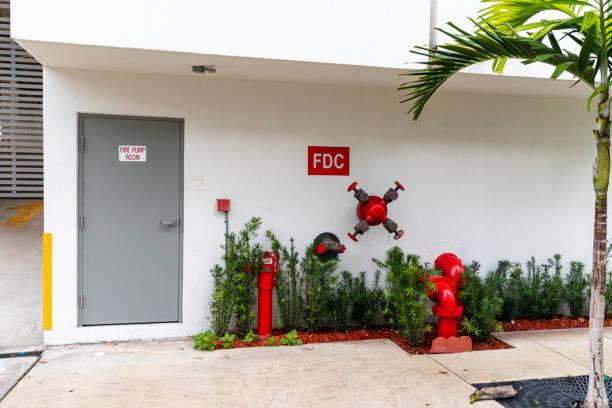
Fire protection systems in commercial buildings depend on reliable water delivery when an emergency occurs. As offices, warehouses, retail facilities, airports, hotels, and other commercial properties become more complex, building operators must consider how effectively sprinkler systems can maintain adequate water pressure. Fire pumps play an important supporting role by helping deliver water where conventional supply pressure may be insufficient.
The commercial building fire pumps market covers equipment designed to increase and maintain water flow for firefighting applications across different commercial property types. According to the source report, the segment includes diesel, electric, steam turbine, and dual operating configurations, along with centrifugal and positive displacement pump designs. The commercial fire protection equipment landscape is therefore shaped by building requirements, safety regulations, system design, and operating conditions.
Markntel Advisor identifies commercial-sector expansion as an important factor influencing demand for fire pumps. Growth in office facilities, retail spaces, warehouses, transportation infrastructure, hospitality properties, and other commercial developments can increase the need for dependable fire suppression infrastructure. At the same time, regulatory requirements and insurance considerations encourage property owners and facility managers to evaluate the reliability of installed fire protection systems.
Why Reliable Water Pressure Matters
Fire sprinkler systems require sufficient water pressure and flow to distribute water effectively during a fire. In taller or larger commercial properties, the pressure available from conventional water supplies may not always be adequate for the complete sprinkler network. Fire pumps help overcome this limitation by increasing water pressure and supporting consistent delivery throughout designated areas of a building. The source report defines fire pumps as an integral component of sprinkler systems for this purpose.
This function becomes particularly important in properties where multiple floors, extensive piping networks, storage areas, or large occupied spaces increase the complexity of fire protection. Properly specified pumping equipment can support the hydraulic requirements of the system, helping sprinkler installations operate according to their intended design during an emergency.
Commercial Construction Supports Equipment Demand
Expansion across commercial real estate remains closely connected with the need for building safety infrastructure. New offices, retail developments, warehouses, hotels, airports, and other facilities require integrated fire protection systems during construction and modernization. Existing properties may also require equipment upgrades when building layouts change, occupancy increases, or fire safety requirements become more demanding.
The report highlights office buildings as an important end-user category, reflecting their extensive use of sprinkler-based fire suppression systems. Warehouses and retail facilities also require dependable protection because their layouts, stored materials, occupancy patterns, and operational environments can create different fire safety requirements. Airports and ports represent additional applications where large facilities require carefully planned protection infrastructure.
Technology Is Adapting to Building Constraints
Space availability is an important consideration when installing mechanical equipment in commercial properties. Traditional pump installations can require dedicated areas for pumps, controls, piping, and related equipment. As building footprints become more expensive and technical rooms face space limitations, manufacturers have increasingly explored compact and modular configurations.
Modular fire pump designs can help address installation constraints by providing equipment configurations suited to restricted spaces. The source report specifically discusses vertical execution and modular approaches as developments intended to reduce floor-space requirements. Such solutions can be relevant in dense commercial environments where safety infrastructure must be incorporated without significantly affecting usable building space.
Centrifugal Pumps Remain Widely Used
Fire pump selection depends on hydraulic requirements, building configuration, system design, and operating conditions. Centrifugal pumps are widely used because their operating characteristics can support high-flow applications associated with firefighting systems. Within this category, configurations include overhung pumps, vertical inline pumps, horizontal end-suction pumps, and split-case designs.
Positive displacement pumps represent another technical category and include diaphragm and piston configurations. These pumps can generate high pressure and are suited to specific applications where their operating characteristics provide advantages. The choice between pump technologies ultimately depends on the requirements of the fire protection system rather than a single universal configuration.
Cost Remains an Important Consideration
Despite their role in fire protection, installation costs can influence purchasing decisions, particularly among smaller and medium-sized commercial properties. Fire pumps require equipment, installation, controls, supporting infrastructure, testing, and ongoing maintenance. These requirements can make initial investment an important factor when property owners evaluate different approaches to fire suppression.
Cost considerations can also influence purchasing decisions in price-sensitive regions. Building owners must balance equipment expenditure with regulatory requirements, operational reliability, available space, maintenance needs, and the characteristics of the property. Lifecycle considerations are therefore relevant when assessing fire protection equipment rather than focusing only on initial installation costs.
Regional Development Shapes Future Requirements
Regional construction activity can influence the adoption of fire protection equipment. The source report identifies Asia-Pacific as a significant regional area, supported by commercial development in countries including China and India. Expanding office, retail, transportation, and other commercial infrastructure creates additional requirements for safety systems that can be integrated into new and existing buildings.
Commercial real estate development in the Middle East also creates opportunities for fire protection infrastructure, particularly as countries invest in tourism, hospitality, business facilities, and large-scale events. These developments can require fire safety systems capable of supporting complex commercial properties with varied occupancy and operational conditions.
What Building Operators Should Consider
Fire pump selection should be approached as part of the broader fire protection system rather than as an isolated equipment decision. Factors such as building height, sprinkler coverage, water supply, required pressure, flow characteristics, available installation space, operating environment, maintenance requirements, and applicable safety standards can all influence system design.
As commercial buildings continue to evolve, fire protection infrastructure is also adapting to changing architectural and operational requirements. Greater attention to compact equipment, dependable water delivery, system integration, and lifecycle maintenance can shape how fire pumps are incorporated into modern properties. The resulting landscape reflects the interaction between commercial construction, safety regulations, building design, and advances in pumping technology.
 English
Join our community to interact with posts!