
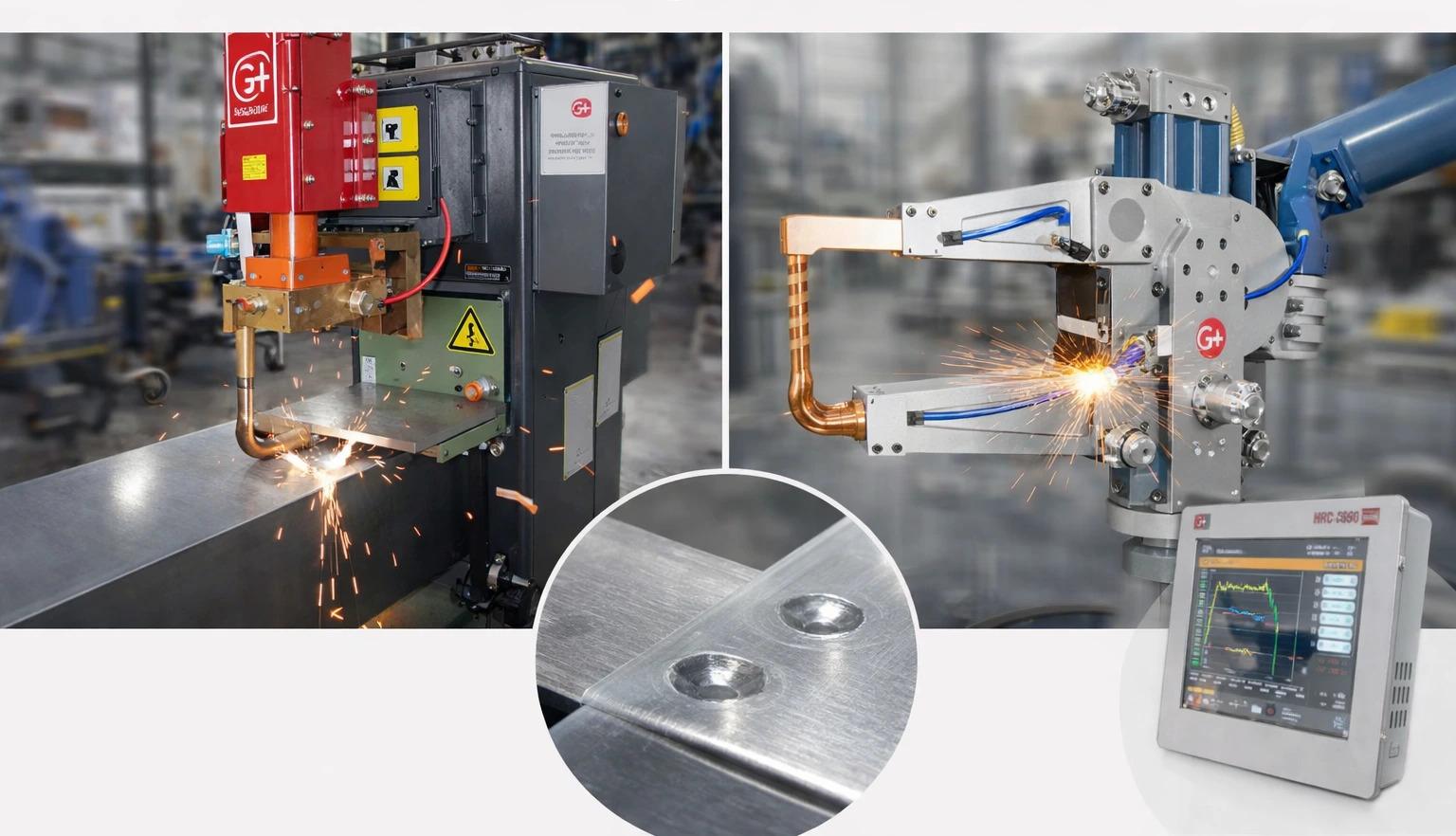
In modern automotive manufacturing, aerospace engineering, and consumer electronics production, lightweighting has become a central design goal to reduce overall structural weight, improve fuel efficiency, and cut energy consumption. Consequently, engineers frequently need to spot weld aluminium sheets and sub-assemblies to create strong, durable structures without adding unnecessary mass. However, working with aluminum alloys presents unique metallurgical challenges due to high thermal conductivity, low electrical resistance, and a tough oxide film on the metal surface. At Heron Welder, state-of-the-art resistance welding equipment is engineered specifically to overcome these barriers, enabling manufacturers to achieve dense, defect-free nuggets with absolute repeatability on every single shift.
Overcoming the Metallurgical Barriers of Light Metal Joining
Unlike standard low-carbon steel, which possesses high electrical resistance and easily retains heat, aluminum rapidly dissipates thermal energy into surrounding sheet areas. Therefore, attempting to spot weld aluminium components using legacy alternating current equipment often results in weak bonds, severe surface burning, or extreme tip pickup. Machinery designed by Heron Welder solves this issue by deploying medium-frequency direct current power sources that deliver concentrated peak energy in milliseconds. This localized heat input breaks through the surface oxide layer instantly, creating a dense metallurgical nugget before thermal energy can conduct away into surrounding sheet metal.
Dynamic Force Follow-Up for Porosity-Free Nuggets
As aluminum transitions rapidly from a liquid to a solid state during cooling, it experiences significant volumetric shrinkage. If mechanical pressure lags during this brief cooling window, microscopic internal voids, cracks, or surface expulsion will compromise structural integrity. To ensure that operators can spot weld aluminium assemblies without internal defects, Heron Welder integrates low-friction pneumatic rams or high-response servo actuators into its welding frames. This dynamic force follow-up maintains continuous forging pressure as the metal solidifies, squeezing out internal gas pockets and delivering high shear strength across every joint.
Extending Copper Tip Lifespan and Reducing Maintenance
A persistent challenge faced by fabrication facilities when they spot weld aluminium sheets is the rapid pickup of aluminum oxide on copper alloy electrode tips. This alloy contamination causes tip mushrooming, fluctuating current density, and frequent production line stoppages for manual tip dressing. Equipment built by Heron Welder incorporates automated electrode dressing units paired with adaptive current control algorithms. By adjusting output parameters as tips wear and executing automated tip dressing cycles between assembly runs, plants maintain uninterrupted throughput while extending copper tip lifespan significantly.
Energy Savings for High-Amperage Production Lines
Delivering the high current density required to spot weld aluminium substrates can place heavy peak power demands on a facility electrical grid. Choosing energy-efficient resistance machinery from Heron Welder minimizes peak kVA demand by drawing balanced three-phase electricity from the power grid and converting it with high efficiency. This balanced power draw eliminates severe line voltage drops, protects surrounding factory electronics, and yields lower utility bills, allowing component manufacturers to expand their lightweight joining capacity sustainably.
Elevating Lightweight Assembly Capabilities with Heron Welder
As global manufacturing continues to prioritize lightweight alloy construction, having an experienced joining technology partner is essential. Heron Welder brings decades of specialized application engineering, offering complete turnkey system development, customized copper tooling, and full robotic integration support. Upgrading your assembly environment with advanced resistance equipment ensures that every time your line operators spot weld aluminium components, the finished products meet or exceed strict international structural safety standards. Contact our technical engineering team today to explore tailored lightweight metal joining solutions.
 English
Join our community to interact with posts!