
Packaging and labelling play an important role in maintaining garment quality, hygiene, and customer confidence. For top innerwear manufacturers in Tamilnadu, these elements are essential for protecting products during storage, transportation, and retail display. Since innerwear comes into direct contact with the skin, manufacturers must ensure that garments reach customers in clean, well-protected, and properly labelled condition. Effective packaging also helps businesses maintain product consistency and build a professional brand image.
For companies such as Lux Industries, which operates in the innerwear and hosiery segment, product presentation and quality management are important considerations throughout the supply chain. From selecting suitable packaging materials to providing accurate product information, every detail contributes to a better customer experience.
1. How Packaging Protects Innerwear Quality
Packaging creates a protective barrier between garments and external contaminants. During transportation and storage, innerwear can be exposed to dust, moisture, friction, and handling. Appropriate packaging helps minimise these risks and keeps products in suitable condition until they reach retailers or customers.
For example, individual polybags, protective sleeves, and well-designed cartons can help prevent stains, fabric damage, and unnecessary contact with other products. Manufacturers should also consider ventilation, moisture control, and packaging durability according to the garment type and storage conditions.
Moreover, suitable packaging helps preserve the original appearance of fabrics, including their colour, shape, and finish. This is particularly important for products made using soft cotton and other hosiery fabrics, where maintaining cleanliness and presentation supports perceived quality.
2. Why Accurate Labelling Matters for Innerwear
Labelling provides essential information that helps customers select the right garment and care for it properly. Clear and accurate labels typically include size, fabric composition, washing instructions, manufacturer details, and product identification. These details are particularly useful when customers compare different innerwear styles or purchase products in bulk.
For instance, a label indicating cotton or a cotton-spandex blend helps customers understand the material used in the garment. Similarly, correct size information reduces confusion and helps retailers manage inventory efficiently. Incorrect labels, however, can lead to customer dissatisfaction, product returns, and a loss of trust.
Therefore, innerwear manufacturers in India should maintain a reliable labelling process that matches the actual product specifications. Labels must also remain readable and durable throughout normal handling and storage.
3. Packaging and Labelling Build Brand Trust
Packaging and labels influence how customers perceive a product before they even wear it. Neat folding, consistent packaging, readable typography, and professional branding communicate attention to detail. For retailers and distributors, uniform packaging also makes products easier to identify, organise, display, and sell.
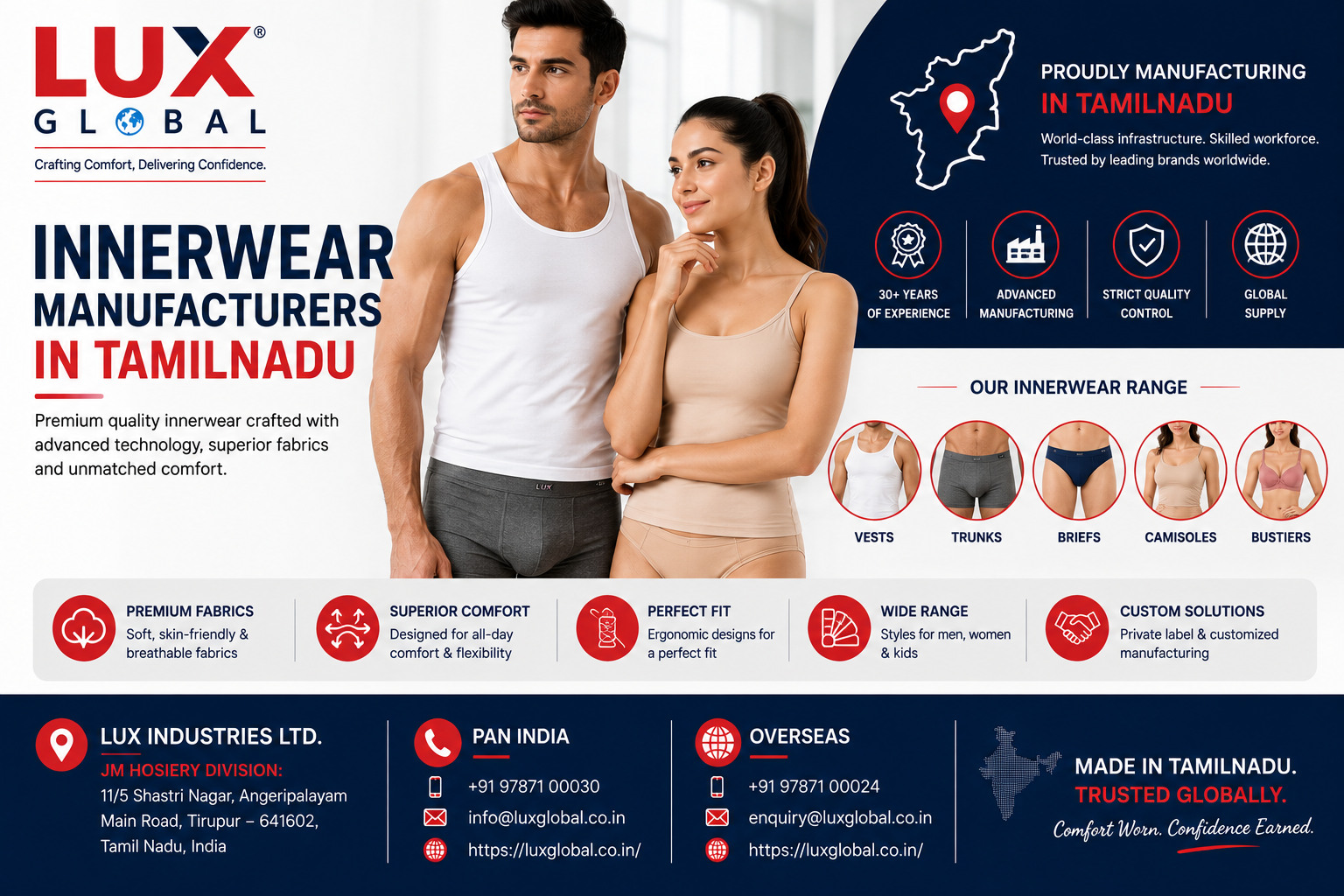
Lux Industries, through its B2B hosiery manufacturing operations in Tirupur, Tamil Nadu, highlights in-house packing capabilities for retail-ready, bulk, white-label, and corporate orders. This approach supports businesses that need finished garments with consistent presentation and packaging aligned with their requirements.
For private-label businesses, customised packaging and branding are especially valuable. They help establish a recognisable identity while ensuring that product information remains clear. However, attractive packaging should never replace accurate labelling or appropriate garment protection.
4. Best Practices for Packaging and Labelling Innerwear
Manufacturers can improve packaging quality and consistency by following a few practical measures:
-
Choose suitable materials: Select packaging that protects garments from dust, moisture, and handling damage.
-
Verify product information: Check sizes, fabric composition, care instructions, and product codes before printing labels.
-
Maintain hygiene: Ensure garments are clean and properly folded before packing, using suitable handling procedures.
-
Standardise packaging: Follow consistent packing methods across product batches to simplify storage and distribution.
-
Inspect finished packs: Check seals, labels, printing quality, and garment presentation before dispatch.
-
Consider sustainability: Where practical, explore recyclable packaging materials without compromising product protection.
These practices help manufacturers maintain consistency across large production volumes while supporting smoother inventory management and a better customer experience.
Conclusion
Packaging and labelling are essential parts of innerwear quality management because they protect garments, communicate product information, and strengthen brand credibility. For top innerwear manufacturers in Tamilnadu, combining suitable packaging materials with accurate labelling and systematic inspections can improve product presentation and customer confidence.
With its B2B hosiery manufacturing and packing capabilities, Lux Industries provides a relevant example for brands and businesses seeking finished innerwear solutions.
 English
Join our community to interact with posts!