
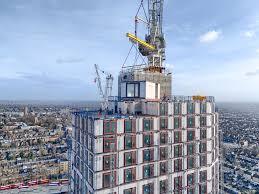
When people hear the term Structural Engineering, they often think of beams, columns, and the basic skeleton of a building. But one of the most critical aspects of keeping buildings safe is something far more dynamic: lateral stability—the ability of a structure to resist horizontal forces such as wind loads, seismic activity, and even accidental impacts.
Without a carefully engineered lateral system, even a beautifully designed building could become dangerously unstable. In fact, lateral loads are often the governing factor in high-rise and long-span structures, shaping everything from the foundation to the roof.
Understanding how buildings stand tall against powerful, unpredictable forces starts with understanding the physics behind how these forces act, how they move through the structure, and how engineers strategically design systems to resist them.
Whether you’re a homeowner, a builder, a student, or simply curious, exploring the science of lateral stability reveals just how intricate and fascinating the world of structural design truly is.
How Buildings Resist Lateral Forces
To understand lateral stability, imagine the way a strong wind pushes against a tall building. That building must transfer the load from its façade, down through the structural system, and safely into the earth.
Earthquakes work differently, shaking the ground beneath the structure and sending waves of motion upward. Both phenomena require systems specifically designed to resist sliding, overturning, and deformation.
Shear Walls: The Vertical “Backbones” of Stability
Shear walls are among the most common lateral-resisting systems in modern construction. They are stiff vertical walls—often made of reinforced concrete, masonry, or heavily braced wood—that act like deep beams standing upright. When wind or seismic forces hit a building, the shear walls take on the shear stresses and bending forces, distributing them downward to the foundation.
In high-rise buildings, concrete core walls (which also house elevators and stairs) frequently serve this function. Their stiffness prevents excessive lateral drift, ensuring not only structural safety but also occupant comfort. A building can be structurally safe yet still sway enough to cause discomfort—shear walls play a key role in preventing this.
Braced Frames: Steel Strength in Action
In many steel structures, engineers use braced frames—diagonal steel members arranged in X-, V-, or K-shaped patterns. These braces form rigid triangles, one of the strongest geometric shapes in engineering. When lateral loads hit the structure, the braces either stretch (tension) or compress, resisting movement.
Braced frames are especially useful in industrial structures and buildings where open floor plans are needed. Because shear walls can be bulky or obstructive, braced frames allow for a more flexible architectural layout while still providing strong lateral resistance.
Moment Frames: Flexible Strength for Earthquakes
Moment frames resist lateral forces through rigid connections between beams and columns, allowing the frame to bend without collapsing. Unlike braced frames, moment frames do not rely on diagonal bracing, which preserves open spaces and architectural freedom.
Although moment frames are more flexible, this flexibility can actually be beneficial in seismic regions. Structures in earthquake-prone areas often rely on ductility—the ability to bend without breaking—and moment frames excel in providing energy dissipation during seismic events.
Diaphragms: The Horizontal Load Distributors
Floors and roofs act as diaphragms—horizontal structural planes that collect lateral loads and deliver them to the vertical resisting elements (shear walls, braced frames, or moment frames). Without diaphragms, loads would not be properly transferred, and vertical systems could not function effectively.
There are three main diaphragm types:
- Rigid diaphragms (common in concrete buildings)
- Flexible diaphragms (common in wood-frame construction)
- Semi-rigid diaphragms (often steel deck systems with concrete topping)
Understanding diaphragm behavior is essential, especially when designing structures with large openings like atriums or parking levels.
From Ground to Sky: Lateral Loads and Building Height
As buildings grow taller, lateral loads increase exponentially. Wind speed increases with height, and the slenderness of tall structures can amplify sway. Engineers must carefully balance strength and flexibility to ensure a building remains stable while remaining functional and comfortable.
Wind Loads
Wind produces two main effects:
- Direct pressure on the windward side
- Suction on the leeward side
These forces try to push and pull the building, making drift control a major design criterion in high-rise construction.
Seismic Loads
Earthquakes generate ground acceleration, shaking the structure back and forth. Buildings must be able to dissipate energy and move in a controlled manner. Engineers use strategies like:
- Base isolation systems
- Dampers (similar to shock absorbers)
- Ductile framing techniques
Seismic design is not simply about strength but about controlled deformation.
Why Lateral Stability Matters
Lateral stability impacts nearly every aspect of a building’s performance:
- Safety: Prevents collapse during earthquakes or hurricanes.
- Comfort: Minimizes excessive swaying in tall buildings.
- Durability: Reduces long-term damage from repeated lateral loading.
- Functionality: Ensures windows, doors, and mechanical systems remain operational during movement.
A building that cannot properly resist lateral forces is at risk—even if its vertical load-bearing components are perfectly designed.
Choosing the Right Engineers for Lateral Stability
Designing a structurally sound lateral system requires deep knowledge of materials, loads, building codes, and advanced analysis methods. For property owners, developers, or contractors seeking professional expertise, partnering with experienced specialists is essential. You can explore options through one of the Best structural engineering firms in Michigan , especially for projects involving complex load demands or regional seismic and wind concerns.
Final Thoughts: The Future of Lateral Stability in Structural Engineering
As building technology evolves, so do the tools and techniques used to analyze and resist lateral forces. From advanced finite element modeling to innovative materials like carbon-fiber reinforcement and mass timber systems, the future promises even stronger, safer, and more sustainable structures.
Modern Structural Engineering continues to push boundaries, ensuring buildings can withstand increasingly complex natural forces while maintaining beauty, efficiency, and resilience. Understanding lateral stability gives us a deeper appreciation for the science and skill behind every safe structure we walk into—today and for generations to come.
 English
Join our community to interact with posts!