
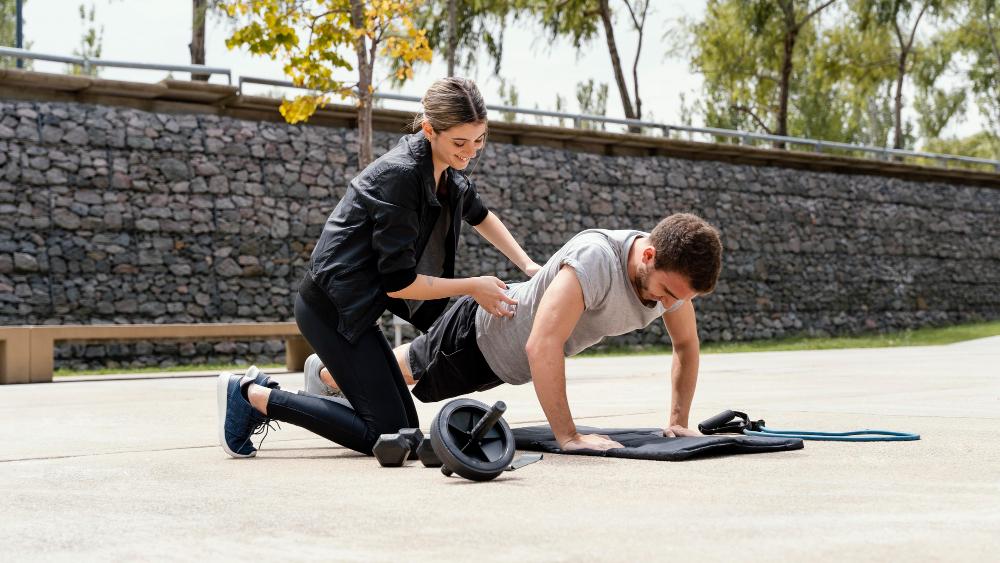
We have all had those moments in the gym where an exercise felt heavier than it looked on paper, right? When we chat with students doing a Personal Training course Brisbane, this topic pops up a lot. Not because it sounds fancy, but because ground reaction forces... well, they quietly control everything we do when we move, jump, lift, or even just stand there trying to look athletic.
So let us break it down in a way that feels real... the way trainers actually think about it on the gym floor.
So, What Are Ground Reaction Forces Anyway?
Imagine pushing your feet into the floor during a squat. You push down, the ground pushes back up. That push from the floor is the ground reaction force. Simple. We do not always notice it, but our body is constantly negotiating with gravity and the surface beneath us.
The stronger your movement, the stronger the pushback. Researchers often describe it as Newton’s third law in action... equal and opposite forces. A classic study from the Journal of Strength and Conditioning Research found that GRF during jumping can reach 2 to 5 times a person's body weight. Pretty wild when you think about it… your legs dealing with five times your weight for just one jump.
Why GRF Matters More Than People Think
Here is something we always tell future trainers: the floor is your first piece of equipment. Sounds weird, but it is true. Every rep starts with the way you interact with the ground.
Take a deadlift. If someone feels wobbly through their feet, their whole chain breaks down. Their hips shoot up too fast, the bar drifts forward, and suddenly the rep feels like punishment from the fitness gods.
We see the same thing in explosive work. Olympic lifters, sprinters, even weekend footy players... they depend on how efficiently they can redirect GRF. A study published by the National Strength and Conditioning Association highlighted that improved force production from the ground directly links to better sprint acceleration and jump height. So the floor is basically giving you free energy... if you know how to use it.
How GRF Changes Exercise Technique
Let us look at a few real gym examples.
1. Squats
If someone collapses inward at the knees, it is often because they are not directing force evenly into the floor. The ground pushes back in the wrong direction and things get messy fast. Cueing people to “spread the floor” or “push the ground away” often fixes the issue without overthinking.
2. Plyometrics
Jumps and hops are all about how much force you can create and absorb. Too much force on landing with poor technique? Hello, shin splints. Too little force on take-off? The jump looks like a half-hearted attempt at reaching the top shelf.
3. Running
This is one people underestimate. Ground reaction forces during running can reach double bodyweight with every step. If mechanics are off... overstriding, stiff ankles, poor hip control... those forces do not magically disappear. They travel straight up the chain.
Coaches Need to Understand Force, Not Just Form
This is where the deeper learning from a Certificate IV in Fitness Brisbane becomes super handy. You get a proper understanding of biomechanics, not just textbook form cues. We want trainers who know how to watch the interaction between the body and the ground, because once you see it, you cannot unsee it.
And clients feel the difference too. When they learn how to use the ground better... their lifts feel smoother, jumps feel springier, and running becomes less like a battle with their own legs.
Teaching Clients to Feel GRF (Yes, Feel It)
We always encourage trainers to bring some awareness to the feet. Just basic stuff like:
- Feeling heel, big toe, and little toe on the floor
- Pushing the floor away during lifts
- Landing quietly in plyometrics
- Softening the knees and ankles on impact
- Using cues like “grab the floor” or “drive through the mid-foot”
You would be surprised how much someone’s technique can change by simply getting them to reconnect with what is happening under their shoes.
One small change in foot pressure can completely shift the force pattern up the body.
So, What Is the Big Takeaway?
Ground reaction forces are not some science lab concept. They are happening every second you move. When trainers understand them, coaching becomes easier. When clients understand them, movement becomes stronger and safer.
And honestly... once you start paying attention to GRF, you see exercise in a totally different way. It becomes less about just “doing the rep” and more about how your body talks to the ground to make that rep happen.
If you are teaching, studying, or planning to dive deeper into the craft, this is one of those topics that keeps showing up again and again. And for good reason... it is the foundation for strength, power, stability, and technique.
 English
Join our community to interact with posts!