
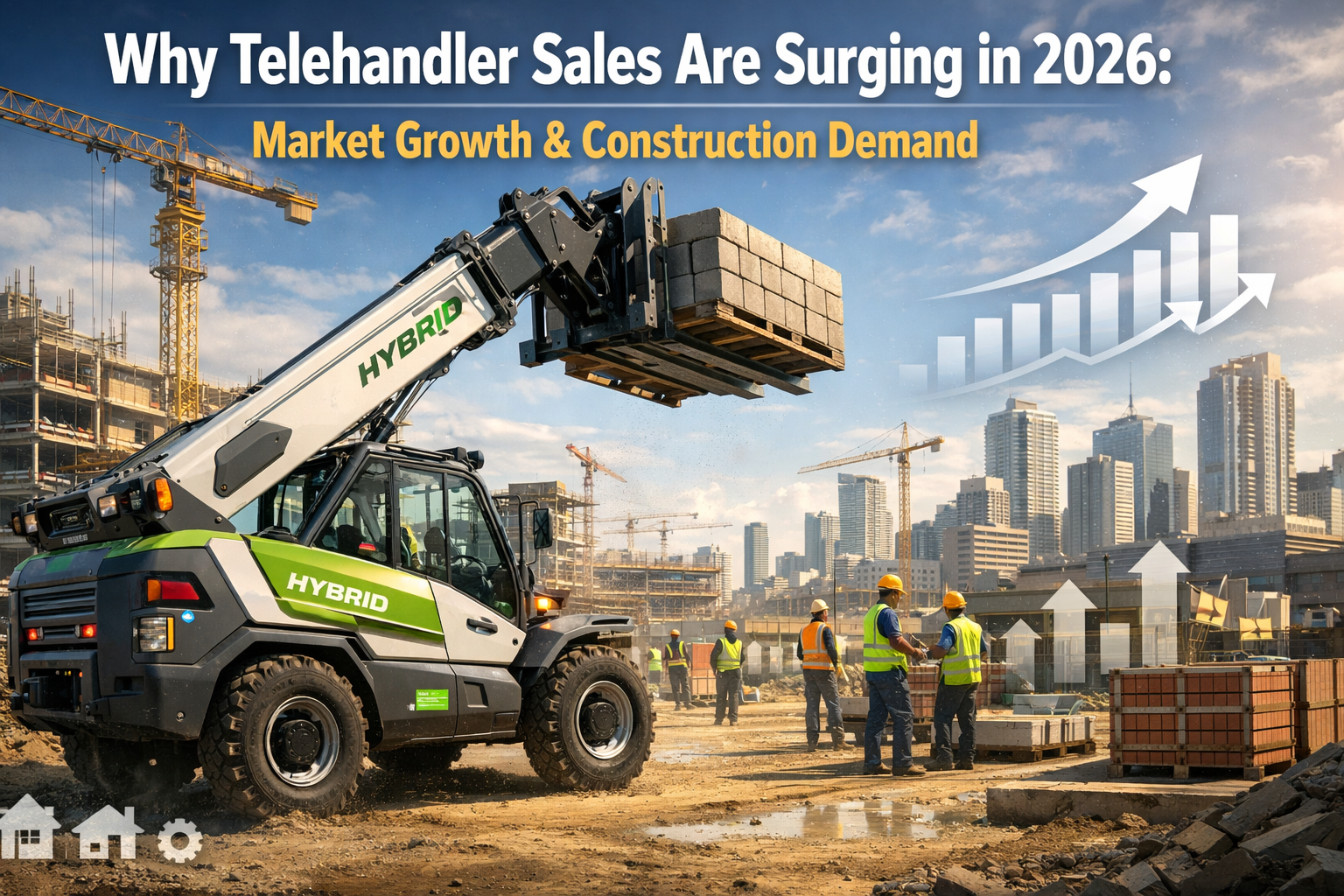
In 2026, telehandler sales are heating up worldwide, with demand rising across construction, infrastructure, agriculture, logistics, and equipment rental markets. These versatile machines — often described as a hybrid between a forklift, crane, and loader — are increasingly central to modern job sites. But what’s driving this surge? Here’s a closer look.
1. Rapid Construction and Infrastructure Expansion
One of the biggest drivers of telehandler sales is the global boom in construction activities. With governments and private developers investing heavily in residential, commercial, and infrastructure projects, the need for efficient material‑handling machinery continues to grow.
Telehandlers are essential on construction sites because they can lift, move, and place heavy materials across diverse terrains — from rough outdoor environments to tight urban build sites. As urbanization and infrastructure development expand, so does the reliance on telehandlers for efficient operations.
Why This Matters in 2026
-
Residential and commercial construction is expanding in many regions, including emerging markets.
-
Governments are pouring funds into roads, bridges, utilities, and public buildings — all requiring robust material‑handling solutions.
-
Telehandlers offer adaptability that traditional forklifts or cranes often can’t match, particularly for lifting loads to elevated heights with precision.
2. Market Growth Forecasts Point Strongly Upward
The global telehandler market continues its upward trajectory. Analysts report solid growth forecasts for the next decade, with significant increases expected in sales and market value.
For example:
-
Some market research forecasts the telehandler industry will grow from about USD 5.66 billion in 2023 to over USD 8.56 billion by 2032.
-
Other studies project market values rising beyond USD 15 billion by 2032, with annual growth rates of around 8% from 2025 to 2032.
These figures reflect steady expansion, driven in large part by construction demand and broader adoption across multiple industries.
3. Versatility Drives Adoption Across Sectors
Telehandlers are not just for construction — their versatility is expanding their appeal into agriculture, warehousing, industry, and more.
Key uses include:
-
Construction — lifting and placing materials, transporting loads, and handling awkward or heavy objects.
-
Agriculture — moving bales, lifting feed or equipment, and general handling tasks.
-
Warehousing & logistics — reaching high storage racks and streamlining material flow.
This broad applicability attracts buyers and renters alike, helping to sustain strong sales growth.
4. Technology & Efficiency Improvements
The telehandler market is evolving with technological advancements that enhance productivity, safety, and operating efficiency — features that buyers increasingly demand.
Some notable trends include:
-
Smart features like telematics for real‑time fleet tracking and maintenance alerts.
-
Advanced hydraulics and load management systems that improve precision and reduce operator fatigue.
-
Electric and hybrid models, aligning with sustainability goals and stricter emissions regulations.
These innovations are especially appealing to construction firms aiming for higher efficiency and lower operating costs.
5. Rental Market Growth Supports Sales
Another important factor boosting telehandler sales is the growth of the equipment rental market.
Many companies — especially small to medium‑sized contractors — choose to rent rather than buy outright. This shifts demand toward rental providers, who in turn purchase more telehandlers to expand their fleets. Rentals reduce upfront capital expenditure, offer flexibility, and help businesses scale with project workloads.
This dynamic supports both new equipment sales and a vibrant resale market for used machines.
6. Urbanisation & Mechanisation Trends
With urban populations rising, cities are becoming denser and construction projects more complex. Telehandlers shine in these environments because they can:
-
Navigate tight spaces,
-
Handle materials at height,
-
Adapt quickly with different attachments.
Mechanisation is also accelerating across industries seeking to increase productivity while dealing with labor shortages. Telehandlers help bridge these gaps — reducing manual handling, improving safety, and helping projects stay on schedule.
Conclusion: A Confluence of Demand Drivers
In 2026, the surge in telehandler sales isn’t driven by a single factor — it’s the convergence of:
-
Construction and infrastructure demand,
-
Strong market growth forecasts,
-
Broad sector adoption,
-
Technological advancement,
-
Rental market expansion
-
Urbanization and mechanisation trends.
 English
Join our community to interact with posts!