
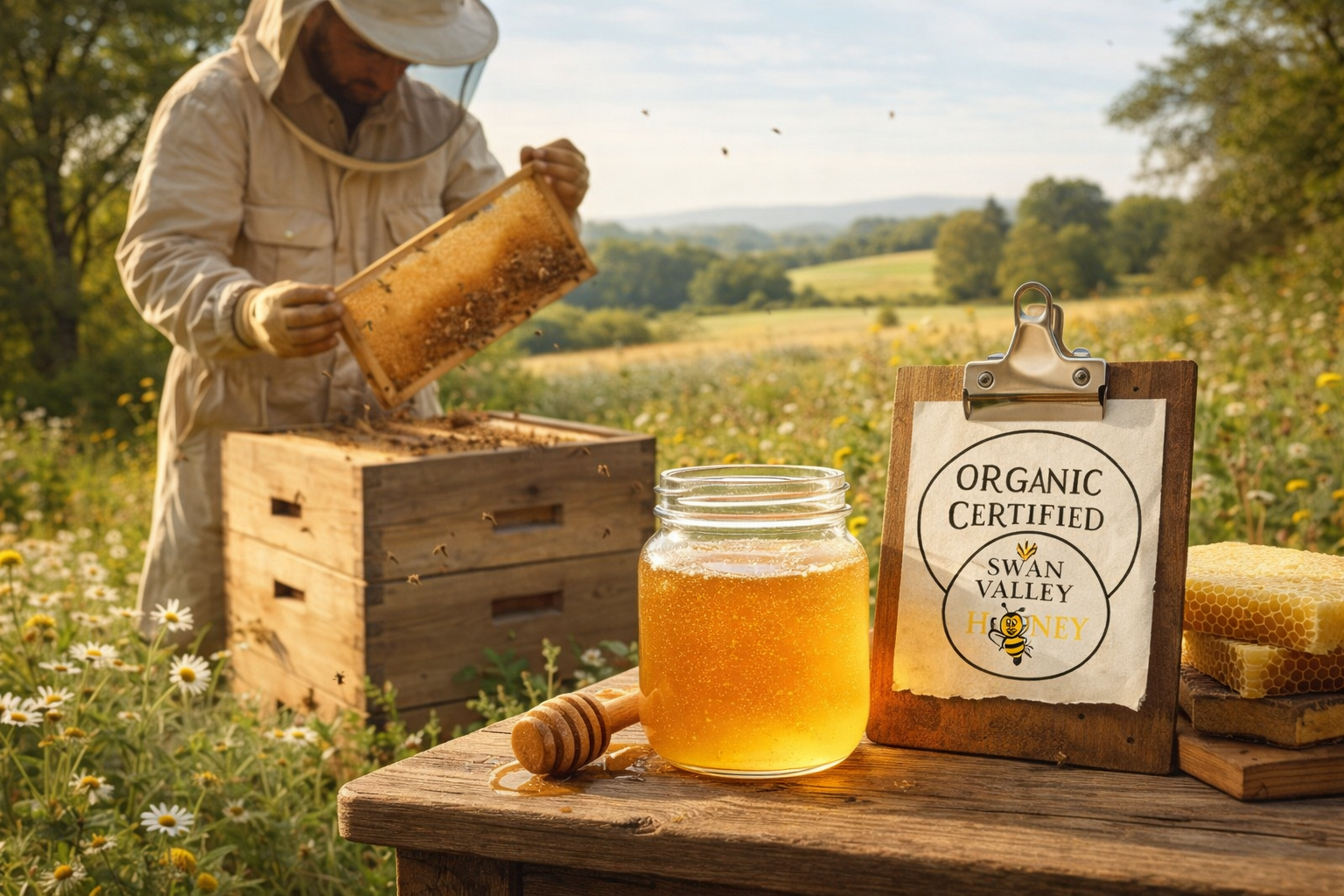
Walk into any supermarket or browse online and you’ll see plenty of jars labeled “organic raw honey,” “natural honey,” or even “pure honey for sale.” The words sound reassuring. They suggest something clean, healthy, and close to nature. But what does organic actually mean when it comes to honey? And why is getting certified so challenging for beekeepers?
Let’s break it down in simple terms.
The Simple Idea Behind Organic Honey
At its heart, organic honey is about how the bees are raised, where they forage, and how the honey is handled from hive to jar.
Unlike fruits or vegetables, honey isn’t grown in a field you can fence off. Bees can fly several kilometers in any direction. That means beekeepers can’t fully control where bees collect nectar. This is one reason why organic honey certification is much more complicated than people think.
To be called organic raw honey, producers usually need to meet rules like:
-
Bees must forage in areas free from pesticides, chemical fertilizers, and industrial pollution
-
The land around the hives must be considered “clean” or organic
-
The hives should be made from natural or approved materials
-
Bees should not be treated with harmful chemicals or antibiotics
-
Honey should be extracted and packed with minimal processing and no synthetic additives
In simple words, organic honey is about protecting the bees, protecting nature, and keeping the honey as close to its natural state as possible.
Organic vs Natural Honey: Not the Same Thing
Here’s something many shoppers don’t realize: “natural honey” does not always mean “organic.”
-
Natural honey usually means the honey hasn’t had artificial flavors or colors added. It might still come from bees that forage near farms using pesticides.
-
Organic raw honey means the beekeeper is following strict rules about location, hive management, treatments, and handling—and this is checked by a certification body.
So when you see honey for sale labeled “natural,” it’s a good sign, but it doesn’t automatically mean it meets organic standards.
What Certification Bodies Look For
To get organic certification, beekeepers must prove their entire operation meets strict guidelines. While rules differ slightly by country, most certification systems focus on these main areas:
1. Clean Foraging Areas
Bees usually fly up to 3–5 kilometers from their hive. For organic certification, the area around the hives must be mostly:
-
Organic farms, forests, or wild vegetation
-
Free from heavy traffic, factories, or polluted water sources
-
Away from crops that use chemical pesticides or synthetic fertilizers
This is one of the hardest rules to meet, especially in farming or urban regions.
2. Hive Materials and Management
Organic standards often require:
-
Hives made from natural materials like untreated wood
-
Natural wax or organically approved wax foundations
-
No use of toxic paints, preservatives, or synthetic chemicals inside the hive
The goal is to keep the bees’ living space as natural and safe as possible.
3. Bee Health Without Harsh Chemicals
Bees, like all living creatures, can get sick. But in organic systems:
-
Antibiotics are usually not allowed
-
Chemical treatments for pests are restricted or banned
-
Beekeepers must use natural or approved methods to control diseases and mites
This is good for honey purity, but it also makes beekeeping more difficult and risky.
4. Gentle Processing of Honey
To stay truly “raw” and organic:
-
Honey should not be overheated
-
Filtration should be minimal
-
Nothing artificial should be added
-
Storage and packing must avoid contamination
This helps keep the natural enzymes, pollen, and nutrients in the honey.
Why Organic Honey Is So Hard to Produce
From the outside, it might seem simple: “Just keep things clean and natural.” In reality, it’s a constant challenge.
You Can’t Control Where Bees Fly
This is the biggest problem. Even if a beekeeper places hives in a clean area, bees might still reach:
-
Non-organic farms
-
Roads with heavy traffic
-
Areas sprayed with chemicals
Certification bodies often use maps, land-use data, and inspections, but there’s always some uncertainty.
It Costs More Time and Money
Organic certification usually means:
-
Paying for inspections and paperwork
-
Keeping detailed records
-
Using more expensive natural treatments
-
Accepting lower yields sometimes
For small beekeepers, these costs can be a serious burden.
Higher Risk, Lower Short-Term Returns
Without strong chemical treatments, bees may be more vulnerable to diseases or pests. This can lead to:
-
Weaker colonies
-
Lower honey production
-
More work for the beekeeper
Yet many still choose this path because they believe in producing cleaner, more responsible honey.
Why Consumers Care More Than Ever
Today, people don’t just want something sweet—they want something honest, traceable, and good for their health and the planet.
That’s why searches for organic raw honey and natural honey keep rising. Shoppers want to know:
-
Where their food comes from
-
How it’s made
-
Whether it harms the environment or helps it
For many, buying certified organic honey feels like a small but meaningful way to support better farming and healthier ecosystems.
How to Choose Real Organic Honey
When you’re looking at honey for sale, here are a few simple tips:
-
Look for a recognized organic certification logo
-
Read the label: does it mention raw, unfiltered, or minimally processed?
-
Check if the brand talks about where the honey comes from
-
Be careful with vague words like “pure” or “natural” without proof
Real organic honey usually costs more—and there’s a reason for that.
The Honest Truth
Organic honey isn’t perfect, and it isn’t easy to produce. But when done properly, it represents:
-
Better care for bees
-
Less chemical use in the environment
-
More natural, less processed food for people
In a world full of shortcuts, that’s something worth supporting.
FAQs
1. Is organic raw honey better than regular honey?
Organic raw honey is produced under stricter rules, with fewer chemicals and less processing. This often means it keeps more natural enzymes and nutrients, but quality can still vary by producer.
2. Does “natural honey” mean the same as organic?
No. Natural honey usually means nothing artificial was added, but it does not guarantee organic farming practices or certified clean foraging areas.
3. Why is organic honey more expensive?
It costs more to produce because of certification fees, stricter rules, higher risks, and lower yields in some cases. You’re paying for cleaner methods and better traceability.
4. Can honey be 100% organic if bees fly everywhere?
That’s the big challenge. Certification focuses on placing hives in mostly clean areas and following strict practices, but absolute control over bees is impossible. That’s why standards are so strict and inspections are required.
5. How can I tell if the honey for sale is truly organic?
Look for an official organic certification label, check the brand’s transparency about sourcing, and avoid products that only use vague terms like “pure” or “natural” without proof.
 English
Join our community to interact with posts!