
Fake signups are one of the biggest hidden costs for modern digital businesses. Whether you run a SaaS platform, eCommerce store, fintech app, or marketplace, bot registrations and invalid contact details can quietly damage your growth.
Many businesses start by using a free phone number checker to filter obvious errors. While that’s a good first step, today’s fraud tactics require something more advanced. You need a real-time phone number verification system that protects your platform without creating friction for genuine users.
In this guide, you’ll learn how advanced phone verification works, why it matters, and how it helps you scale securely.
Why Fake Signups Are a Serious Problem
At first, fake registrations may seem harmless. But over time, they impact performance, security, and profitability.
Here’s what fake signups typically cause:
-
Inflated user metrics
-
Increased SMS and email costs
-
Failed OTP authentication attempts
-
Trial abuse and promotional misuse
-
Poor CRM data quality
-
Higher fraud and chargeback risk
When bots or fraudsters create accounts using disposable or invalid numbers, your platform suffers in ways that are not always immediately visible.
The solution isn’t just blocking users. It’s implementing intelligent verification.
What Is an Advanced Phone Number Verification Tool?
An advanced phone verification tool goes beyond checking if a number “looks correct.” It performs real-time analysis using telecom intelligence and global numbering data.
Instead of basic formatting checks, it evaluates:
-
Whether the number is structurally valid
-
Country and international format
-
Carrier details
-
Line type (mobile, landline, VoIP)
-
Risk indicators
This allows your system to make informed decisions before an account is even created.
Basic Validation vs Advanced Verification
Many businesses rely only on front-end validation (like regex format checks). That’s not enough.
Basic Validation:
-
Checks number length
-
Confirms country code format
-
Ensures numeric structure
Advanced Verification:
-
Confirms number exists within telecom ranges
-
Identifies mobile vs landline
-
Detects VoIP or virtual numbers
-
Provides carrier-level insights
-
Supports fraud filtering
If you want to truly validate phone number online in a way that protects your platform, advanced verification is essential.
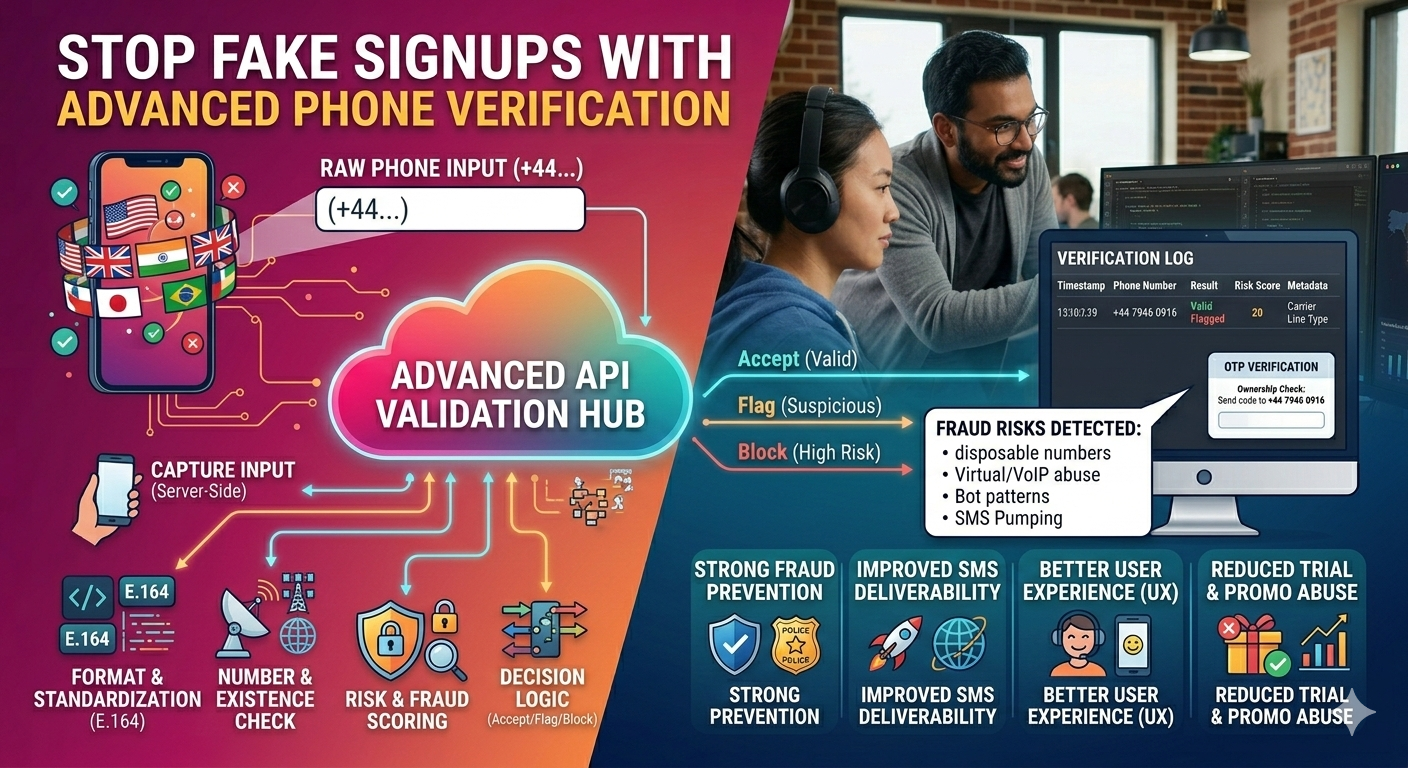
How Advanced Phone Verification Works
The process is fast and seamless for users.
Step 1: User Enters Phone Number
During signup, checkout, or profile update.
Step 2: API Request Is Sent
Your backend sends the number to a verification service.
Step 3: Real-Time Telecom Analysis
The system checks international numbering databases and carrier records.
Step 4: Structured Data Is Returned
You receive detailed metadata in milliseconds.
Step 5: Smart Decision-Making
Your app can:
-
Approve valid numbers
-
Flag suspicious entries
-
Block high-risk signups
-
Route communication correctly
All of this happens without slowing down the user experience.
Key Benefits of Using Phone Number Verification
1. Stronger Fraud Prevention
Fraudsters frequently use:
-
Temporary numbers
-
VoIP services
-
Randomly generated combinations
Advanced verification helps identify risky numbers before accounts are activated.
2. Improved SMS Delivery
Sending OTPs or notifications to landlines or invalid numbers wastes money and hurts deliverability rates. Verification ensures you’re communicating with reachable mobile numbers.
3. Better User Experience
Auto-detecting country codes and formatting numbers correctly reduces signup friction and input errors.
4. Cleaner Database
Accurate phone data keeps your CRM reliable, improves segmentation, and enhances marketing performance.
5. Reduced Trial Abuse
SaaS platforms often struggle with users creating multiple trial accounts. Filtering suspicious numbers reduces this risk significantly.
Industry Use Cases
SaaS Platforms
-
Prevent bot registrations
-
Strengthen two-factor authentication
-
Reduce fake trial accounts
eCommerce Stores
-
Confirm delivery contact numbers
-
Improve order notification accuracy
-
Minimize fake purchases
Fintech & Banking
-
Add an extra layer of identity verification
-
Reduce fraud attempts
-
Support compliance requirements
Marketplaces
-
Verify both buyers and sellers
-
Build trust between users
-
Lower scam incidents
No matter the industry, phone verification strengthens both operational efficiency and customer trust.
Best Practices for Implementing Phone Verification
To maximize effectiveness, follow these guidelines:
Store Numbers in International Format (E.164)
This ensures consistency across global users.
Perform Server-Side Validation
Never rely only on front-end checks. Secure API keys and verification logic on the backend.
Combine with OTP Authentication
Verification confirms metadata. OTP confirms ownership.
Avoid Over-Blocking
Not all VoIP numbers are malicious. Apply smart filtering based on your risk model.
Monitor Patterns
Track repeated suspicious attempts and refine your fraud detection rules over time.
Performance and Scalability Considerations
A good verification system should:
-
Respond within milliseconds
-
Handle high traffic volumes
-
Provide global coverage
-
Offer high uptime reliability
To maintain performance:
-
Use asynchronous API calls
-
Implement timeout safeguards
-
Cache results when appropriate
Security should never slow down growth.
Common Mistakes to Avoid
Relying Only on Regex
Format checks cannot detect carrier or risk signals.
Ignoring International Users
If you operate globally, your verification system must support worldwide numbering plans.
Poor Error Messages
Instead of “Invalid number,” provide clear guidance like:
“Please enter a valid mobile number with country code.”
Skipping Ownership Verification
Metadata verification is not identity confirmation. Always use OTP for sensitive actions.
The Business Impact of Smarter Verification
When you eliminate fake signups, you improve:
-
Conversion rate accuracy
-
Marketing ROI
-
Customer data quality
-
Fraud prevention
-
Operational efficiency
Over time, the savings from reduced SMS waste, lower fraud losses, and improved database integrity far outweigh the cost of implementation.
Smart verification isn’t just a technical feature. It’s a growth strategy.
The Future of Phone Number Intelligence
As fraud tactics evolve, verification systems are becoming more intelligent.
Emerging advancements include:
-
Real-time risk scoring
-
AI-based anomaly detection
-
Carrier-level routing optimization
-
Behavioral fraud analytics
Businesses that adopt intelligent phone validation today position themselves ahead of tomorrow’s threats.
Fake signups silently damage platforms. They distort analytics, increase costs, and open the door to fraud.
An advanced phone number verification tool helps you stop these problems at the source. By adding real-time telecom intelligence and structured validation to your onboarding process, you protect both your business and your users.
Whether you start with a simple screening layer or implement a complete system to validate phone number online, taking action today ensures cleaner data, stronger security, and sustainable growth tomorrow.
FAQs
1. How does phone number verification prevent fake signups?
It analyzes number structure, carrier data, and line type in real time. Suspicious or invalid numbers can be blocked before account creation is completed, reducing bot and fraudulent registrations.
2. Is phone number verification the same as OTP authentication?
No. Verification checks number validity and metadata. OTP confirms that the user actually owns the number. Both should be used together for maximum security.
3. Can small businesses benefit from phone verification tools?
Yes. Even small platforms face bot attacks and fake registrations. Using a reliable solution or even starting with a free phone number checker can significantly improve data quality and reduce fraud risks.
 English
Join our community to interact with posts!