
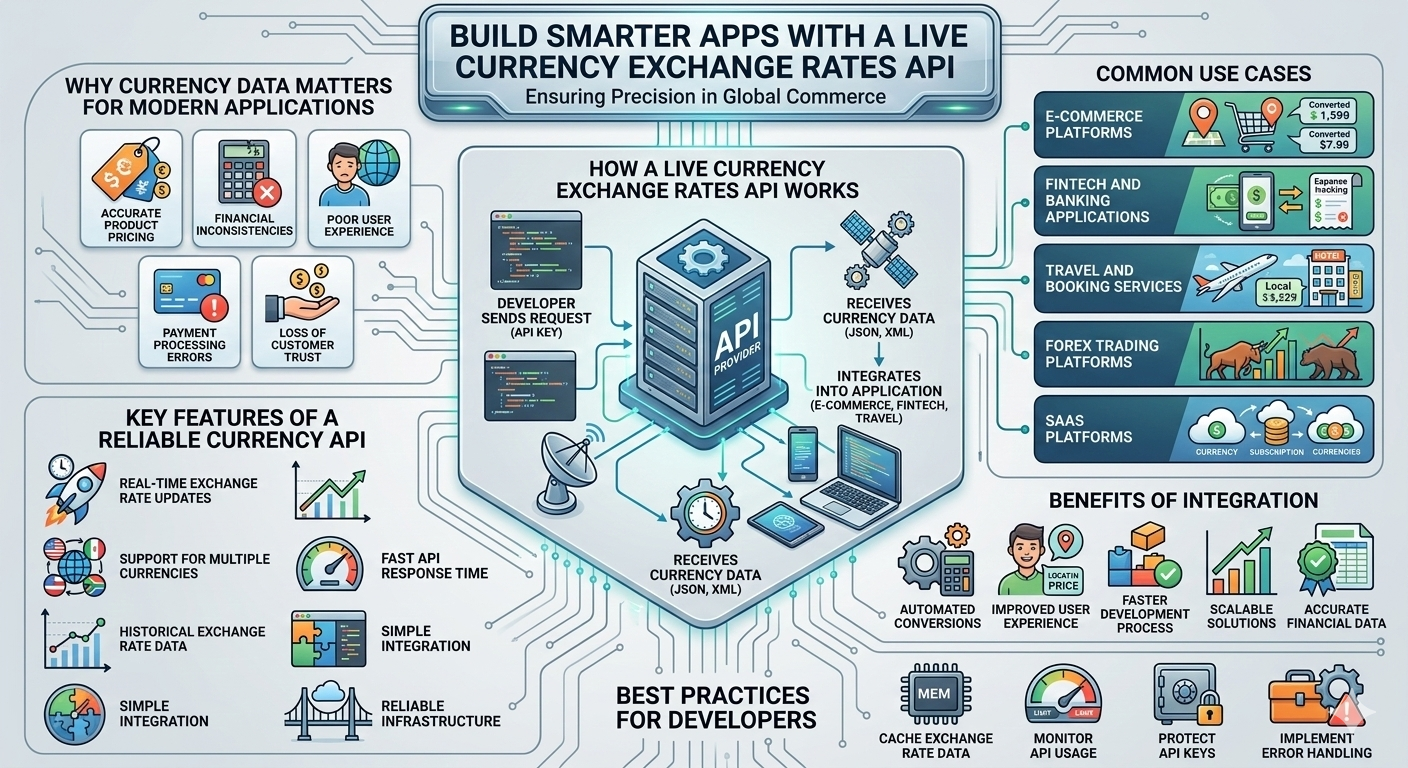
Modern applications often serve users from multiple countries, which means handling different currencies efficiently is essential. Whether you are building a fintech product, an eCommerce platform, a travel website, or a financial analytics tool, accurate currency data plays a major role in improving both functionality and user experience. A currency exchange api allows developers to access real-time exchange rate data and integrate automatic currency conversion into their applications.
Instead of manually updating currency values or relying on outdated financial data, developers can use a currency API to fetch the latest rates instantly. This not only saves development time but also ensures that users always see accurate and reliable financial information.
This article explains how live currency exchange rate APIs work, why they are important for modern applications, and how developers can use them to build smarter and more scalable products.
Why Currency Data Matters for Modern Applications
Many digital products now serve a global audience. Businesses selling products, offering financial services, or providing travel bookings must display prices in different currencies.
If the exchange rate used in the system is outdated, it can lead to:
-
Incorrect product pricing
-
Financial inconsistencies
-
Poor user experience for international customers
-
Payment processing errors
-
Loss of customer trust
By integrating real-time currency data, applications can automatically update exchange rates and maintain accurate pricing across different regions.
What Is a Live Currency Exchange Rates API?
A live currency exchange rates API is a service that provides real-time exchange rate data through a web-based interface. Developers send a request to the API, and the server returns the latest currency data.
The information is typically delivered in formats such as JSON or XML, making it easy to integrate into web applications, mobile apps, and backend systems.
For example, an application may request the current conversion rate between USD and EUR. The API processes the request and returns the latest rate, which the application can then use to calculate prices or display currency conversions.
This process usually takes only a few milliseconds, allowing applications to update financial data instantly.
Key Features of a Reliable Currency API
Not all currency APIs provide the same level of functionality or performance. Choosing the right API is important for ensuring reliable financial data.
Here are some important features developers should look for.
Real-Time Exchange Rate Updates
Real-time data ensures that currency values are always accurate and reflect the latest market changes.
Support for Multiple Currencies
A good API should support a wide range of global currencies so applications can serve users from different regions.
Historical Exchange Rate Data
Access to past exchange rates allows businesses to analyze trends, generate financial reports, and create forecasting tools.
Fast API Response Time
Applications that rely on instant currency conversions need an API that can deliver data quickly without delays.
Simple Integration
Clear documentation and straightforward endpoints make it easier for developers to integrate the API into their projects.
Reliable Infrastructure
High uptime ensures that applications can access exchange rate data whenever needed.
How Currency APIs Improve Application Functionality
Integrating a currency API can significantly improve how an application handles financial data. Instead of relying on static conversion tables or manual updates, applications can dynamically calculate currency values.
This creates a smoother and more reliable experience for users.
For example:
-
An eCommerce website can automatically convert product prices based on the customer’s location.
-
A travel platform can show flight and hotel prices in local currencies.
-
A fintech app can display real-time currency conversion for international payments.
These features improve usability and make digital platforms more accessible for global audiences.
Common Use Cases for Currency APIs
Currency APIs are widely used across many industries that require accurate financial data.
eCommerce Platforms
Online stores selling internationally must convert product prices for customers in different countries. A currency API automates this process and ensures accurate pricing.
Fintech and Banking Applications
Financial platforms use currency APIs for features such as international transfers, expense tracking, and currency monitoring.
Travel and Booking Services
Travel platforms often display prices for hotels, flights, and packages in multiple currencies to help users understand the total cost.
Forex Trading Platforms
Trading tools rely heavily on real-time currency data to monitor market movements and support trading decisions.
SaaS Platforms
Software platforms that offer subscription services to international customers often convert pricing plans into local currencies.
Benefits of Using a Currency Exchange API
Using a currency API offers many advantages for both developers and businesses.
Automated Currency Conversions
The API automatically updates exchange rates, eliminating the need for manual adjustments.
Improved User Experience
Displaying prices in a user's preferred currency makes it easier for customers to understand costs and make purchasing decisions.
Faster Development Process
Developers can integrate currency functionality without building complex financial systems from scratch.
Scalable Solutions
Currency APIs allow applications to handle growing traffic and increasing international users.
Accurate Financial Data
Real-time updates ensure that currency values remain accurate for transactions and financial reporting.
How Developers Integrate Currency APIs
Most currency APIs follow a simple request-and-response structure, making them easy to implement.
The basic integration process usually involves the following steps:
-
Sign up with an API provider and obtain an API key.
-
Send a request to the API endpoint using the key.
-
Receive exchange rate data from the API server.
-
Use the data within the application for currency conversions.
Developers can integrate these APIs using many programming languages such as JavaScript, Python, PHP, Java, or Ruby.
Once integrated, the application can automatically retrieve the latest exchange rates whenever needed.
Best Practices for Working with Currency APIs
While currency APIs are relatively easy to use, following certain best practices can help improve performance and reliability.
Cache Exchange Rate Data
Storing frequently requested data temporarily can reduce the number of API calls and improve application performance.
Monitor API Usage
Tracking request limits helps ensure that the application does not exceed the provider’s allowed usage.
Protect API Keys
API keys should be stored securely and not exposed publicly in the application code.
Implement Error Handling
Applications should be able to handle API errors gracefully and continue functioning if a temporary issue occurs.
Future of Currency APIs in Digital Applications
As global digital services continue to expand, the demand for accurate currency data will continue to grow. More businesses are building platforms that operate internationally, making automated currency conversion a core feature of many applications.
Future developments in currency APIs may include:
-
AI-powered financial insights
-
Advanced currency analytics tools
-
Integration with global payment gateways
-
Real-time market trend monitoring
These improvements will help developers create more advanced financial applications and provide deeper insights into global currency markets.
For developers and startups building financial or international platforms, integrating a reliable free forex api can provide the foundation for accurate and scalable currency data solutions.
Handling multiple currencies is a critical requirement for modern digital platforms. Businesses and developers need accurate exchange rate data to support global customers, maintain transparent pricing, and ensure financial accuracy.
Currency APIs simplify this process by providing real-time access to global exchange rates. By integrating these APIs into applications, developers can automate currency conversions, improve user experience, and build smarter financial systems.
Whether you are developing a fintech application, an eCommerce store, or a travel platform, using a live currency exchange rate API helps ensure your application delivers reliable financial data to users around the world.
FAQs
1. What is a currency exchange rates API?
A currency exchange rates API is a service that provides real-time currency data to applications. Developers can use it to convert currencies, display international prices, and support financial features within their platforms.
2. Why do applications need real-time currency data?
Real-time currency data ensures that prices, payments, and financial calculations remain accurate. This is especially important for businesses that serve customers across multiple countries.
3. Is it difficult to integrate a currency API into an application?
Most currency APIs are designed to be developer-friendly. With proper documentation and a simple API key, developers can integrate currency conversion features into their applications within a short time.
Recommended Resources:-
7 Best Free Currency Converter APIs In 2025
Best Practices for REST API Error Handling in 2025
 English
Join our community to interact with posts!