
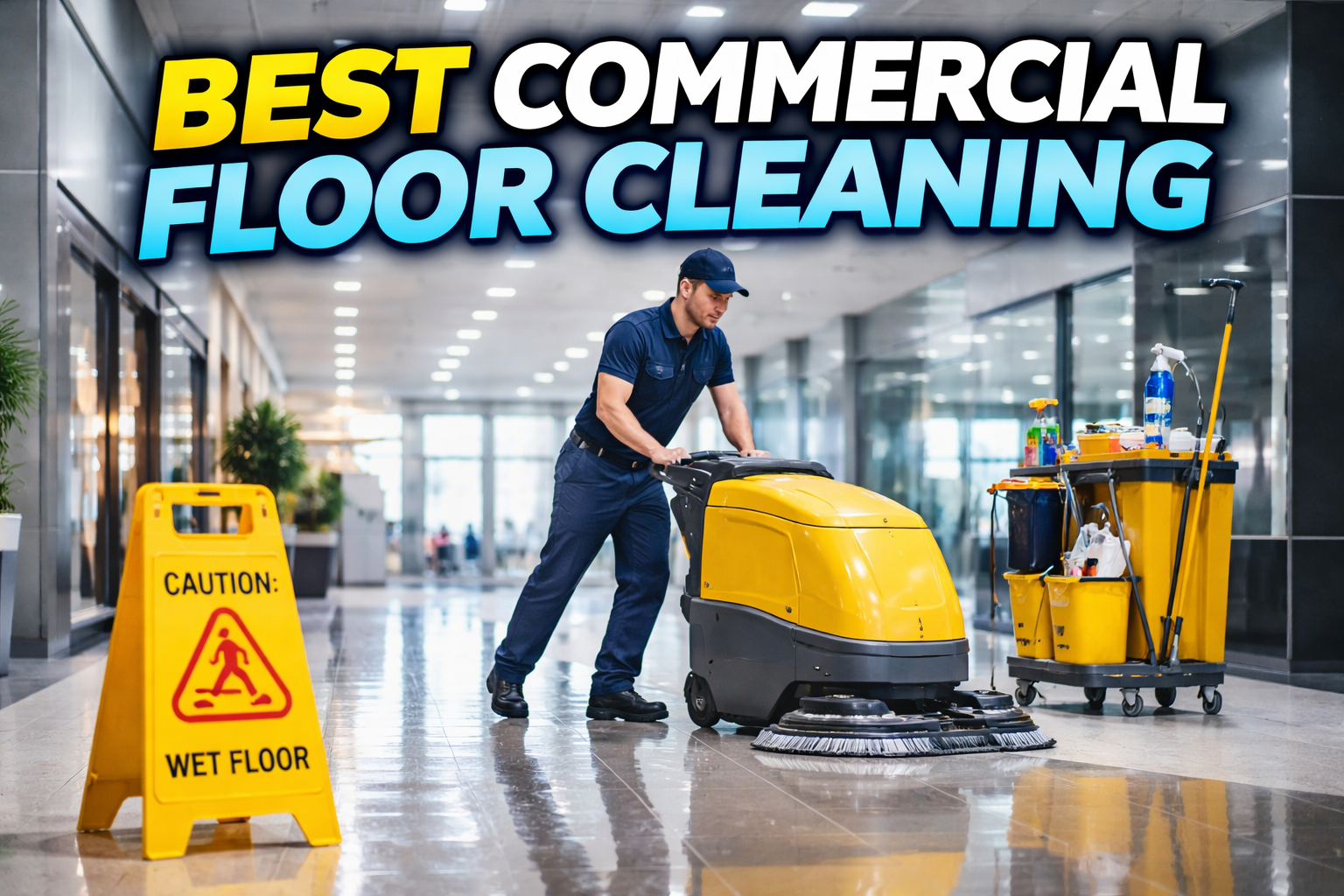
Commercial floor cleaning is an essential part of modern business maintenance because workplace flooring directly affects hygiene, safety, and professional appearance. Many business owners struggle to decide how often they should hire commercial floor cleaning services since cleaning too frequently may increase operational costs, while cleaning too rarely may cause dirt buildup and surface damage. The ideal cleaning schedule depends on workplace traffic intensity, flooring material, and business industry type. Professional commercial cleaning services help organizations maintain hygienic and visually attractive environments without wasting maintenance resources.
Flooring surfaces inside business environments experience constant pressure from foot movement, furniture friction, and environmental dust particles. Over time, microscopic dirt particles accumulate on floor surfaces and gradually reduce shine and protective coating strength. Without proper cleaning frequency, businesses may face long-term repair expenses caused by surface scratches, chemical residue buildup, or microbial contamination. Understanding cleaning schedule optimization is therefore important for cost management and workplace safety.
Modern organizations are becoming more conscious about workplace hygiene because employee health and customer satisfaction are directly connected to environmental cleanliness. Commercial floor cleaning services provide structured maintenance programs that help businesses maintain professional standards while protecting expensive flooring investments.
Why Cleaning Frequency Matters for Businesses
Cleaning frequency plays a critical role in maintaining floor durability and workplace hygiene quality. If floors are cleaned too rarely, dust particles may accumulate and create friction damage when people walk across the surface repeatedly. On the other hand, excessive cleaning may weaken protective coatings if strong chemicals or mechanical pressure are used frequently.
Business flooring materials are expensive assets, and improper maintenance can reduce their lifespan significantly. Professional cleaning schedules help balance cleanliness and material protection. Companies that follow proper maintenance timing usually experience lower repair costs and better flooring performance over long periods.
Maintaining appropriate cleaning frequency also supports corporate professionalism. Customers and visitors subconsciously judge business quality based on interior cleanliness. Therefore, choosing the right cleaning schedule is not only about hygiene but also about brand reputation.
Factors That Decide Cleaning Frequency
Workplace Traffic Level
The number of people walking inside a workplace is one of the biggest factors determining cleaning frequency. High traffic areas such as office corridors, shopping malls, and reception zones accumulate dust much faster than low traffic zones. Businesses with heavy daily movement usually require more frequent professional cleaning services.
Furniture movement and equipment rolling activity also contribute to surface wear. Chair wheels and footwear friction can gradually create microscopic scratches if dust particles are not removed regularly. Evaluating workplace traffic patterns helps organizations design appropriate cleaning schedules.
Flooring Material Type
Different flooring materials require different maintenance frequencies because each material reacts differently to chemical exposure and mechanical pressure. Hardwood floors require gentle cleaning methods because excessive moisture can cause swelling or coating damage.
Tile and concrete flooring can tolerate slightly stronger cleaning methods but still require professional maintenance to prevent dirt buildup. Marble and polished stone floors need specialized polishing and cleaning programs to preserve the natural shine quality.
Business Industry Requirements
Cleaning frequency also depends on industry type because healthcare, food service, and hospitality businesses require stricter hygiene standards. Hospitals and clinics must maintain disinfected floor surfaces to prevent infection transmission.
Restaurants and food processing facilities require frequent sanitation programs due to contamination risk. Corporate offices may follow less intensive cleaning schedules compared to the medical or food industries.
Recommended Cleaning Schedule for Different Businesses
High Traffic Commercial Spaces
High-traffic business environments such as shopping centers, airports, and large corporate offices usually require professional floor cleaning services at least two to three times per week. Continuous foot movement increases dust accumulation and friction damage risk.
Daily dust removal may also be necessary in entrance zones and corridors. High-traffic spaces benefit from scheduled maintenance programs that include deep cleaning and surface protection treatment.
Medium Traffic Offices
Most standard corporate offices fall under the medium traffic category and usually require professional floor cleaning once per week. Weekly cleaning is sufficient to maintain hygiene quality and prevent dust accumulation.
Office spaces with carpet or hardwood flooring may require additional maintenance depending on material sensitivity. Slightly damp cleaning methods are recommended for wooden surfaces.
Low Traffic Business Areas
Small offices, private consultation rooms, and low-visitor businesses may only need professional cleaning once every two to four weeks. However, daily dust removal should still be performed using basic cleaning tools.
Low traffic environments are less prone to rapid dirt buildup but still require periodic professional maintenance.
Signs That Your Business Needs Immediate Floor Cleaning
If floors appear cloudy, sticky, or dull, it is a clear sign that cleaning is overdue. Visible stain marks, dust layers, or slippery surface conditions indicate chemical residue or dirt accumulation.
Unpleasant indoor odor may also signal microbial growth inside floor pores. Businesses should schedule professional cleaning immediately when these symptoms appear.
Ignoring early warning signs may lead to long-term flooring damage and expensive restoration work.
Benefits of Regular Professional Floor Cleaning
Regular commercial floor cleaning improves workplace hygiene by removing dust, bacteria, and environmental pollutants from surfaces. It also enhances employee comfort and reduces workplace accident risks caused by slippery floors.
Professional cleaning services help extend the lifespan by protecting the protective coating layers from chemical and mechanical damage. Businesses that maintain consistent cleaning schedules save long-term repair and replacement costs.
Clean workplace environments also improve customer perception and corporate reputation. Professional interior cleanliness reflects organizational quality and operational discipline.
Conclusion
Determining how often businesses should hire commercial floor cleaning services depends on traffic intensity, flooring material, and industry requirements. High traffic workplaces may need cleaning several times per week, while low traffic areas may require monthly maintenance. Regular professional cleaning helps maintain hygiene standards, protect flooring investments, and improve workplace productivity. Instead of waiting for visible damage, businesses should follow preventive maintenance schedules to ensure long-term flooring durability and professional environmental presentation.
Frequently Asked Questions
1. How often should businesses hire commercial floor cleaning services?
Cleaning frequency depends on traffic level, but most offices require weekly or monthly professional floor cleaning.
2. Which businesses need more frequent floor cleaning?
High traffic areas such as malls, hospitals, restaurants, and large offices need more frequent cleaning.
3. What happens if businesses don’t clean floors regularly?
Dust buildup, surface scratches, bacteria growth, and flooring damage may occur over time.
4. Is daily floor cleaning necessary for all businesses?
Not always. High traffic workplaces may need daily dust removal, while others can follow weekly schedules.
5. Can professional floor cleaning reduce workplace accidents?
Yes, proper cleaning reduces slipperiness and helps prevent injuries caused by dirt or moisture.
6. What is the best cleaning frequency for office hardwood floors?
Most office hardwood floors require weekly professional cleaning and daily dust maintenance.
7. Are commercial cleaning services expensive for businesses?
Costs vary by building size and service type, but professional cleaning is cost-effective compared to repair expenses.
8. How do I know if my business floor needs cleaning?
Cloudy appearance, sticky surface, visible stains, or dust accumulation are warning signs.
9. Do commercial cleaners use safe chemicals?
Yes, professional cleaning companies use certified and tested cleaning solutions.
10. Can regular professional cleaning extend floor lifespan?
Yes, proper maintenance protects protective coatings and reduces long-term surface wear.
 English
Join our community to interact with posts!