
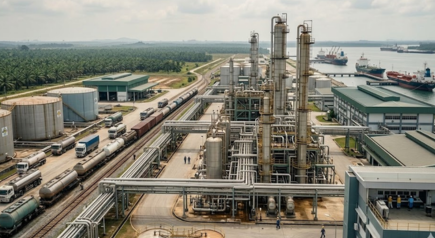
The RBD Palm Oil Price Trend in Q3 2025 remained firm, supported by rising crude palm oil prices and supply constraints in Malaysia and Indonesia caused by weather-related yield declines. Strong import demand from India sustained regional trade flows. In the near term, prices are expected to track crude palm oil movements, while demand during seasonal consumption cycles will shape short-term fluctuations.
Quick Summary
-
Current market direction: Firm
-
Primary driver: Crude palm oil price movement
-
Key demand center: India
-
Supply influence: Malaysian and Indonesian production conditions
-
Volatility level: Moderate
Market Snapshot (Data Block)
-
China: 1282 USD/MT (September 2025)
-
India: 1745 USD/MT (September 2025)
-
Volatility Level: Moderate
-
Major producing regions: Malaysia and Indonesia dominate global supply
-
Trade pattern: Asia drives global import demand
What is RBD Palm Oil?
Refined, Bleached, and Deodorized (RBD) Palm Oil is a processed vegetable oil derived from crude palm oil. It undergoes refining, bleaching, and deodorization to remove impurities, color compounds, and odor-forming substances.
Production Process
-
Palm fruit harvesting and oil extraction
-
Crude palm oil production
-
Refining to remove free fatty acids
-
Bleaching for color stabilization
-
Deodorization to remove odor and improve shelf life
Key Industrial Properties
-
Neutral taste and odor
-
High oxidative stability
-
Long shelf life for food processing
-
Suitable for frying, baking, and packaged food manufacturing
Supply Chain Structure
Oil palm plantations → Crude palm oil mills → Refining facilities → Global trading hubs → Food processors, retailers, and industrial buyers.
Current Price Trend Analysis (2024–2025)
During Q3 2025, the RBD palm oil market maintained an upward pricing direction across key Asian markets.
Cause-and-Effect Market Dynamics
Weather disruptions → Lower yields → Supply tightening
Malaysia and Indonesia experienced weather-related production challenges, which reduced yields in several growing areas. These constraints supported higher crude palm oil prices, which directly influenced refined palm oil values.
Inventory accumulation → Export demand uncertainty
Although Malaysian inventories increased, this reflected slower export demand rather than oversupply, which limited downward price pressure.
Strong Indian imports → Trade flow expansion
India remained the dominant demand center. Refiners increased imports due to palm oil’s significant cost advantage over competing edible oils such as soybean oil.
Alternative sourcing → Competitive imports
Indian buyers also sourced cargoes from Colombia and Guatemala. These shipments arrived at lower prices compared with traditional Southeast Asian origins, helping refiners manage procurement costs.
Despite these changes, RBD palm oil maintained its premium over crude grades, reflecting its refined processing value.
Key Price Drivers
Raw Material Supply → Direct Price Transmission
RBD palm oil prices closely follow crude palm oil market movements.
-
Production constraints in Malaysia and Indonesia limited supply growth
-
Weather disruptions reduced yields in some producing regions
Impact: Higher crude palm oil prices translated directly into higher refined palm oil prices.
Energy Costs → Refining Cost Influence
Refining palm oil requires thermal energy and processing operations.
-
Refining costs influence the price premium between crude and refined grades
Impact: Refining expenses help maintain the structural price difference between crude palm oil and RBD palm oil.
Industrial Demand → Market Stability
Demand from the food processing sector remains a key consumption driver.
Major demand sectors include:
-
Packaged food manufacturing
-
Frying oil applications
-
Bakery and confectionery production
-
Foodservice industry
Impact: Stable downstream demand supports consistent import activity.
Environmental Regulations → Trade Structure
Sustainability regulations in some markets influence sourcing decisions.
European buyers often evaluate sustainability certifications and traceability requirements.
Impact: Compliance requirements affect procurement strategies and supplier selection.
Logistics and Freight → Regional Price Spread
Global edible oil trade depends heavily on shipping routes and freight costs.
-
Southeast Asia remains the primary export hub
-
South American suppliers increasingly compete in import markets
Impact: Competitive freight and pricing from alternative origins can reshape import patterns.
Geopolitical Factors → Market Substitution
Disruptions affecting other edible oils influence palm oil demand.
-
Sunflower and rapeseed oil supply limitations increased reliance on palm oil
Impact: Buyers shift toward palm oil when alternative vegetable oils face supply disruptions.
Regional Analysis
Asia-Pacific
Asia remains the center of global palm oil trade.
-
China price: 1282 USD/MT (September 2025)
-
India price: 1745 USD/MT (September 2025)
India was the primary driver of regional imports. Refiners increased purchases to capitalize on palm oil’s cost advantage over soybean oil.
Sourcing diversification also increased, with shipments arriving from South American suppliers at competitive prices.
Europe
European markets followed global palm oil trends while maintaining a premium for refined grades.
Key market dynamics included:
-
Consistent import demand from Southeast Asia
-
Growing competition from South American exporters
-
Limited sunflower and rapeseed oil availability
These factors sustained palm oil’s role as a flexible edible oil option for European buyers.
North America
Trade activity in North America remained comparatively stable.
Demand came mainly from:
-
Food processing industries
-
Bio-based fuel blending requirements
Although crude palm oil dominated trading activity, RBD palm oil continued to serve downstream sectors requiring ready-to-use refined inputs.
Middle East
The region depends largely on imported edible oils.
Palm oil is widely used in food manufacturing and foodservice applications due to its stability and competitive pricing.
Forecast & Outlook (2026–2027)
Short-Term Outlook (6–12 Months)
In the near term, RBD palm oil prices are expected to continue tracking crude palm oil movements.
Seasonal consumption cycles and import demand patterns will influence short-term fluctuations.
Directional Bias: Stable to Firm
Medium-Term Outlook (2 Years)
Over the next two years, palm oil prices are expected to remain closely linked to production performance in Southeast Asia and demand trends in key importing regions.
Demand growth in Asia, particularly from food processing industries, will remain a central market influence.
Directional Bias: Stable
Upside Risks
-
Production disruptions in major producing regions
-
Strong import demand from large consuming countries
-
Supply constraints in competing vegetable oils
Downside Risks
-
Inventory accumulation in exporting countries
-
Reduced global edible oil demand
-
Increased competition from alternative vegetable oils
Strategic Procurement Insights
For food manufacturers, edible oil traders, and bulk buyers, several procurement strategies can improve cost stability.
Supplier Diversification
Maintain sourcing across multiple exporting regions to reduce dependency on a single origin.
Contract Structuring
Use a mix of long-term supply agreements and spot purchases to balance price stability with market flexibility.
Inventory Timing
Avoid excessive stock accumulation when inventories in producing regions increase.
Market Monitoring
Track crude palm oil movements, as refined grades closely follow its pricing pattern.
Risk Management
Evaluate substitute oils to maintain flexibility during price fluctuations.
FAQ – RBD Palm Oil Price Trend
What is driving the RBD Palm Oil price trend?
RBD palm oil prices are primarily influenced by crude palm oil prices, supply conditions in Malaysia and Indonesia, and global edible oil demand. Weather disruptions and yield fluctuations in producing regions significantly affect price direction.
Is the price expected to rise in 2026?
In the near term, prices are expected to follow crude palm oil market movements. Seasonal demand patterns and supply conditions in Southeast Asia will determine whether prices strengthen or remain stable.
Which region offers the lowest pricing?
Asian markets typically offer more competitive pricing due to proximity to major production centers and lower transportation costs.
Is RBD palm oil a volatile commodity?
RBD palm oil generally shows moderate volatility because prices closely track crude palm oil markets and broader vegetable oil supply dynamics.
Which industries monitor RBD palm oil prices?
Industries that rely heavily on palm oil include food processing, packaged foods, bakery manufacturing, confectionery production, and biofuel blending operations.
Why does RBD palm oil trade at a premium to crude palm oil?
Refining processes such as bleaching and deodorization add processing costs and improve product quality, allowing RBD palm oil to command a premium compared with crude grades.
 English
Join our community to interact with posts!