
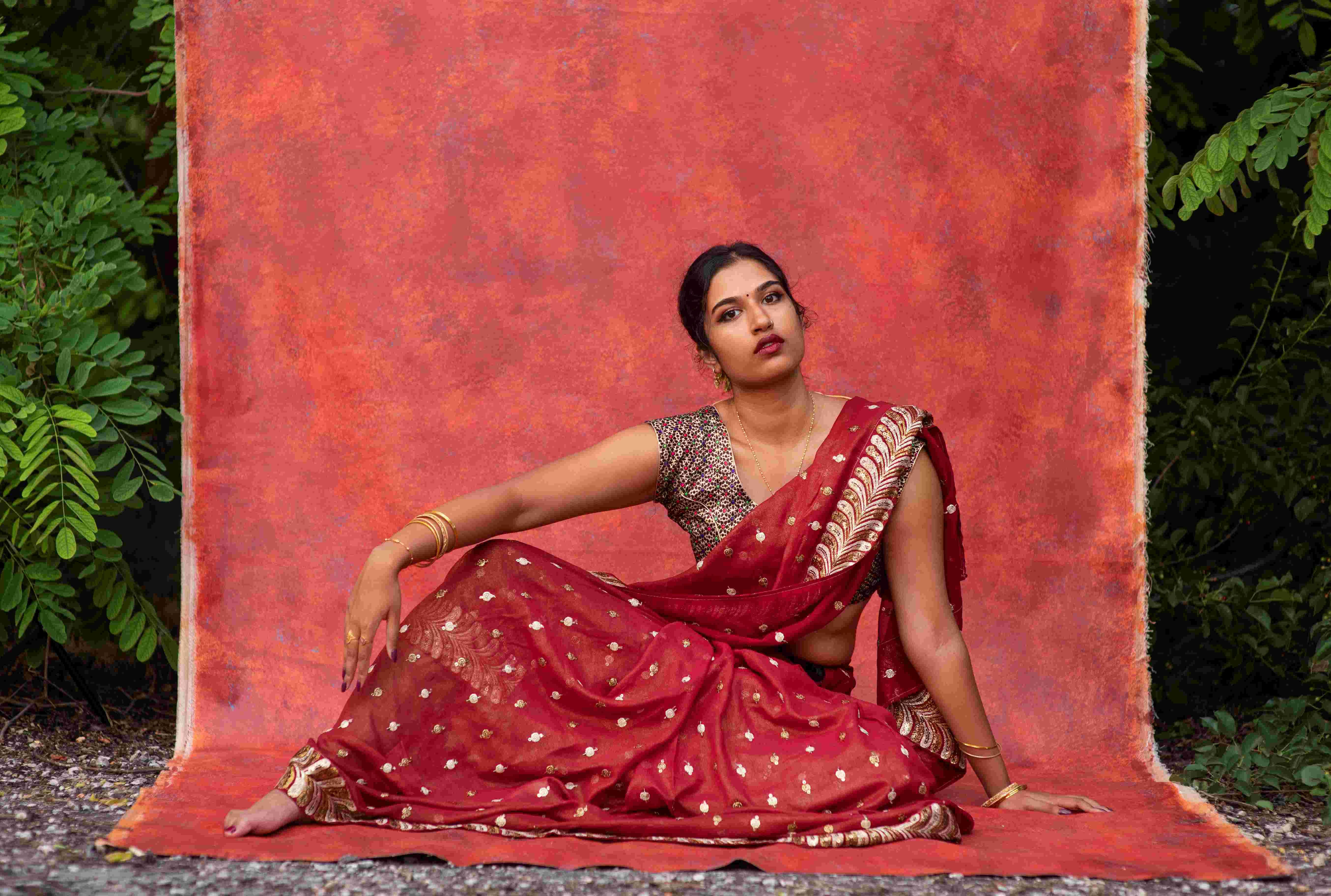
Among all the magnificent textile traditions of India, Kanchipuram silk holds a place of extraordinary prestige. When it comes to bridal fashion in South India, bridal Kanchipuram sarees are considered the ultimate expression of tradition, prosperity, and auspicious beauty. Woven in the temple city of Kanchipuram in Tamil Nadu, these sarees are revered as much for their spiritual significance as for their unparalleled craftsmanship.
The Heritage of Bridal Kanchipuram Sarees
The art of Kanchipuram weaving dates back over four centuries, with its origins deeply intertwined with the patronage of the Pallava and Chola dynasties. Weavers in Kanchipuram are traditionally members of the Devanga community, who are said to have migrated from the North and brought with them advanced weaving techniques. Over generations, they refined their craft to produce sarees of extraordinary quality and beauty, establishing Kanchipuram as one of the foremost silk-weaving centers in the world.
Bridal Kanchipuram sarees are distinguished by several unique features. They are made from the finest mulberry silk, which is sourced primarily from Karnataka and gives the fabric its characteristic weight, sheen, and durability. The use of pure zari — threads made from silver coated with gold — creates the dazzling borders and motifs that are synonymous with the Kanchipuram weaving tradition.
Why Brides Choose Bridal Kanchipuram Sarees
For South Indian brides, wearing bridal Kanchipuram sarees on their wedding day is as much a religious tradition as it is a fashion choice. The saree is considered auspicious, often gifted by the groom's family to the bride as a symbol of welcome and prosperity. The act of wearing a Kanchipuram saree at the wedding ceremony is believed to invoke blessings and good fortune for the new couple.
Beyond their spiritual significance, bridal Kanchipuram sarees are chosen for their extraordinary beauty and the statement they make. The combination of rich silk, vibrant colors, and elaborate gold zari work creates a look that is both majestic and deeply traditional. When a bride walks into her wedding ceremony draped in a Kanchipuram saree, she commands attention and embodies the grace and grandeur of South Indian culture.
Colors, Motifs, and Designs
Bridal Kanchipuram sarees come in a breathtaking array of colors. Auspicious shades like red, maroon, and deep orange are the most traditional choices for wedding ceremonies. However, modern brides increasingly opt for colors like royal blue, deep teal, and golden yellow, which offer a fresh take on tradition while maintaining the saree's ceremonial character.
The motifs woven into Kanchipuram sarees draw from a rich vocabulary of traditional symbols. Temple towers, peacocks, elephants, lotus flowers, mango designs, and various geometric patterns appear in the borders and body of these sarees. The pallu — the decorative end piece that drapes over the shoulder — is typically the most elaborate section, featuring large, complex designs that showcase the weaver's mastery.
Identifying Authentic Bridal Kanchipuram Sarees
Given the popularity and high value of Kanchipuram sarees, the market unfortunately contains many imitations. Authentic bridal Kanchipuram sarees can be identified by several characteristics. First, the saree should have a distinctly heavy weight due to the quality of the silk and the density of the weave. The body, border, and pallu are woven separately and then interlocked — a technique that creates a distinctive texture at the junctions.
Look for the Silk Mark certification and, where possible, purchase from authorized Kanchipuram silk establishments or cooperatives. A genuine saree will have small imperfections that are a hallmark of handloom weaving, unlike the perfectly uniform appearance of machine-made imitations. The zari work should feel slightly rough to the touch if it contains genuine gold coating, as opposed to the smooth feel of imitation zari.
Caring for Your Kanchipuram Saree
Bridal Kanchipuram sarees require careful maintenance to preserve their beauty. Always dry clean these sarees, as the combination of silk and zari can be damaged by water and detergents. Store them wrapped in soft muslin cloth, preferably with a few neem leaves to deter insects. Avoid storing in plastic covers, as these can trap moisture and damage the fabric. Air the sarees periodically and refold them along different lines to prevent permanent creases from forming along the same folds.
With proper care, a bridal Kanchipuram saree can remain beautiful for decades and even be passed on as a precious family heirloom. Many South Indian families treasure their Kanchipuram sarees for generations, connecting family members across time through these magnificent woven treasures that embody the very best of Indian craftsmanship and culture.
 English
Join our community to interact with posts!