
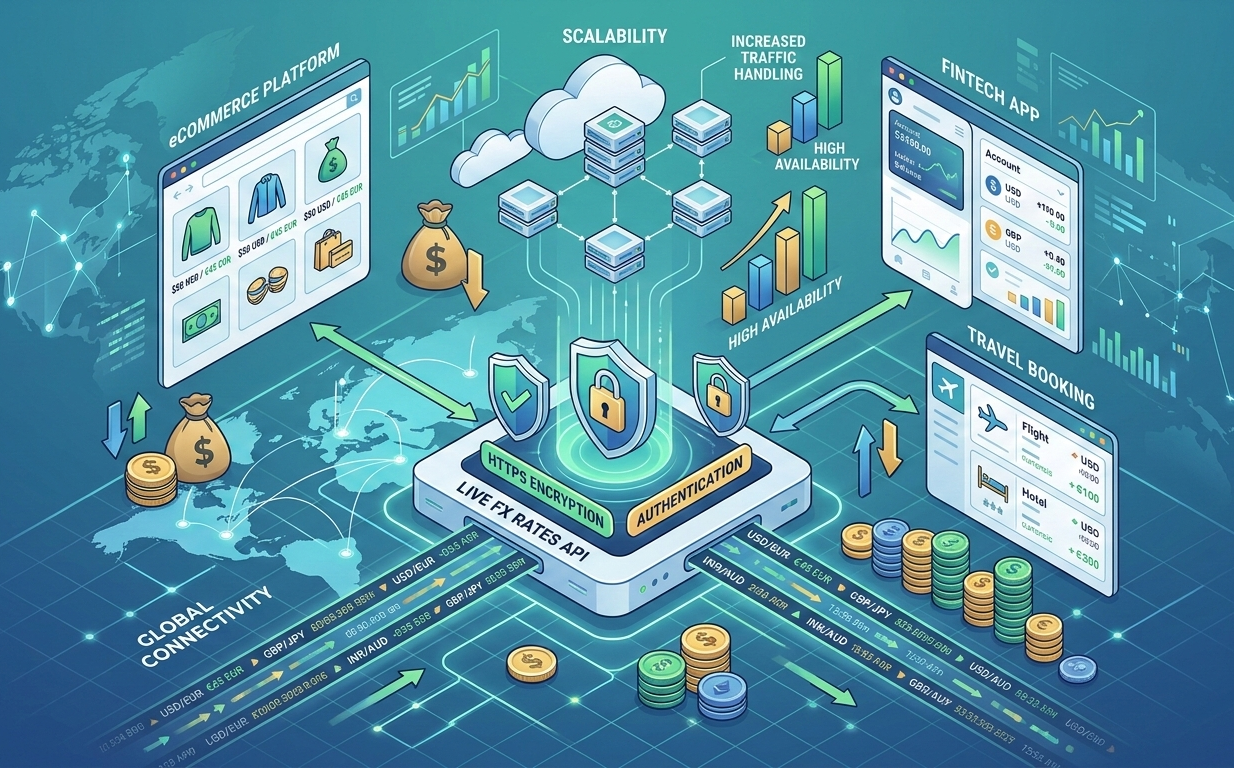
Global digital products often serve users from multiple countries, which means handling different currencies becomes a critical feature for developers. Applications such as eCommerce platforms, fintech tools, travel booking websites, and SaaS products must display prices and financial values accurately for international users. One of the most effective ways to achieve this is by integrating an api currency converter that retrieves live exchange rate data automatically.
Instead of manually collecting financial information from various sources, developers can rely on APIs to deliver reliable currency data in real time. This approach simplifies development, improves pricing accuracy, and ensures applications always display updated currency values for users across different regions.
This article explores how live FX rate APIs work, why security and scalability are important, and how developers can integrate these services to build reliable global applications.
Why Live FX Rates Matter for Global Applications
Exchange rates are constantly changing due to global financial activity. Market demand, economic policies, geopolitical developments, and international trade all influence currency values. Because of this volatility, applications that rely on outdated currency data may show incorrect prices or perform inaccurate financial calculations.
For businesses operating internationally, these inaccuracies can lead to several issues:
- Incorrect product pricing in different regions
- Confusion during online checkout
- Financial reporting errors
- Poor user experience for global customers
Live FX rate APIs solve these problems by delivering updated exchange rate information directly to applications. This ensures that currency conversions always reflect current market conditions.
When users see prices in their local currency and those values remain consistent across platforms, it builds trust and improves the overall user experience.
What Is a Currency API?
A currency API is a web-based service that provides exchange rate data through simple requests. Developers connect their applications to the API and retrieve currency information whenever it is required.
Instead of building an internal system to collect and maintain financial data, the application sends a request to the API and receives the latest exchange rate information in response.
Typical information returned by currency APIs includes:
- Base currency used in the request
- Target currency for conversion
- Current exchange rate value
- Timestamp showing when the data was last updated
- Additional market information depending on the provider
Most APIs return this data in structured formats such as JSON, which makes it easy for developers to integrate into websites, mobile applications, or backend systems.
How Secure Currency APIs Protect Financial Data
Security plays a major role when dealing with financial data. Applications that process currency conversions must ensure that exchange rate information is delivered securely and cannot be manipulated during transmission.
A secure currency API typically uses modern security measures to protect both the data provider and the applications consuming the service.
Some important security practices include:
Encrypted Data Transmission
Secure APIs use HTTPS protocols to encrypt communication between the application and the server. This prevents unauthorized parties from intercepting sensitive financial data.
API Authentication
Most currency APIs require an API key or authentication token. This ensures that only authorized applications can access the service.
Request Monitoring
Providers monitor API usage to detect unusual activity or potential abuse. This helps maintain service stability and protects the infrastructure.
Reliable Data Sources
Trusted currency APIs collect exchange rate data from financial institutions and market aggregators to ensure the information delivered to applications is accurate.
By following these security practices, developers can confidently integrate currency APIs into their systems.
Why Scalability Is Important for Currency APIs
As digital platforms grow, the number of users and requests increases. A currency API must be able to handle this growth without affecting performance.
Scalable infrastructure ensures that applications can continue retrieving exchange rate data even during high traffic periods.
Several factors contribute to the scalability of a currency API.
Cloud-Based Infrastructure
Many APIs operate on distributed cloud networks, allowing them to handle large volumes of requests efficiently.
Fast Response Times
Low latency ensures that applications receive currency data quickly, preventing delays in price calculations.
High Availability
Reliable APIs maintain strong uptime so applications can access exchange rate data whenever needed.
Support for Multiple Currencies
Scalable APIs support dozens or even hundreds of global currencies, making them suitable for applications that serve international markets.
For businesses planning to expand globally, choosing a scalable API is essential for long-term reliability.
Common Use Cases for Currency APIs
Currency APIs support a wide range of digital services that deal with international users or financial data.
eCommerce Platforms
Online stores that sell products internationally need to display prices in different currencies. Currency APIs allow these platforms to convert product prices automatically based on the user’s location.
SaaS Platforms
Subscription-based services often serve customers from multiple countries. Currency conversion ensures pricing plans are displayed in the user's preferred currency.
Fintech Applications
Financial technology platforms rely heavily on exchange rate data for transactions, account balances, and financial reporting.
Travel and Booking Websites
Travel platforms display hotel prices, flight costs, and travel packages in various currencies to help users understand the value of services.
Financial Analytics Tools
Businesses analyzing international revenue use exchange rate data to convert financial values into a single reporting currency.
Steps to Integrate a Currency API
Integrating a currency API into an application is usually a straightforward process.
1. Select a Currency API Provider
The first step is choosing a reliable provider that offers accurate exchange rate data, strong uptime, and good documentation.
2. Register and Obtain an API Key
Developers typically create an account with the provider and receive an API key that authenticates requests.
3. Send an API Request
The application sends a request to the API endpoint containing parameters such as:
- Base currency
- Target currency
- Conversion amount (optional)
4. Process the Response
The API returns the exchange rate data in a structured format. Developers can extract the required values and perform currency conversions.
5. Display Converted Prices
The final step is displaying the converted value within the application interface so users can see prices in their local currency.
This process allows applications to retrieve currency data dynamically and maintain accurate pricing.
Best Practices for Using Currency APIs
Developers should follow several best practices when implementing currency APIs to ensure accuracy and reliability.
Use Standard Currency Codes
Always rely on internationally recognized currency codes such as USD, EUR, or GBP when requesting exchange rate data.
Avoid Hardcoding Exchange Rates
Exchange rates should never be stored manually in the application because they change frequently.
Cache Data for Performance
Temporary caching can reduce the number of API requests while still keeping exchange rate data relatively fresh.
Handle Errors Gracefully
Applications should include fallback mechanisms in case the API service becomes temporarily unavailable.
Maintain Consistent Currency Formatting
Different regions display currency values differently. Proper formatting improves clarity and usability.
The Future of Currency APIs
As global digital services continue expanding, the need for reliable financial data will continue to grow. Applications must support multiple currencies while maintaining accurate pricing and consistent financial calculations.
Advances in cloud infrastructure and financial data aggregation are making currency APIs more powerful than ever. Developers can now access real-time exchange rate data with minimal latency and high reliability.
These improvements allow businesses to build more advanced financial tools, support international transactions, and deliver better user experiences.
For development teams building global platforms, integrating a reliable exchangerate api helps ensure currency data remains accurate, secure, and scalable across applications.
FAQs
1. What is a currency API used for?
A currency API provides exchange rate data that developers can integrate into websites, mobile apps, or financial platforms to perform currency conversions and display international pricing.
2. How often do currency APIs update exchange rates?
The update frequency depends on the provider. Some APIs update rates every few minutes, while others provide near real-time updates based on global financial markets.
3. Is it difficult to integrate a currency API into an application?
Most currency APIs are designed to be developer-friendly. Integration typically requires registering for an API key, sending requests to the API endpoint, and processing the returned exchange rate data within the application.
Recommended Resources:-
Best Practices for REST API Error Handling in 2025
Building a Currency Converter Using Exchangeratesapi.io
 English
Join our community to interact with posts!