
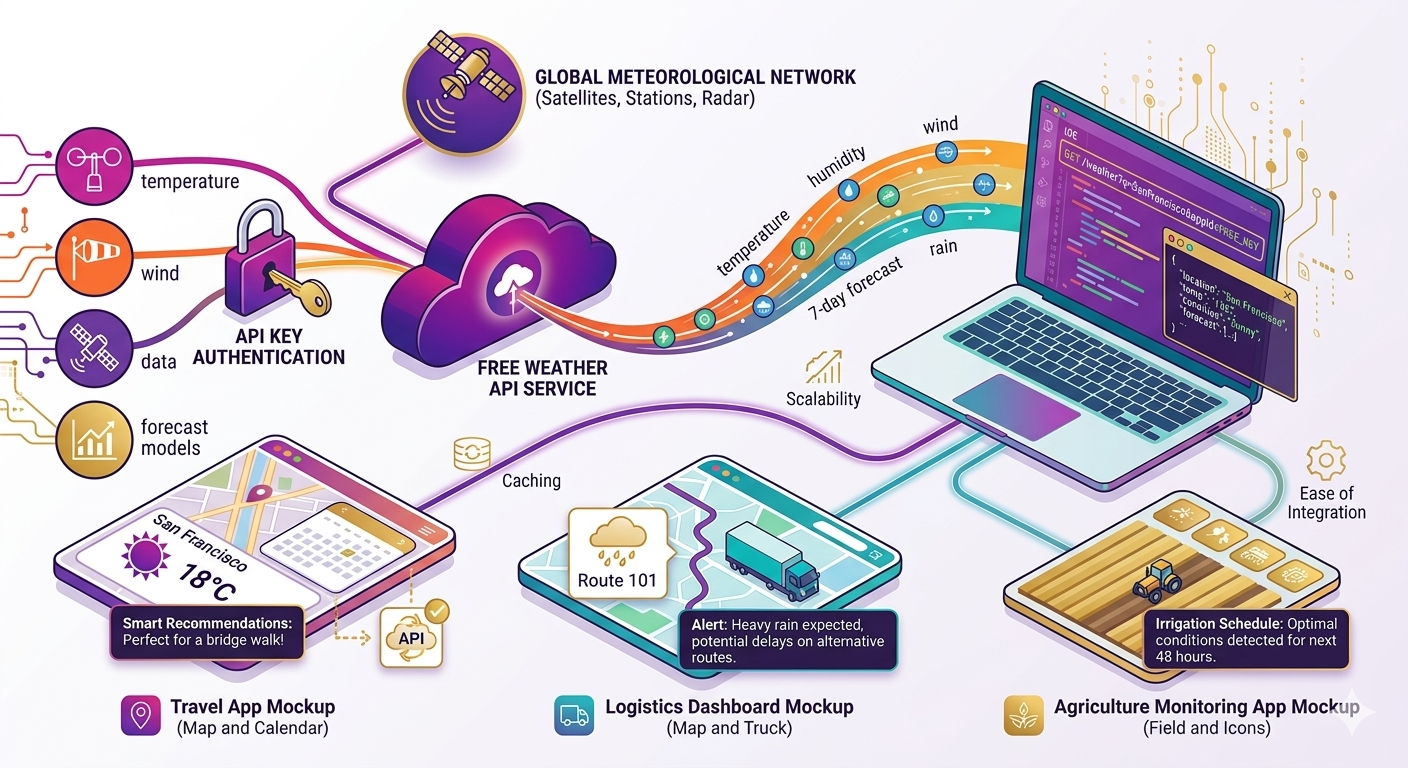
Modern websites and mobile applications often rely on real-time environmental data to improve user experience. From travel platforms and logistics systems to agriculture dashboards and smart home applications, weather data has become a valuable component of digital products. Developers who want to integrate such functionality usually depend on api weather solutions that deliver reliable forecasts, historical records, and global climate insights through simple API requests.
Choosing the right weather API can significantly impact the performance and usefulness of your application. Some services focus on real-time forecasts, while others provide historical climate data or long-term predictions. The ideal solution is easy to integrate, scalable, and designed with developers in mind.
This guide explains how weather APIs work, why they are essential for modern applications, and what features to consider when selecting one for your project.
What Is a Weather API?
A weather API is a service that allows applications to access meteorological data through a structured interface. Developers send a request to the API using parameters such as location, date, or coordinates. The API then returns weather information in a structured format like JSON or XML.
This data can include:
- Current temperature and conditions
- Weather forecasts for upcoming days
- Historical climate information
- Wind speed and direction
- Humidity levels
- Atmospheric pressure
- Precipitation data
By integrating such data, developers can add dynamic weather features to their websites or applications without building complex forecasting systems from scratch.
Why Websites and Apps Need Weather APIs
Weather information influences many daily decisions, and digital platforms increasingly use it to provide contextual insights to users.
1. Improved User Experience
Weather data helps applications deliver relevant information. Travel platforms can recommend destinations based on climate conditions, while fitness apps can suggest suitable times for outdoor workouts.
2. Data-Driven Decision Making
Businesses use weather data to analyze patterns that affect demand, logistics, and operations. For example, retail companies can predict seasonal product demand based on climate trends.
3. Automation and Smart Systems
Smart home systems, IoT devices, and agricultural platforms rely on weather data to automate actions such as irrigation scheduling or energy management.
4. Enhanced Mobile Applications
Weather features are common in navigation apps, travel planners, and lifestyle platforms, helping users make informed decisions.
Key Features to Look for in a Weather API
Not all APIs provide the same level of data quality or developer support. When evaluating options, consider the following essential features.
Reliable Real-Time Data
Real-time updates ensure that applications display accurate and current weather conditions. Reliable APIs gather information from multiple meteorological sources and update frequently.
Global Coverage
Applications with international audiences need access to weather data from cities around the world. APIs that support global locations allow developers to serve users regardless of their geographic region.
Historical Weather Data
Historical climate information is useful for analytics, research, and trend analysis. Businesses can evaluate seasonal patterns and forecast demand more effectively with historical datasets.
Forecast Data
Short-term and long-term forecasts help users plan activities in advance. A strong API should offer daily or hourly forecasts depending on the needs of the application.
Simple Integration
Developers prefer APIs that are easy to implement. Clear documentation, REST architecture, and simple endpoints make integration faster and reduce development time.
Scalability
As applications grow, the API must handle increasing request volumes. Scalable infrastructure ensures consistent performance even with high traffic.
Types of Weather Data Available Through APIs
Weather APIs usually provide several categories of meteorological information.
Current Weather Data
This includes real-time conditions such as temperature, wind speed, humidity, and visibility. It is commonly used in mobile apps, dashboards, and website widgets.
Forecast Weather Data
Forecast data predicts upcoming weather conditions over the next few hours or days. Travel websites and event planning platforms frequently rely on this information.
Historical Weather Data
Historical data provides past climate records that help businesses analyze patterns or build predictive models.
Geographic and Location Data
Some APIs allow queries using multiple location formats, including city names, ZIP codes, IP addresses, or geographic coordinates.
Common Use Cases for Weather APIs
Weather APIs are used across many industries. Below are some of the most common use cases.
Travel and Tourism Platforms
Travel booking websites integrate weather forecasts to help users plan trips and select the best travel dates.
Agriculture Technology
Farm management platforms use weather data to guide irrigation planning, crop monitoring, and risk management.
Transportation and Logistics
Shipping and delivery companies analyze weather conditions to optimize routes and improve operational efficiency.
Smart Home and IoT Devices
Connected devices can automate heating, cooling, or irrigation systems based on weather updates.
Mobile Applications
Weather widgets, fitness apps, and navigation platforms often include real-time weather information to enhance user engagement.
Benefits of Using Developer-Friendly Weather APIs
Developer-friendly APIs offer more than just weather data. They simplify the development process and improve overall application reliability.
Faster Development Time
Well-designed APIs reduce the need for complex backend systems. Developers can retrieve weather information with simple HTTP requests.
Accurate and Verified Data
Quality APIs collect data from trusted meteorological sources and process it to deliver consistent and accurate results.
Flexible Integration Options
Most modern APIs support multiple programming languages and frameworks, allowing developers to integrate them easily into various projects.
Reduced Infrastructure Costs
Using an external API eliminates the need for building and maintaining large weather data infrastructure internally.
How to Choose Among the Best Weather APIs
Selecting the right API requires evaluating both technical and practical factors.
First, analyze the type of data your application needs. Some projects require only current conditions, while others depend on historical climate records or detailed forecasts.
Second, review the API documentation. Clear instructions, example requests, and SDKs can significantly simplify integration.
Third, consider pricing and request limits. Some APIs provide free tiers for small projects, while enterprise plans support higher volumes and additional features.
Finally, evaluate reliability and uptime. A weather service that frequently experiences downtime can disrupt the functionality of your application.
Developers searching for the best weather apis often prioritize reliability, ease of use, and flexible data access.
Best Practices When Integrating a Weather API
Successful integration involves more than simply connecting an endpoint. Developers should follow best practices to ensure smooth operation.
- Cache frequently requested data to reduce API calls and improve performance.
- Handle API errors gracefully to avoid disruptions in the user interface.
- Monitor request usage to stay within rate limits.
- Secure API keys and avoid exposing them publicly in client-side code.
- Test with multiple locations to ensure accurate results across different regions.
Implementing these strategies helps maintain application stability and ensures users receive reliable weather information.
The Future of Weather Data Integration
Weather technology continues to evolve with advancements in satellite monitoring, machine learning, and predictive analytics. Modern APIs are becoming more precise and capable of delivering hyper-local forecasts.
In the future, weather APIs will likely support even more advanced features such as climate risk modeling, real-time environmental alerts, and AI-driven predictions. These innovations will open new opportunities for developers to create smarter and more responsive applications.
Platforms offering the best weather apis will continue focusing on developer experience, global accessibility, and high-quality data delivery.
FAQs
1. What is the easiest way to add weather data to a website?
The easiest method is integrating a weather API. Developers can send a request to the API using a location parameter and display the returned weather data directly on their website or application.
2. Can weather APIs provide historical climate information?
Yes. Many weather APIs offer historical datasets that allow developers to analyze past weather patterns, which is useful for analytics, research, and forecasting models.
3. Are weather APIs suitable for mobile applications?
Absolutely. Mobile apps frequently use weather APIs to show current conditions, forecasts, and location-based weather updates, improving the overall user experience.
Recommended Resources:-
Numverify vs Twilio vs Vonage: Phone Verification for Your Enterprise
OpenAI Function Calling: How to Connect LLMs to The Best Free APIs (2025)
 English
Join our community to interact with posts!