
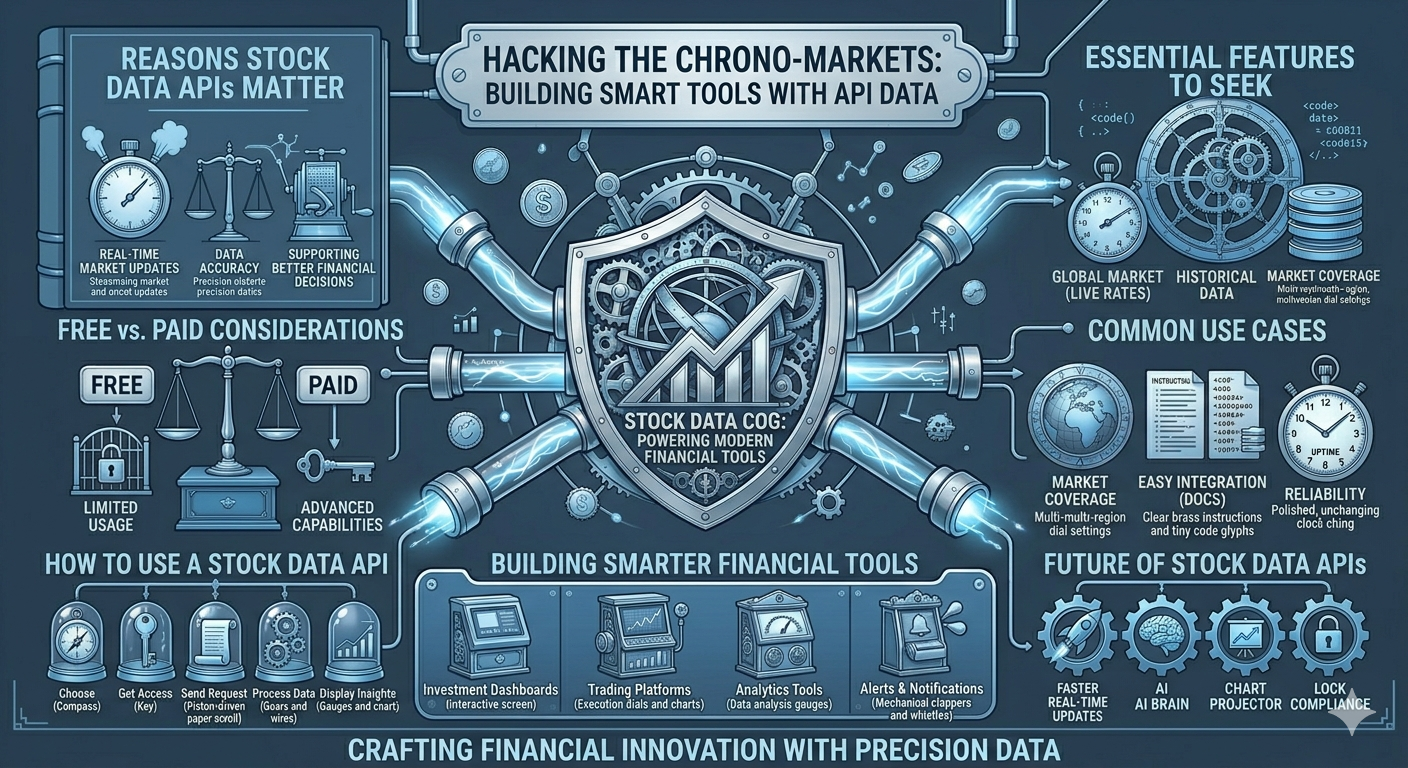
In the fast-paced world of financial markets, access to timely and reliable information can make all the difference. Investors, traders, and financial analysts need tools that allow them to monitor market movements, track trends, and make informed decisions instantly. This is where finance APIs have emerged as a game-changer, bridging the gap between raw data and actionable insights.
Finance APIs, such as a stock market API, provide real-time data that can transform the way individuals and businesses interact with financial markets. By integrating these APIs into trading platforms, investment apps, or analytical dashboards, users gain immediate access to market trends, historical data, and other crucial metrics that inform smarter investment decisions.
Understanding Finance APIs
A finance API, at its core, is a software interface that allows applications to request and retrieve financial data from a provider in a standardized format. Unlike traditional methods of collecting financial data, which may involve manual downloads or delayed reports, APIs provide instant access to constantly updated information.
Some common features offered by finance APIs include:
- Real-time stock prices and market indices
- Currency exchange rates
- Historical financial data for analysis
- Company profiles and earnings reports
- News feeds relevant to market events
With this data available at any moment, users can build tools and platforms that are more responsive and adaptable to market fluctuations.
Benefits of Real-Time Market Data
Having real-time financial data isn’t just convenient; it can fundamentally change investment strategies. Some key advantages include:
Improved Decision Making
Investors rely on accurate and timely information to make decisions. Real-time data ensures that buy or sell decisions are based on the most current market conditions, reducing the risk of acting on outdated information.
Enhanced Trading Strategies
For day traders and algorithmic traders, real-time insights are critical. A finance API allows them to implement automated trading strategies that react instantly to price movements, news, and market trends.
Risk Management
Monitoring market data in real-time helps investors identify potential risks before they escalate. Alerts triggered by specific thresholds can prevent significant losses and help maintain portfolio stability.
Greater Transparency
Access to live data promotes transparency in the financial ecosystem. Investors can verify trends, compare historical data, and gain confidence in the accuracy of the information they use for decision-making.
How Finance APIs Are Transforming Financial Tools
The integration of finance APIs has enabled developers to create smarter, more intuitive financial tools. Some examples include:
Investment Apps
Apps that provide users with real-time stock prices, portfolio tracking, and performance analytics rely heavily on finance APIs. These applications allow users to monitor their investments, explore market trends, and make informed decisions without leaving the platform.
Trading Platforms
Professional trading platforms use finance APIs to feed live market data directly into trading interfaces. This enables traders to react instantly to market changes, execute trades quickly, and analyze performance using accurate metrics.
Analytical Dashboards
Financial analysts benefit from dashboards that aggregate data from multiple sources. By integrating APIs, these dashboards can provide comprehensive insights, visualize trends, and generate predictive analyses based on real-time and historical data.
Robo-Advisors
Automated investment services, or robo-advisors, use finance APIs to make data-driven decisions for their clients. These platforms analyze market conditions, adjust portfolios, and recommend investment strategies without human intervention, all powered by API data.
Choosing the Right API
Not all finance APIs are created equal. Selecting the right API is crucial to ensure reliability, accuracy, and scalability. Factors to consider include:
- Data Coverage: Ensure the API provides access to the specific markets, assets, or financial instruments you need.
- Latency: Low-latency APIs provide faster updates, which is essential for real-time trading.
- Pricing: Evaluate whether the API offers a free tier, subscription plans, or pay-per-use models. The best free financial data API can provide sufficient access for small-scale projects or initial testing.
- Documentation and Support: A well-documented API with responsive support can significantly reduce integration time and troubleshooting challenges.
Integrating a high-quality API ensures that your financial tools remain accurate, reliable, and capable of meeting the demands of today’s markets.
Practical Applications of Finance APIs
Finance APIs are not limited to trading; they have numerous applications across the financial sector:
- Portfolio Tracking: Investors can monitor the performance of their assets in real-time.
- Market Alerts: Set up alerts for price changes, news updates, or unusual market activity.
- Financial Reporting: Automate reporting processes with accurate, up-to-date data.
- Data Analysis: Use historical and live data to identify trends, forecast performance, and back-test strategies.
These applications allow both individual investors and large financial institutions to harness the power of data for better decision-making.
Challenges and Considerations
While finance APIs provide significant advantages, there are some challenges to keep in mind:
- Data Accuracy: Not all APIs provide the same level of accuracy. Choosing reputable providers is essential.
- Rate Limits: Free or lower-tier plans often limit the number of API calls per day, which can impact applications requiring high-frequency updates.
- Security: Financial data is sensitive, so ensuring secure data transmission and storage is critical.
- Integration Complexity: APIs can vary in complexity, requiring technical expertise to integrate and maintain.
Despite these challenges, the benefits of real-time data far outweigh the limitations, particularly for those seeking a competitive edge in financial markets.
The Future of Financial Tools
The financial sector is becoming increasingly data-driven, and finance APIs are at the heart of this transformation. Future trends likely include:
- AI-Powered Analytics: APIs providing richer datasets will enable machine learning models to offer predictive insights.
- Personalized Investment Strategies: Real-time data allows platforms to tailor strategies for individual users.
- Global Market Integration: APIs will make it easier to access data from multiple international markets, broadening opportunities for investors.
- Enhanced Regulatory Compliance: Real-time data ensures that institutions remain compliant with evolving financial regulations.
As APIs continue to evolve, their role in shaping smarter financial tools will only grow, providing more robust and adaptive solutions for market participants.
Finance APIs are essential tools for anyone seeking to navigate the complexities of modern financial markets. From enabling real-time monitoring of stock prices to supporting automated trading strategies and sophisticated analytical tools, these APIs convert raw market data into actionable insights. For developers, investors, and businesses looking to leverage market intelligence, integrating a stock market API or the best free financial data API can significantly enhance decision-making, reduce risk, and provide a competitive advantage.
Frequently Asked Questions
1. What is a finance API, and why is it important?
A finance API is a software interface that provides access to financial data in real-time. It is important because it allows investors and businesses to make informed decisions quickly and efficiently.
2. Can I use free finance APIs for commercial purposes?
Some free APIs allow commercial use but may have limitations such as restricted data coverage or rate limits. It’s essential to review the provider’s terms and choose an API that aligns with your needs.
3. How do finance APIs improve trading strategies?
Finance APIs provide real-time data, enabling traders to react instantly to market changes. This allows for automated trading, risk management, and better-informed investment decisions.
 English
Join our community to interact with posts!