
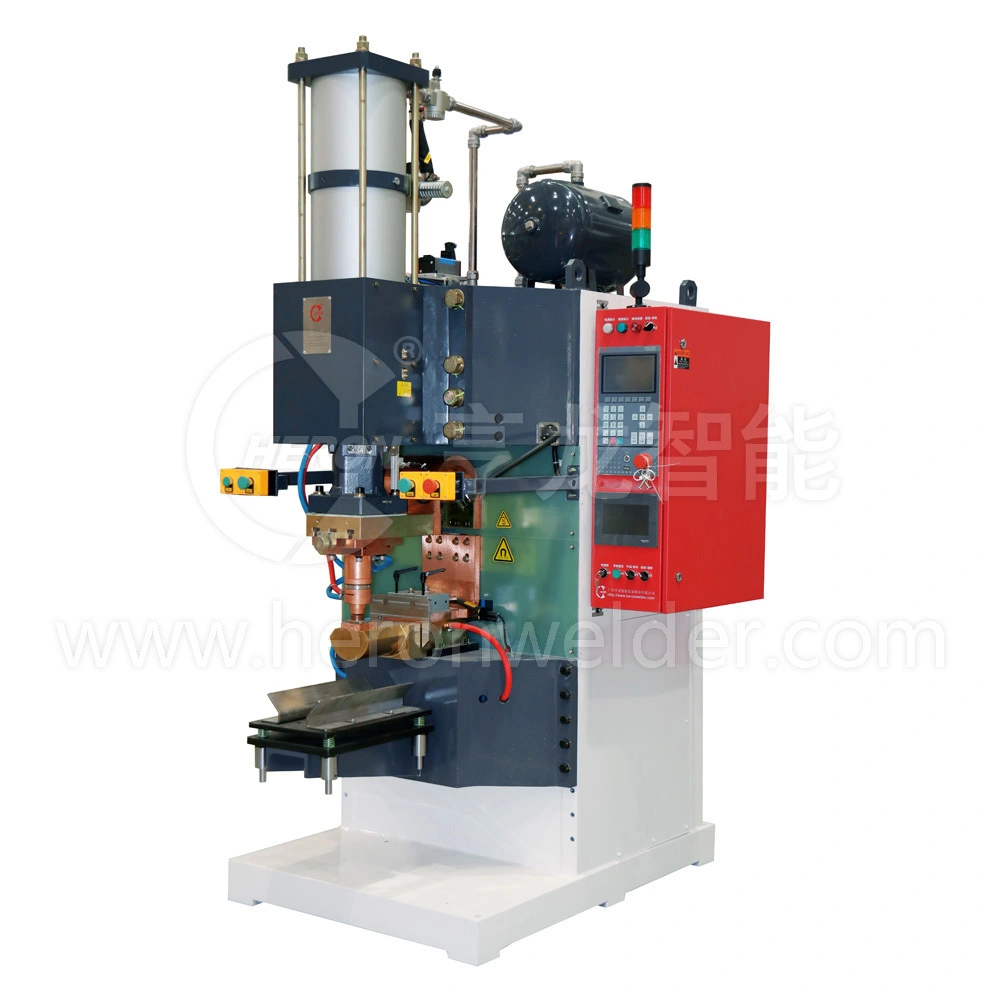
In today’s high-volume manufacturing environment, spot welding equipment is more than just a tool it's a critical enabler of efficiency, quality, and automation. From automotive and aerospace applications to appliance production and industrial fabrication, the right spot welding solution ensures consistent welds, reduced cycle times, and optimized material usage. Heron Welder, a global leader in industrial welding technology, delivers advanced spot welding systems designed for manufacturers seeking precision, reliability, and scalability.
Understanding Spot Welding: Principles and Mechanism
Spot welding is a type of resistance welding where heat generated from electrical resistance is used to join metal sheets at localized points. The process involves:
- Electrode Clamping: Copper alloy electrodes grip two overlapping metal sheets.
- Current Flow: A high-amperage electrical current passes through the contact area.
- Heat Generation: The resistance at the metal interface generates heat, melting the metal locally.
- Formation of Weld Nugget: Upon cooling, a strong metallurgical bond forms, known as a weld nugget.
This process is ideal for thin-gauge metals, particularly steel and aluminum, commonly found in automotive bodies, industrial cabinets, and consumer appliances. Advanced spot welding machines, like those from Heron, feature programmable parameters, real-time monitoring, and adaptive controls to accommodate varying material thicknesses and alloys.
Key Applications of Spot Welding Equipment
Manufacturers across industries rely on spot welding for its precision, speed, and repeatability. Typical applications include:
- Automotive Production: Body-in-white assembly, chassis fabrication, and battery pack welding.
- Aerospace Components: Lightweight aluminum sheet joining for panels and structural frames.
- Appliance Manufacturing: Stainless steel panels and frames for refrigerators, washing machines, and ovens.
- Electronics and Industrial Equipment: Small-scale assemblies requiring consistent weld quality.
Heron Welder’s spot welding systems are engineered for these applications, with models optimized for both high-speed automated production lines and flexible robotic integration.
Spot Welding vs. Other Resistance Welding Techniques
While spot welding is highly versatile, understanding its place among other resistance welding methods helps manufacturers choose the right equipment:
| Welding Type | Ideal Use Case | Advantages | Limitations |
|---|---|---|---|
| Spot Welding | Sheet metal joints, automotive body panels | High speed, precise localized welds | Limited to overlapping sheets |
| Projection Welding | Complex assemblies with protrusions | Multi-point welding in a single cycle | Requires specially formed projections |
| Seam Welding | Continuous sheet joints like tanks or pipes | Continuous, leak-proof welds | Slower for high-volume point welds |
| Capacitor Discharge Welding | Thin metals, terminals, battery tabs | Extremely fast, minimal heat-affected zone | Limited penetration depth |
By comparing methods, manufacturers can balance speed, strength, and cost-efficiency. Heron provides consultation to help OEMs and automation integrators select the optimal welding solution for their production needs.
Best Practices for Spot Welding Efficiency
Implementing spot welding equipment effectively requires a combination of technical knowledge and process optimization:
- Electrode Maintenance: Regular cleaning and dressing prevent inconsistent welds and extend electrode life.
- Process Parameter Control: Adjust current, force, and weld time based on material thickness and alloy.
- Quality Monitoring: Integrate real-time weld monitoring systems to detect inconsistencies and prevent rework.
- Automation Integration: Robotic or gantry systems enhance speed, precision, and worker safety.
- Material Preparation: Ensure proper alignment and surface condition of sheets to reduce defects.
Heron’s modern spot welding equipment comes equipped with intuitive controls, adaptive welding algorithms, and diagnostic tools to support these best practices, ensuring maximum throughput and minimal downtime.
Heron’s Expertise in Spot Welding Solutions
Heron Welder stands out as a global partner for industrial welding, offering:
- Modular Spot Welding Machines: Flexible systems for small to high-volume production.
- Automated Production Lines: Fully integrated robotic welding stations with precise control.
- Customizable Controls: MFDC spot welding machines for energy-efficient operation on challenging materials.
- Technical Support and Consultation: Expert guidance for OEMs, automation integrators, and factory engineers to optimize welding processes.
Manufacturers trust Heron not just for machines, but for complete solutions that enhance production efficiency, reduce costs, and maintain consistent quality.
Frequently Asked Questions (FAQs)
1. What metals can spot welding equipment handle?
Spot welding is effective for mild steel, stainless steel, and aluminum alloys. Heron machines support both single and mixed-material welding.
2. How does MFDC spot welding differ from conventional AC machines?
MFDC (Medium Frequency Direct Current) provides precise current control, faster welding cycles, and reduced heat input, making it ideal for thin or high-strength metals.
3. Can spot welding equipment be integrated into robotic lines?
Yes. Heron’s machines are designed for seamless integration with industrial robots and automated production systems.
4. How do I maintain electrode performance?
Electrodes should be regularly cleaned, dressed, and replaced based on usage. Heron offers maintenance guidance and training for optimal electrode life.
5. What safety features are standard in Heron spot welders?
Machines include interlocks, emergency stops, and protective enclosures, ensuring operator safety while maintaining high productivity.
Conclusion: Optimize Your Manufacturing with Heron Spot Welding
In modern manufacturing, precision, efficiency, and reliability are non-negotiable. Investing in high-quality spot welding equipment from Heron ensures superior weld consistency, enhanced throughput, and seamless automation integration. Whether you are an OEM, a production engineer, or an automation integrator, Heron’s solutions empower your operations with industry-leading technology and expert support.
Request a quote or consult Heron today to explore custom spot welding solutions tailored to your factory’s unique requirements and take your production capabilities to the next level.
 English
Join our community to interact with posts!